Can an LED volume be used for product photography, or is it mainly a tool for filming?
Yes, an LED volume can be used for product photography, and it is not limited to video. The main issue is not whether the technology works for stills, but whether the product, camera setup, lighting plan and studio workflow suit the strengths and limits of an LED backdrop. In some cases, an LED volume gives product teams precise environmental control and realistic reflections. In others, a traditional set, a printed background or an infinity cove remains the better choice.
Table of Contents
Understanding LED volumes: function and application
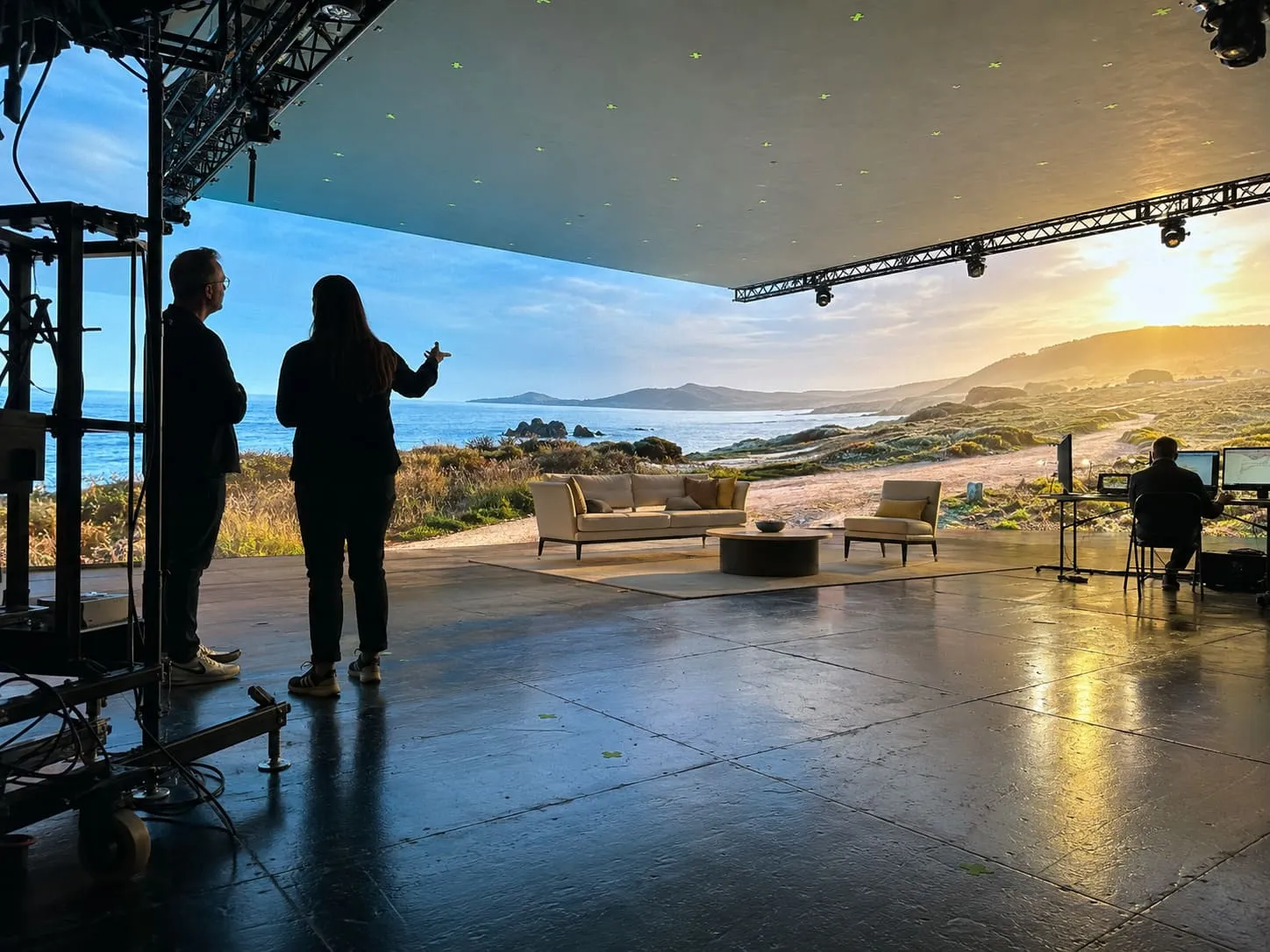
An LED volume is a controlled studio environment built around large LED panels that display digital backgrounds, lighting cues or full real-time scenes. In practical terms, it replaces or supplements physical scenery by putting an image source directly in the studio, which means that the background can also affect the subject with real light and reflections.
That point separates LED wall technology from a green screen. A green screen records a flat chroma surface for later replacement. An LED set for filming or photography displays the scene during capture, so the camera sees a finished or near-finished environment in real time.
A simple way to think about it is this:
- A green screen is mainly a post-production tool.
- An LED backdrop is mainly an on-set image and lighting tool.
- A full virtual production stage combines that backdrop with rendering, tracking and technical coordination.
Pixel pitch, HDR capability and colour behaviour all matter because the wall is being photographed directly. ROE Visual panels are widely used in this part of the market, largely because panel quality, consistency and brightness control affect image reliability as much as headline resolution.
Within virtual production studios, the volume is often discussed as a video asset first. That is understandable, since real-time rendering, camera tracking and set extension became closely associated with film and commercial shoots. Even so, the assumption that an LED volume is video-exclusive misses a large part of its practical use. Product teams may use it to place an object in a believable scene, generate controlled interactive lighting, or switch from one visual environment to another without rebuilding the set.
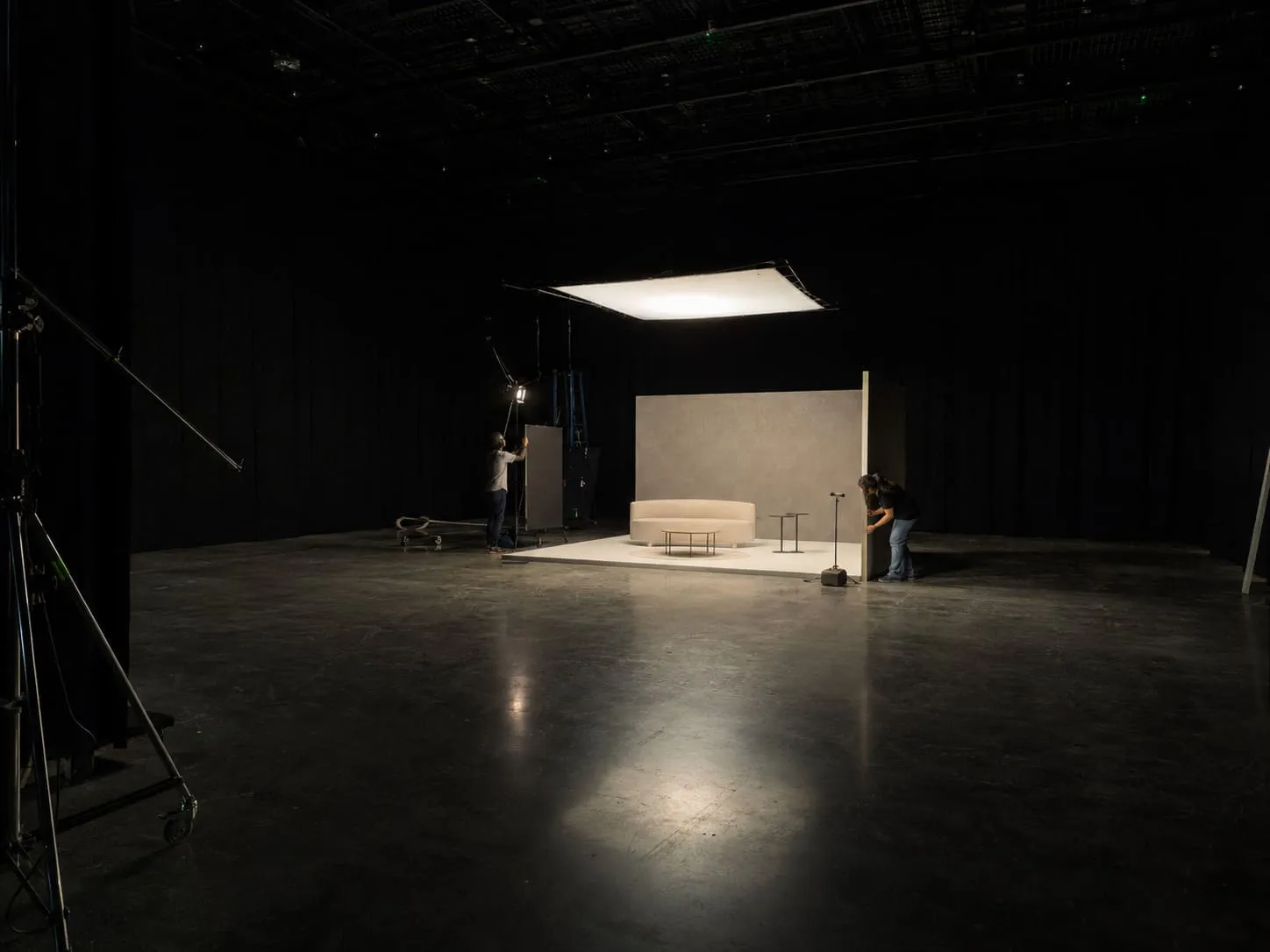
At Mammoth Film Studios, Studio 2 is configured as a blackout and virtual production space with an in-house modular 8 x 4 m ROE 2.8mm HDR LED volume, delivered in partnership with Elsewhere Productions. That kind of setup reflects a wider studio shift. LED volume explained simply, it is less a novelty than a specialised stage tool that can support both moving image and still capture when the production is planned properly.
Core differences between video and still photography workflows
Video and stills may share the same stage, but they do not ask the LED wall to do the same job.
Cinema cameras usually work within frame rate, shutter angle and sync conditions that are built into virtual production planning. Digital still cameras operate with much wider freedom in shutter speed, exposure choices and shooting rhythm. That freedom is useful for photography, yet it can also expose wall behaviour that a video setup has already been tuned to avoid.
Here is where the workflows usually diverge:
- Video capture tends to prioritise stable sync, continuous motion and repeatable playback.
- Still photography often prioritises single-frame sharpness, fine product detail and flexible exposure changes.
- Motion work may accept some compromises in background sharpness that a high-resolution still image will reveal immediately.
Flicker is one obvious example. A cinema camera package on a virtual production stage is often matched to the wall's refresh characteristics. A stills team may change shutter speed freely during a product shoot, and one setting can behave cleanly while another introduces banding or visible inconsistency. Camera sync LED wall planning matters in both disciplines, but the tolerance for small artefacts is often lower in stills because the viewer can study one frame at length.
Colour handling also shifts. Video pipelines are commonly managed through established colour workflows for moving image capture and playback. Product photography may demand very specific tonal accuracy, especially with packaging, cosmetics, luxury goods or branded materials. Colour rendering index, white balance control and wall calibration therefore move closer to the centre of decision-making.
Another difference lies in how the image is judged. During a film take, the wall may function as environment, interactive light source and background in motion. During a still shoot, the product itself often carries the full burden of scrutiny. Fine text, polished surfaces, edge definition and micro-contrast all come under pressure in a way that broad scenic imagery does not. A video vs photography workflow comparison usually comes back to one point: stills are less forgiving of small inconsistencies, especially on highly reflective products.
Technical considerations: using LED volumes for product photography
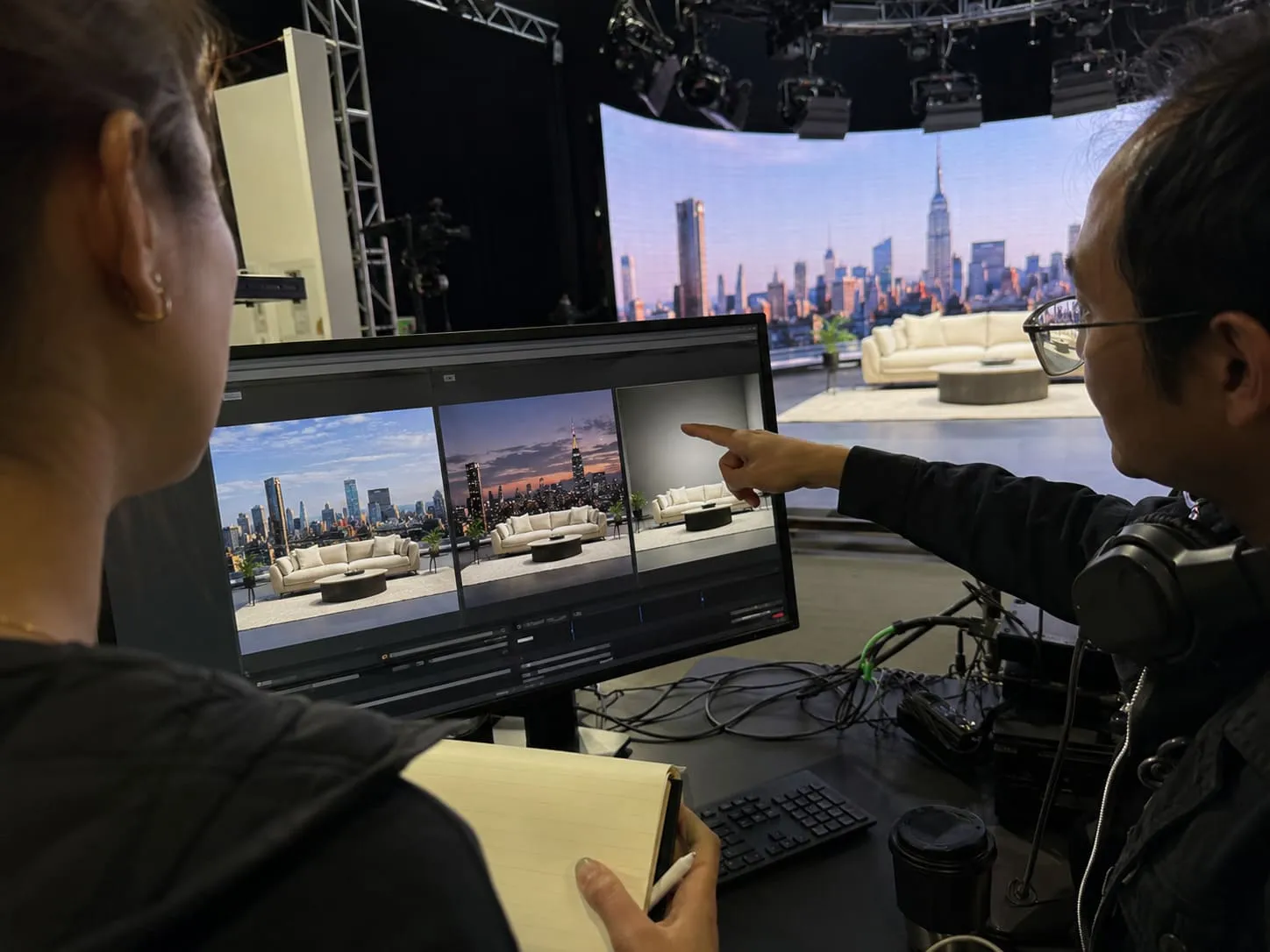
Product photography on an LED wall is possible, but the technical setup has to be tested with the same care as the product lighting itself. What looks convincing to the eye on set may behave differently through a still camera sensor.
The main pressure points usually fall into five areas:
- Flicker and refresh behaviour. The wall and camera need to work together at the chosen shutter speed. PWM frequency and panel control settings can affect whether a frame looks clean or shows banding.
- Colour accuracy. The wall image, camera profile and white balance preset need close alignment. A colour meter can help assess what the product is actually receiving, rather than what the monitor preview appears to show.
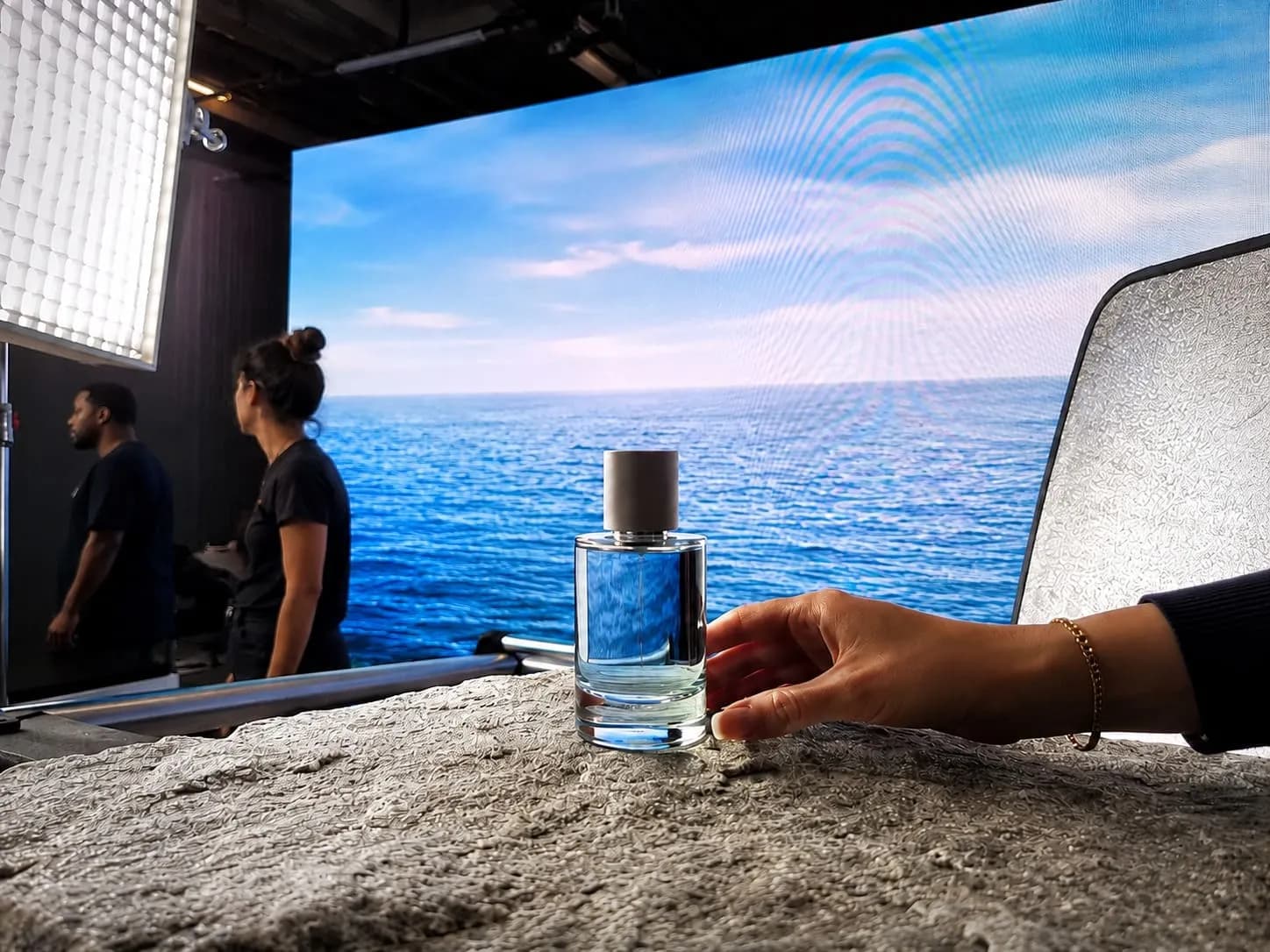
- Reflections. Glossy packaging, glass, metal and polished plastics can mirror the LED pattern, the displayed content or both. Reflections LED backdrop issues are often less about whether reflections exist and more about whether they look believable.
- Moiré and image artefacts. Fine panel structure can interact with high-resolution sensors, focal length choices and subject distance. Moiré patterns are especially relevant where the product is small in frame and the wall is sharply resolved behind it.
- Resolution limits in stills. A wall can read well as environment and light source, yet still fall short if the production needs extremely detailed scenic reproduction in a tightly scrutinised final image.
Mitigation usually involves practical changes rather than one universal fix. Greater distance between product and wall can soften panel visibility. Adjusting focal length can reduce unwanted interaction between sensor and screen. Additional controlled lighting can support the product so the wall does not carry the full exposure burden. In some shoots, the wall works best as a source of background ambience and interactive light, with hero detail held by separate lighting control software and conventional fixtures.
Surface reflectivity deserves special attention. A matte bottle, a brushed metal appliance and a glossy watch face will all respond differently to the same LED content. An LED wall product photography plan that works for one object category may fail for another. Camera manufacturers also vary in how sensors interpret fine repeating patterns, so test captures matter more than assumptions.
A practical example makes the point. If a drinks bottle needs a believable dusk skyline in the background and soft urban reflections around the glass, an LED volume may create that atmosphere quickly. If the same bottle needs absolute colour neutrality, pin-sharp label reproduction and tightly controlled specular highlights for packshot use, a simpler set with conventional lighting may produce a cleaner file.
Operational realities: studio infrastructure and workflow integration
The technical case for an LED volume can look straightforward on paper. The operational case is usually where the decision is won or lost.
A product shoot using an LED stage depends on blackout control, rigging options, power distribution, image playback, camera testing and crew coordination. Plugging a background into the wall is the easy part. Integrating that wall into a working photography schedule takes a studio setup that supports production logic rather than simply housing equipment.
Studio 2 at Mammoth Film Studios is a useful example of this distinction. The space is configured as a 5,000 sq ft blackout and virtual production stage with 24 ft rigging height, full vehicle drive-in access, 63A 3-phase power, steel beams, chain hoists, production areas and step-free access throughout. Those details matter because product teams often need a mix of lighting support, art department handling, set preparation space and reliable movement between technical and client areas.
Operational workflow LED wall planning usually rests on four linked questions. First, who is managing the wall content and playback. Second, how does that integrate with the photography team’s lighting plan. Third, what support is available for rigging and power. Fourth, how much time is built in for testing before the first approved frame is expected.
In that context, in-house partners can simplify the day. Elsewhere Productions handles virtual production delivery in Studio 2, and Cinelight London is the exclusive lighting partner on site. That structure does not remove the need for planning, but it does create clearer lines around who manages key parts of the stage environment. Production managers generally value that kind of clarity because it reduces overlap between departments during a tight schedule.
Access logistics also shape the practical value of a studio infrastructure virtual production setup. A Zone 2 location, drive-in access, on-site parking and proximity to major transport lines all influence call times, load-ins and supplier coordination. Those factors sound mundane until a product launch shoot involves oversized props, multiple client stakeholders and a compressed turnaround on the same day.
When to choose LED volumes for product photography and when not to
An LED volume is best treated as a selective tool, not a default backdrop.
Some product shoots suit it very well. Others gain very little from the added technical layer. The decision usually comes down to whether the wall solves a real production problem or simply adds challenge.
A useful way to judge the fit is to look at the brief in context:
- Choose an LED volume when the product benefits from active background changes, realistic environmental reflections or rapid shifts between scenes without rebuilding sets.
- Choose an LED volume when moving image and stills are being captured within one production, especially if the same visual world needs to carry across both outputs.
- Choose another approach when the brief demands absolute background neutrality, highly controlled packshot precision or maximum still-image detail without panel-related risk.
A product shoot LED stage setup can work particularly well for automotive details, consumer electronics, drinks, fashion accessories and branded objects that need a sense of place. In those cases, the wall acts as both scene and lighting influence. Creative flexibility and production efficiency can improve because the team can change time of day, location mood or environmental tone without physically rebuilding every element.
By contrast, a traditional backdrop often remains stronger for catalogue work, e-commerce imagery, pure cut-out photography or highly reflective hero objects where every highlight must be built with precision. Studio 1, with its 60 x 60 ft white infinity cove and full blackout capability, is a different kind of asset for that reason. A clean cove offers predictable control for product photography that does not need an LED environment at all.
Art departments also affect the choice. If the visual brief depends on tactile surfaces, foreground props and real-world imperfections, a practical set may still look richer than a digital scene. If the brief depends on fast location changes, repeatability and controlled ambient light, Studio 2 may fit better. LED wall vs traditional backdrop is therefore less a technology argument than a production design decision tied to the intended image.
Looking ahead: the role of LED volumes in still and product photography
LED volumes are likely to become more common in photography, but probably in a narrower and more deliberate way than early hype suggested. The direction of travel points to hybrid production workflow models where stills, motion and virtual environments are planned together from the start.
Panel quality is improving, calibration tools are becoming more refined and studio teams are gaining practical knowledge through repeated use. Equipment manufacturers, technical standards bodies and industry working groups are also helping productions speak a more consistent language around colour, sync and performance. That kind of knowledge transfer matters because it turns LED wall innovation into a repeatable working method instead of a one-off experiment.
Virtual production studios are also becoming more disciplined about where the wall adds value and where conventional methods still win. That maturity is useful. It stops the conversation from collapsing into false choices between old and new tools.
For still and product photography, the strongest future case is likely to sit in crossover briefs: campaigns that need motion and stills on the same stage, products that rely on believable reflections, and shoots that benefit from controlled scene changes without travel or repeated set builds. Teams that treat the LED volume as one option within a wider studio toolkit will usually get more from it than teams that expect it to solve every visual problem on its own.