Why choosing the right virtual production set-up matters more than ever
What difference does it make whether you use an LED volume or a green screen?
It affects more than just the visuals. The decision can influence your overall budget, how much time you spend in post-production, your shooting schedule, and how creatively flexible your team can be. Picking the wrong option could lead to delays, extra expenses, or disappointing results.
Picture this. Your shoot is booked. Actors are ready. Now you have to decide what goes behind them. Should you film in a digital world rendered live on LED panels, or shoot against a green screen and replace the background later? This is a choice many directors and producers face, and it's not always an easy one.
Studios across the UK - from Virtual Production Studios London to smaller regional spaces backed by the British Film Commission and the BFI - are seeing more demand and more questions. Both technologies are powerful, but they work best in different scenarios, something our virtual production partner Elsewhere sees every week. Getting it wrong could mean reshoots or a spike in post costs. This guide walks you through the pros, cons, and considerations. By the end, you will have a clearer picture of which set-up suits your next production.
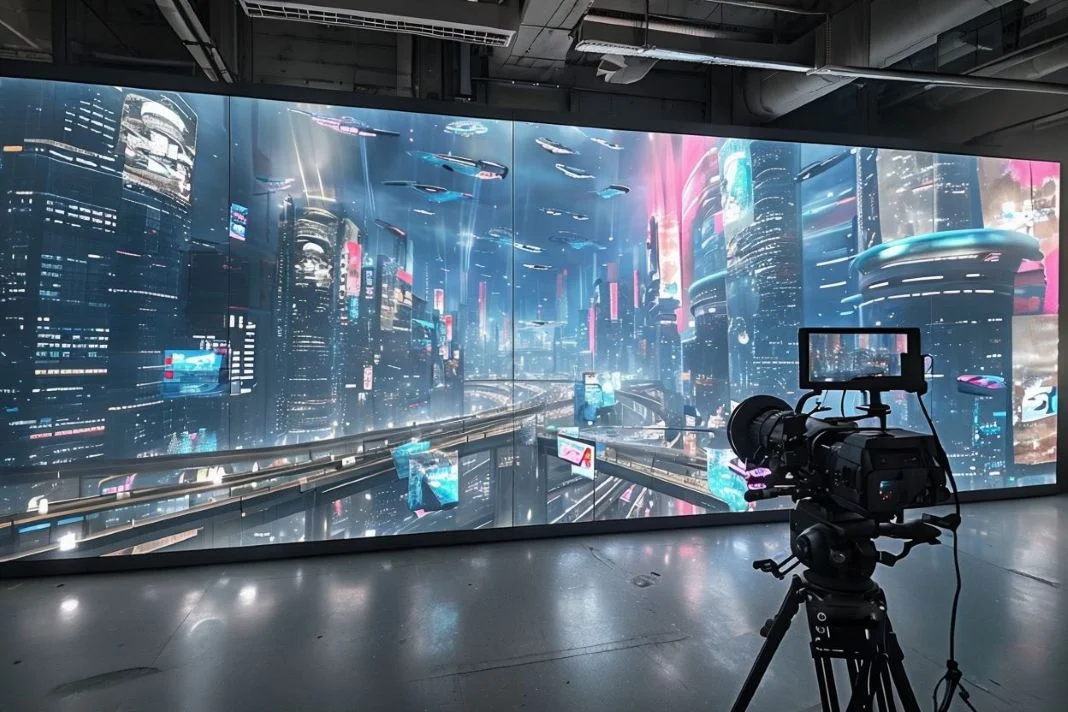
What is an LED volume?
How does an LED volume work, and why is it so popular in virtual production?
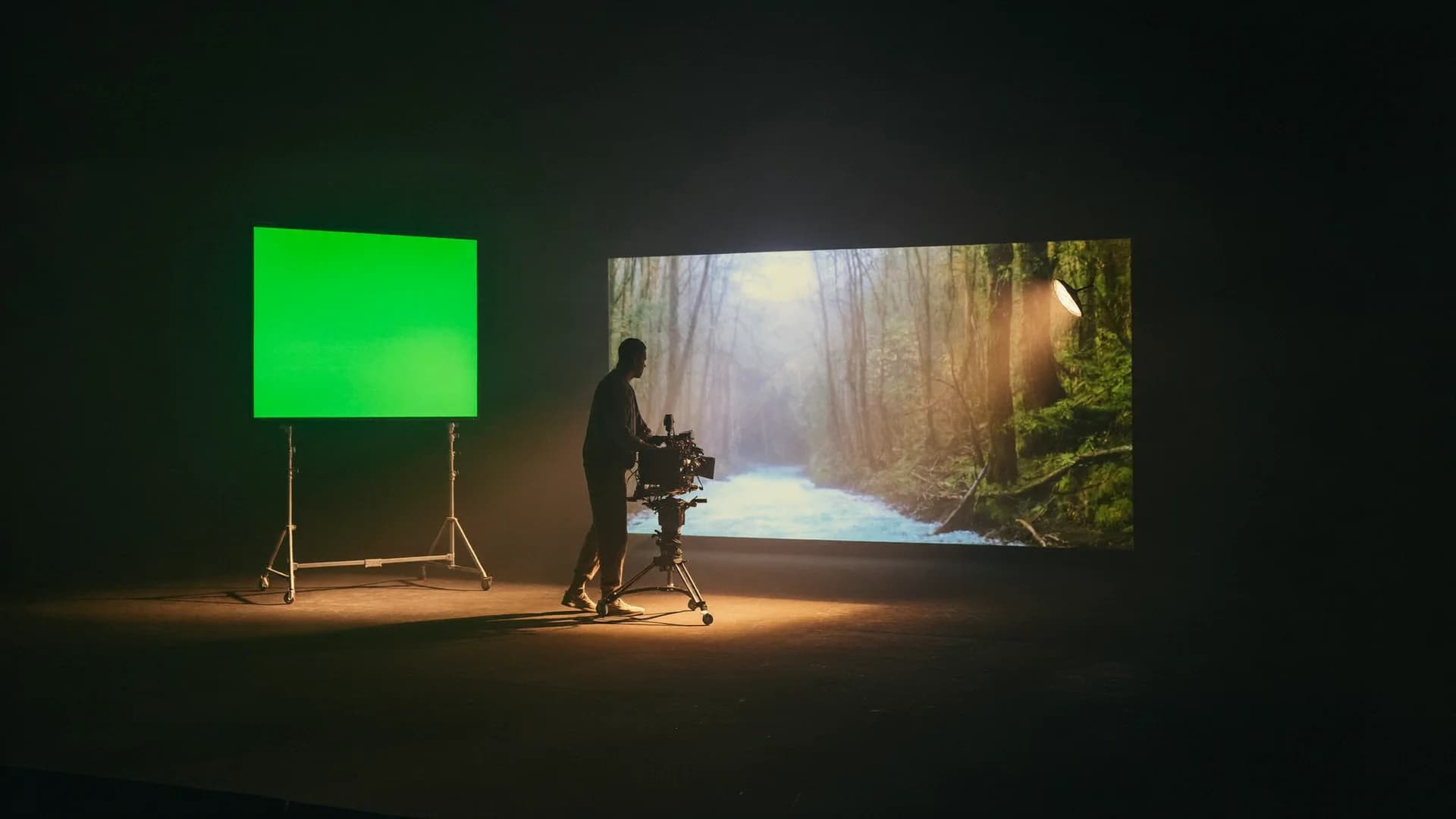
An LED volume is a studio surrounded by high-resolution LED walls that display immersive 3D environments in real time. These virtual sets shift perspective as the camera moves, giving the illusion of real-world depth and scale.
With rendering platforms like Unreal Engine, you can capture the final scene on camera, complete with reflections, dynamic lighting, and natural parallax. This is often called final-pixel delivery, where what you see is what you get.
High-end series such as The Mandalorian brought this approach into the spotlight, integrating ILM StageCraft, Mo-Sys camera tracking, and Disguise control systems. UK studios now regularly use similar set-ups for branded shoots, TV dramas, and VFX-ready content.
What this means for your production is straightforward:
- The lighting on your actors matches the digital backdrop.
- You capture photorealistic scenes on the day.
- The need for compositing and colour correction in post is reduced.
LED volume studio hire in London can vary based on size and tech level. Pricing references are based on publicly listed ranges for professional studio hire and are intended as general estimates only.
What is a green screen?
Why are green screens still widely used in virtual production?
Green screen virtual production allows editors to replace the background with any visual asset using chroma key technology. It is a flexible method still trusted across many film and TV workflows.
This set-up works well for creative projects where the visual environment is developed in post, or when portability and affordability matter most. Green screen studio hire in London typically starts under £1,000 per day, according to common market rates.

The benefits include:
- Simple studio set-up with consistent lighting
- Maximum post flexibility using tools like Nuke or After Effects
- Full control over asset replacement and VFX layering
Challenges include managing lighting uniformity, chroma spill, and the need for detailed compositing. You will often rely on rotoscoping, colour correction workflows, and rendering pipelines to finalise the background.
How to compare: Budget, realism, crew size and workflow
What should guide your choice between LED and green screen?
Use this four-point checklist when deciding:
Budget
- Green screen is cost-effective, ideal for short films, music videos, and promo shoots.
- LED volume requires higher upfront costs but reduces time needed in post.
Realism
- Green screen requires digital creation of backgrounds and lighting after filming.
- LED volume captures realistic lighting and reflections live.
Crew
- Green screen can be managed by a small, generalist team.
- LED volume needs trained crew for calibration, rendering, and camera sync.
Workflow
- Green screen involves longer post-production but greater creative flexibility.
- LED volume requires more pre-production but allows a quicker post process.
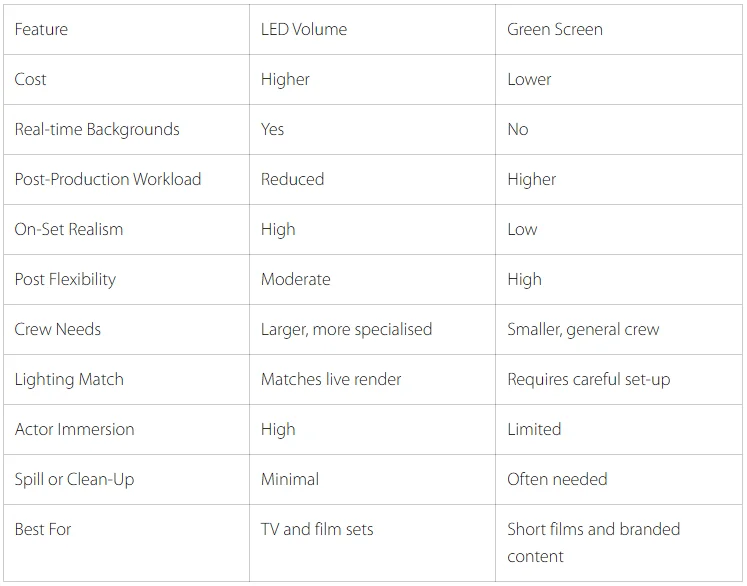
LED volume vs green screen: Pros and cons side-by-side
Can you use both? When a hybrid set-up makes sense
When should you consider a hybrid production studio set-up?
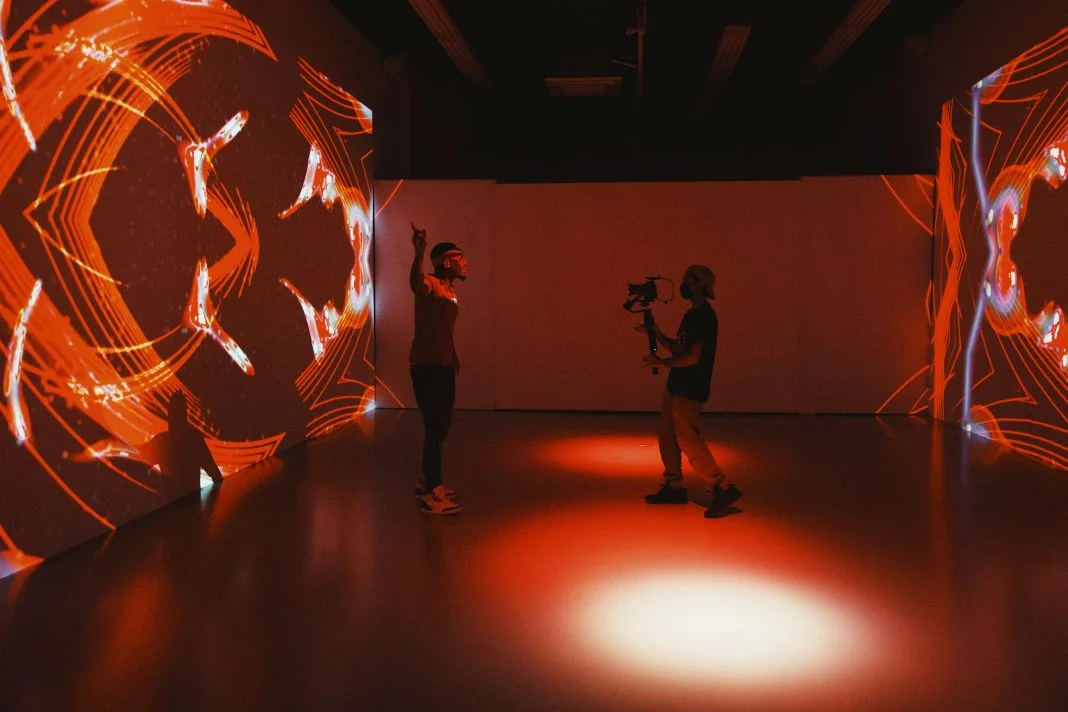
Hybrid virtual production allows you to combine LED and green screen techniques, depending on scene complexity, budget, and your post-production strategy.
For example, you might use LED volume for wide, visually rich scenes where lighting interaction is key. Meanwhile, chroma key could be used for insert shots or scenes that need creative flexibility in post.
Studios like Lux Machina and Vū offer this blended approach. They support real-time asset reuse and consistent lighting across both methods. Proper planning ensures smooth transitions and prevents mismatches.
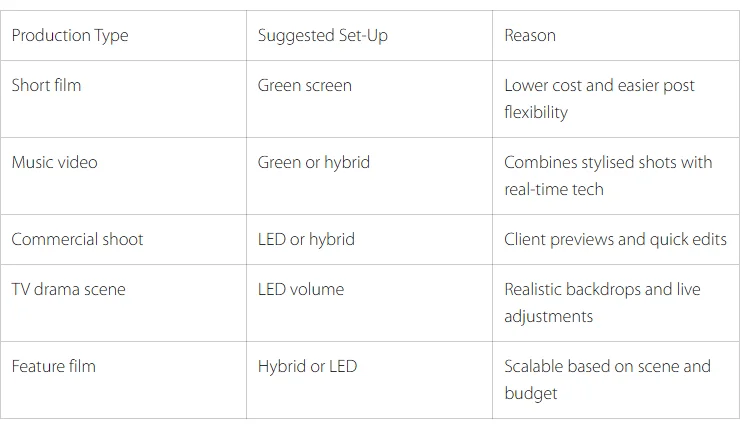
What fits your production? A quick budget & scale matrix
Studio hire checklist: What to ask before you book
- What is the LED wall’s pixel pitch, curve, and resolution?
- Which camera tracking systems are available?
- Is live rendering included, such as Unreal Engine?
- Can I preview rendered assets during the shoot?
- What are the dimensions and lighting setup of the green screen zone?
- Can I use physical set builds with virtual environments?
- Are in-house crew available to support with setup and shoot?
- Are prep days included, and what level of access is offered?
- What power capacity is available for screens, lights, and equipment?
- Are there examples of previous virtual productions filmed here?
Making the right choice: Book with confidence at Mammoth Studios
Whether you need a full LED stage, a chroma key backdrop, or a hybrid set-up, Mammoth Studios in London offers studio hire to fit your goals.
We provide pre-visualisation support, studio planning, and technical guidance for camera-ready and post-production-ready environments. From short films to series shoots, we will help you make a confident and informed decision. Get in touch to plan your virtual shoot today.