How much cove space should you allow for the shoot?
You need enough infinity cove space to hold the subject, the widest frame, the camera position, separate lighting and the people working around the shot. Wall width is one input; depth, grid height and clear floor decide whether the plan fits once the crew starts working.
Table of Contents
Most sizing mistakes come from reading a studio plan as if the camera and lighting package occupy no space. The white area may look enough until a full-body frame forces the camera back, or until the background lights need separation from the subject.
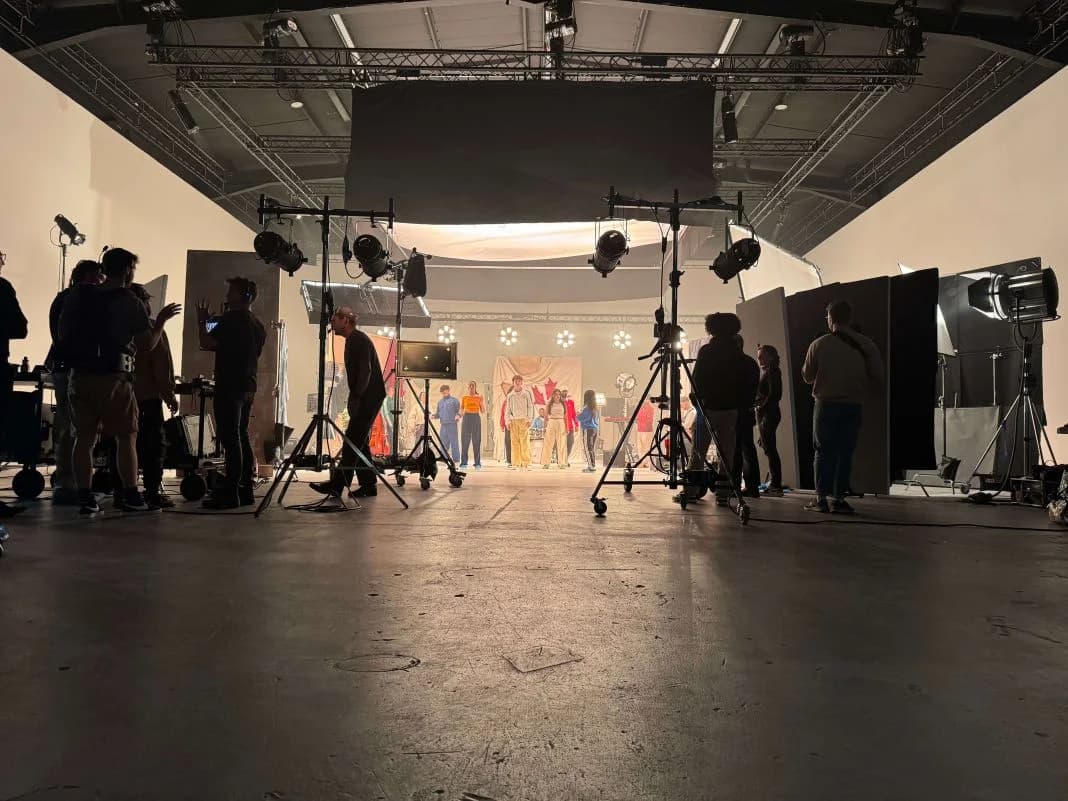
In commercial production, usable studio space also includes the routes around the set. Crew movement, set dressing, client viewing and equipment staging all take floor that never appears in the frame.
Before comparing cove dimensions, brief the largest subject and the widest likely frame. That gives you a working test for every studio spec that follows.
The real size is usable shooting space
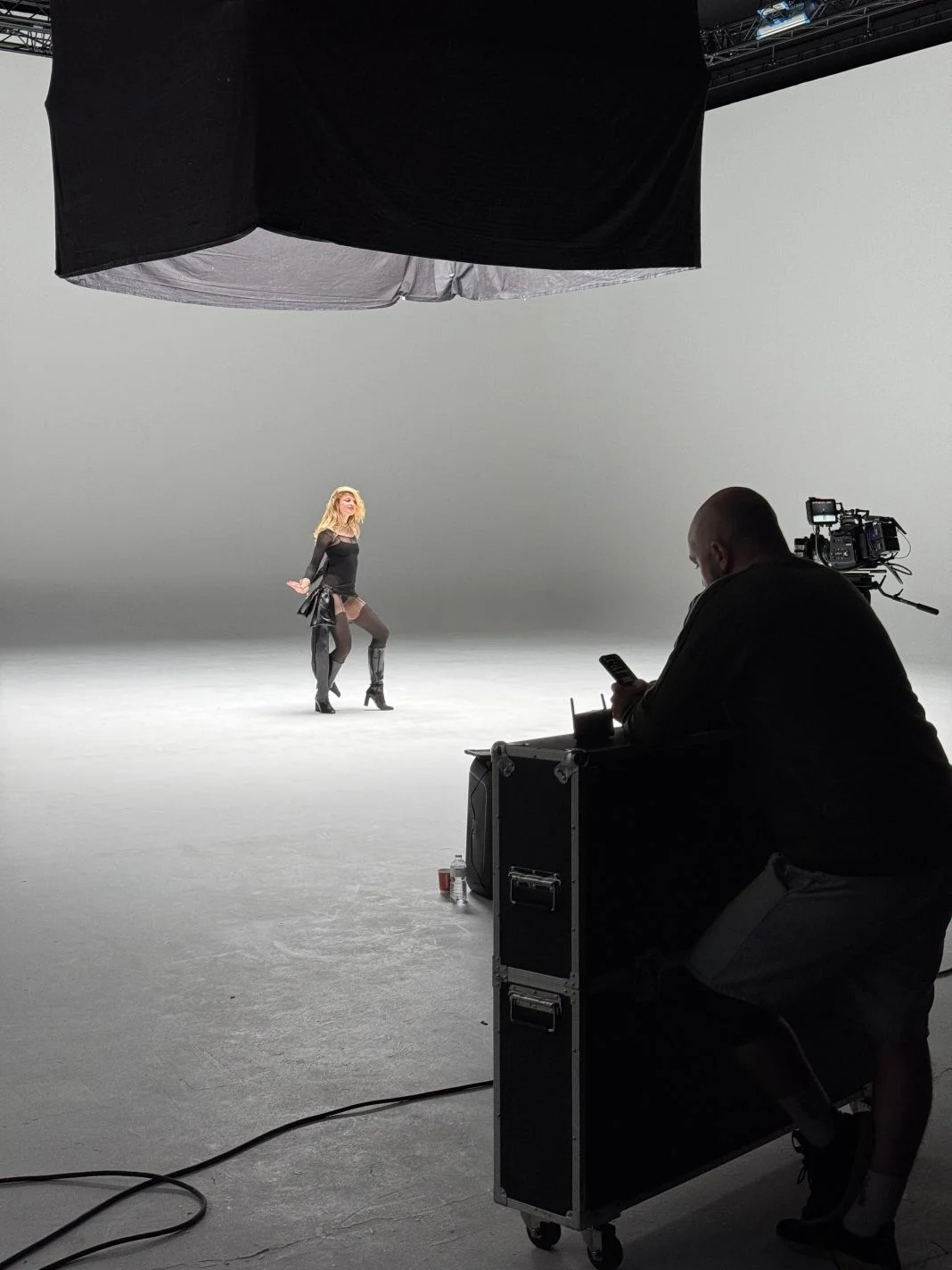
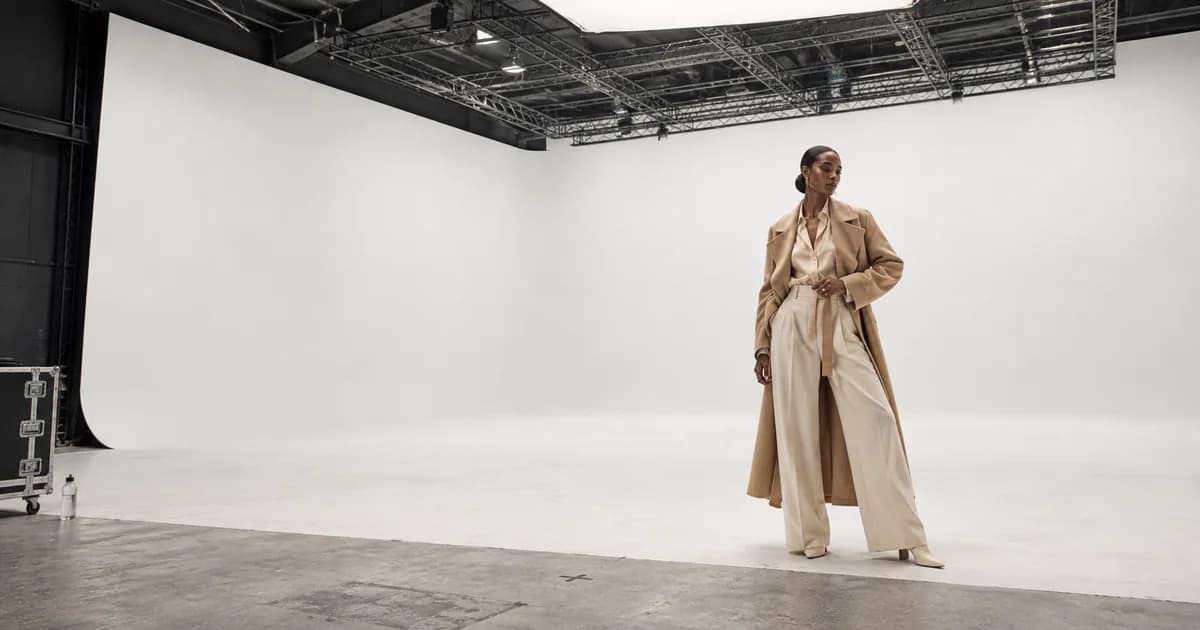
Treat the cove as a usable shooting envelope: wall length, room depth, grid height, clear floor and cove configuration. The white cyc wall size matters, but the production lives in the space around it. Infinity cove size is an operational choice, not a visual preference.
Industry sizing guidance gives practical starting scales; the table below compares production uses with the cyc width and room depth that make each use case more workable.
These ranges are starting points for shortlisting, because the frame and movement still have to be tested. A narrow tabletop setup has a very different pressure on usable studio space from a group, a moving model or furniture that needs room around it.
Brief writers should also specify wall length, height to the lighting grid and desired cove configuration. Cyclorama size includes the curve itself, since the floor-to-wall transition affects shadows, lighting changes and how quickly the edge of the set becomes visible on camera.
Why lensing and lighting change room depth
A full-body fashion frame can fit across a cove and still fail on depth when the camera position is forced forward. On a floor plan, the subject fits. In practice, perspective, lens choice and background control all consume space before the first frame is composed.
Camera distance controls perspective
Camera position sets the real room depth requirement. For full-body work, standard sizing guidance puts 50 mm to 85 mm lenses at about 3 to 5 m between camera and subject, with 85 mm to 135 mm lenses at about 5 to 8 m or more.
Once that distance is added to the subject position, the cove footprint alone becomes a weak measure. The booking question becomes whether the studio can hold the intended perspective and still keep stands, crew and cove edges out of the usable frame.
Lighting separation controls background control
Lighting a white cyclorama evenly depends on physical separation. Background lights need 1 to 2 m of clear space between the subject and the background wall, because separate subject and background lighting becomes harder when the subject is pushed tight to the cyc.
Crews gain control when the lighting plan has its own working space. That space also reduces the risk of last-minute compromises, such as flattening the lighting because the chosen cove depth cannot hold the intended setup.
The brief has to include access and support space
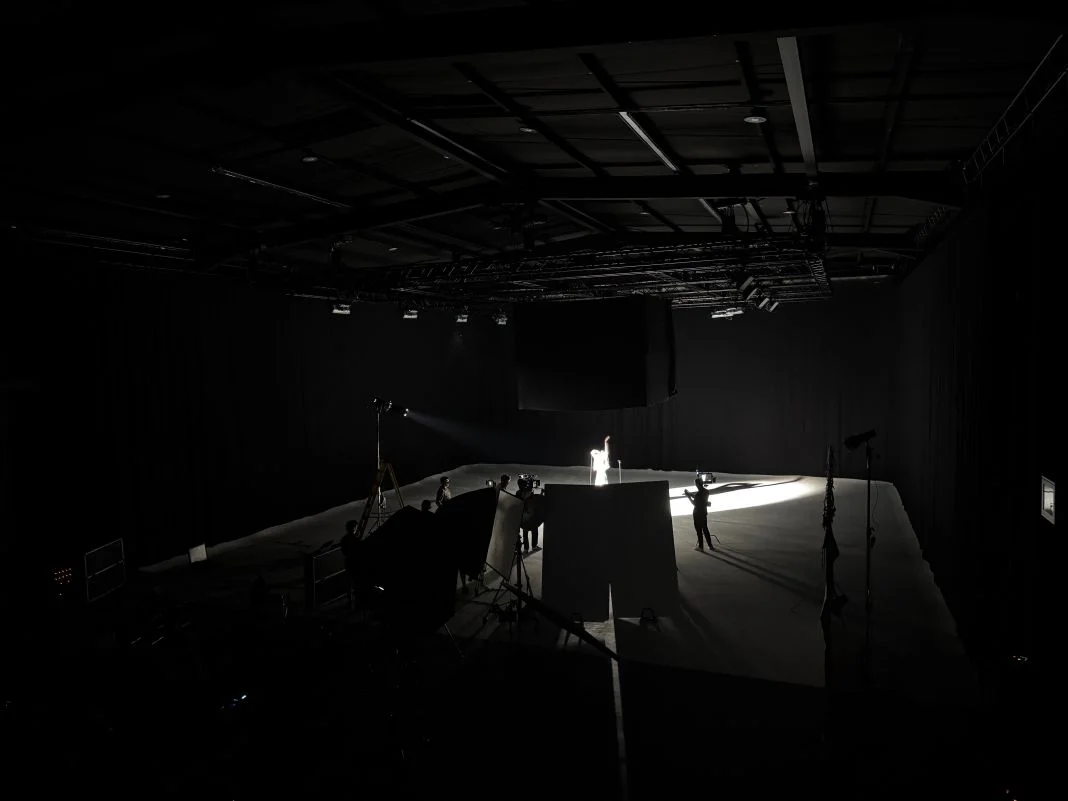
The cove footprint is one part of the booking decision. Your studio brief needs to include everything that keeps the shoot moving before and after the camera turns over.
- Your brief starts with the largest subject, set or vehicle.
- The widest frame and likely camera move set the visible width.
- The intended lens range and camera position set the working depth.
- Subject-to-background distance gives lighting its own working space.
- Height, rigging, power, access and off-set production needs complete the studio test.
A studio’s real size includes load-in, parking and production support, not only the white area. That matters most for vehicles, furniture, groups and wide camera moves, where wall coverage, radius and movement routes all affect whether the floor-to-wall transition stays controlled.
Mammoth Film Studios is a useful London Zone 2 reference because Studio 1 combines an 8,000 sq ft stage with a 60 x 60 ft white infinity cove, 24 ft grid height, 200A 3-phase power, drive-in vehicle access and 20 parking spaces. Its 80 cm cove radius is part of the technical picture, because the curve is a working dimension as much as a visual one.
Zone 2 matters in operational terms. Crews, agencies, suppliers and unit vehicles need a studio that supports access without turning load-in into a hidden production problem.
Why the right cove protects the shoot
Small coves have a clear place in tabletop, headshot and controlled product work. Mid-size coves suit many fashion, portrait and branded content shoots when depth and lighting separation have been allowed for honestly.
Large coves earn their keep when the production needs width, camera movement, vehicles, groups or set dressing inside the same working envelope. The real gain is protection: protection for the frame, for lensing choices, for lighting control and for the schedule.
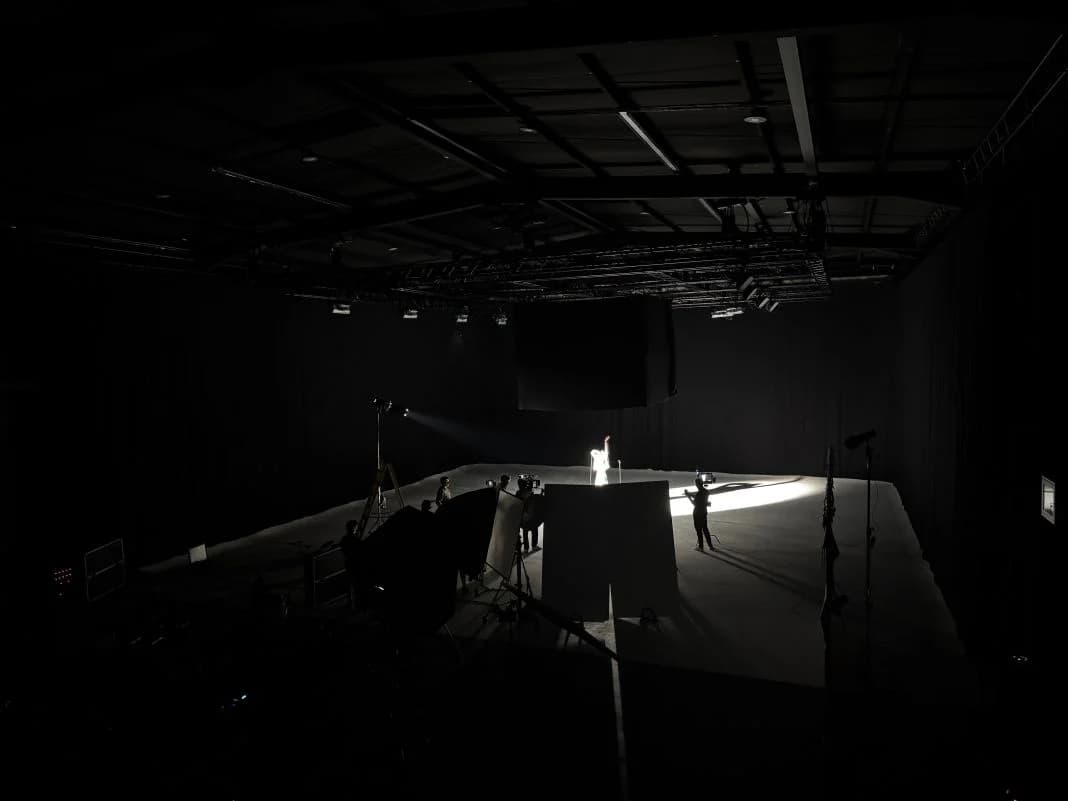
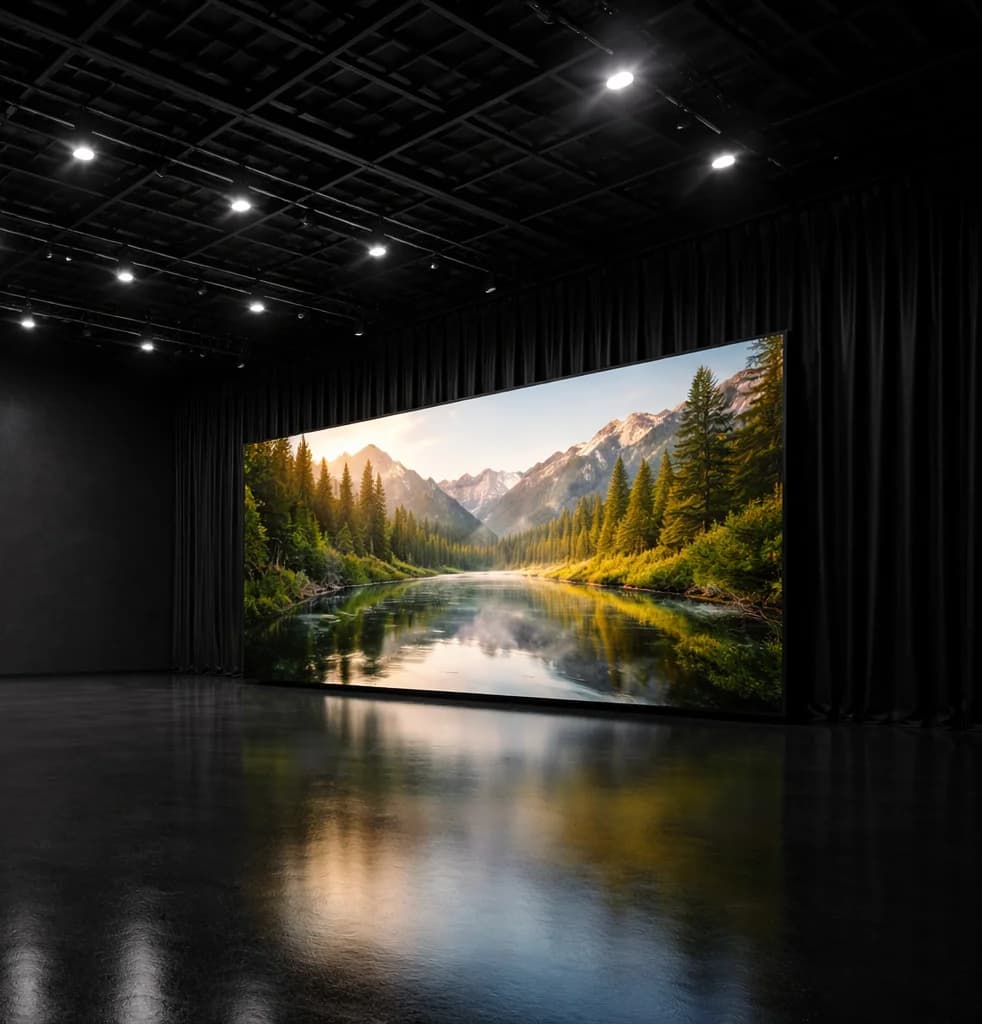
Mammoth Film Studios keeps that distinction visible in its site layout: Studio 1 is the infinity cove and blackout stage, while Studio 2 is the virtual production and blackout studio. That separation is useful because a white cove, blackout and virtual production each solve a different production problem.
A cove earns its size when it gives the shot room to work.
Common questions about choosing an infinity cove
Can a paper backdrop replace an infinity cove for a simple shot?
Paper backdrops can work for narrow, controlled frames with limited floor visibility and little movement. An infinity cove becomes the safer choice when the frame needs seamless floor contact, wider movement or separate lighting control.
Does blackout change the cove size requirement?
Blackout changes the lighting environment, but the cove still has to fit the subject, camera position and clear floor. Treat blackout as a separate production requirement alongside cove scale.
Is a green screen cyclorama the same decision as a white cove?
Green screen cycs and white coves serve different post and lighting requirements. Use the same spatial test first, then judge colour, spill and background workflow separately.
Does sync sound affect the studio choice?
Sync sound needs a separate assessment because a cove size spec says little about acoustic conditions or external noise control. If recorded dialogue or live performance audio is part of the shoot, the sound requirement belongs in the studio shortlist from the start.
Does a corner cyc work differently from a straight cove?
Corner cycs give wraparound coverage for angled frames and movement across two walls. Straight coves suit more frontal compositions, provided the width and depth still fit the shot.