What is the difference between a blackout studio and an infinity cove, and which one suits a shoot best?
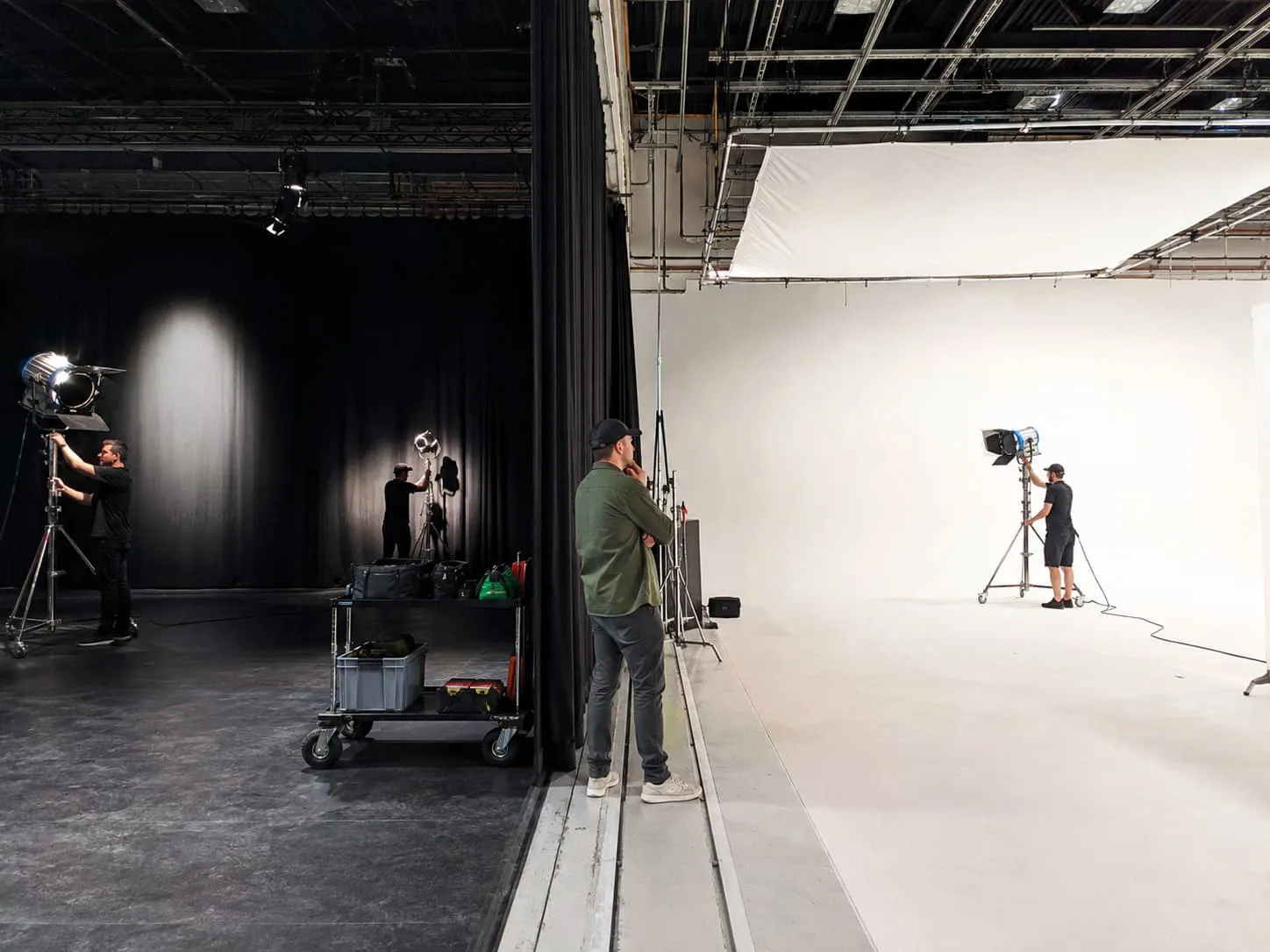
A blackout studio gives production teams full control over ambient light, reflections and screen-based environments. An infinity cove studio provides a smooth background, usually white, for clean visuals, large-format photography and shoots that need smooth horizon lines. The right choice depends on what the camera needs to see, how the lighting needs to behave and how the set will function across the day.
Table of Contents
Understanding Blackout Studios and Infinity Coves
A blackout stage and an infinity cove studio solve different production problems. One is built for isolation and control. The other is built for clean continuity within frame.
Here is the simplest way to separate the two:
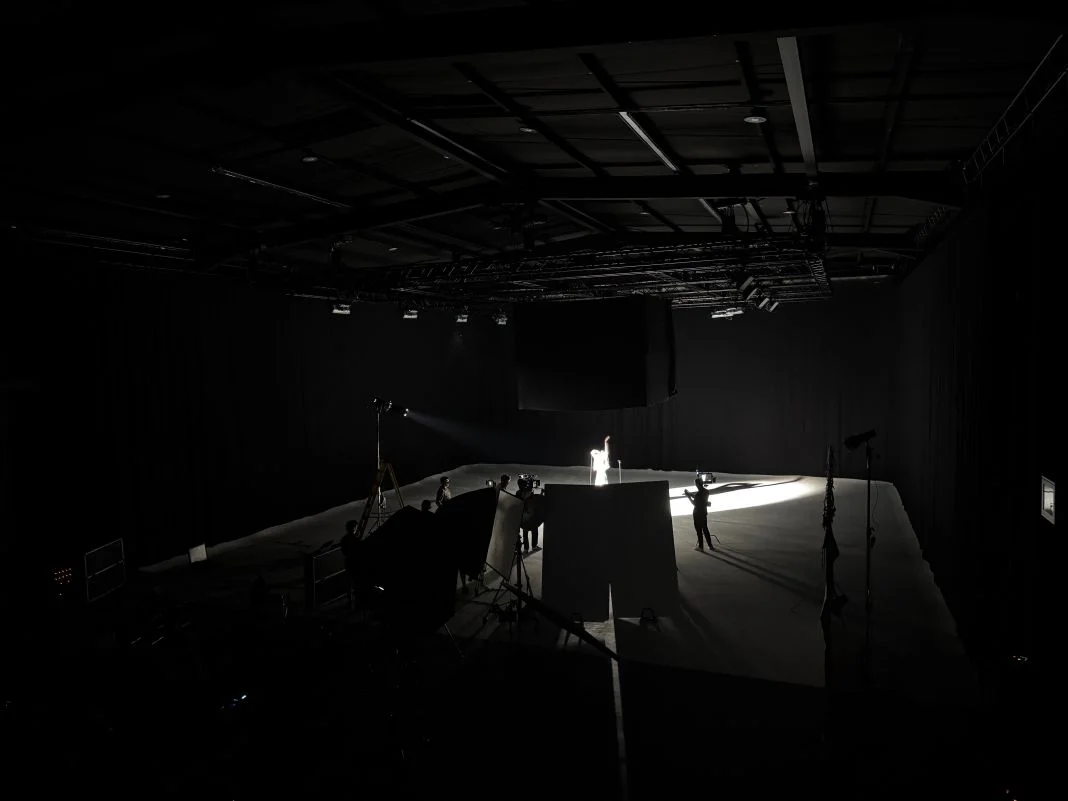
- A blackout studio is intended to block external light and create a total blackout environment for precise lighting setups, projection or LED-based workflows.
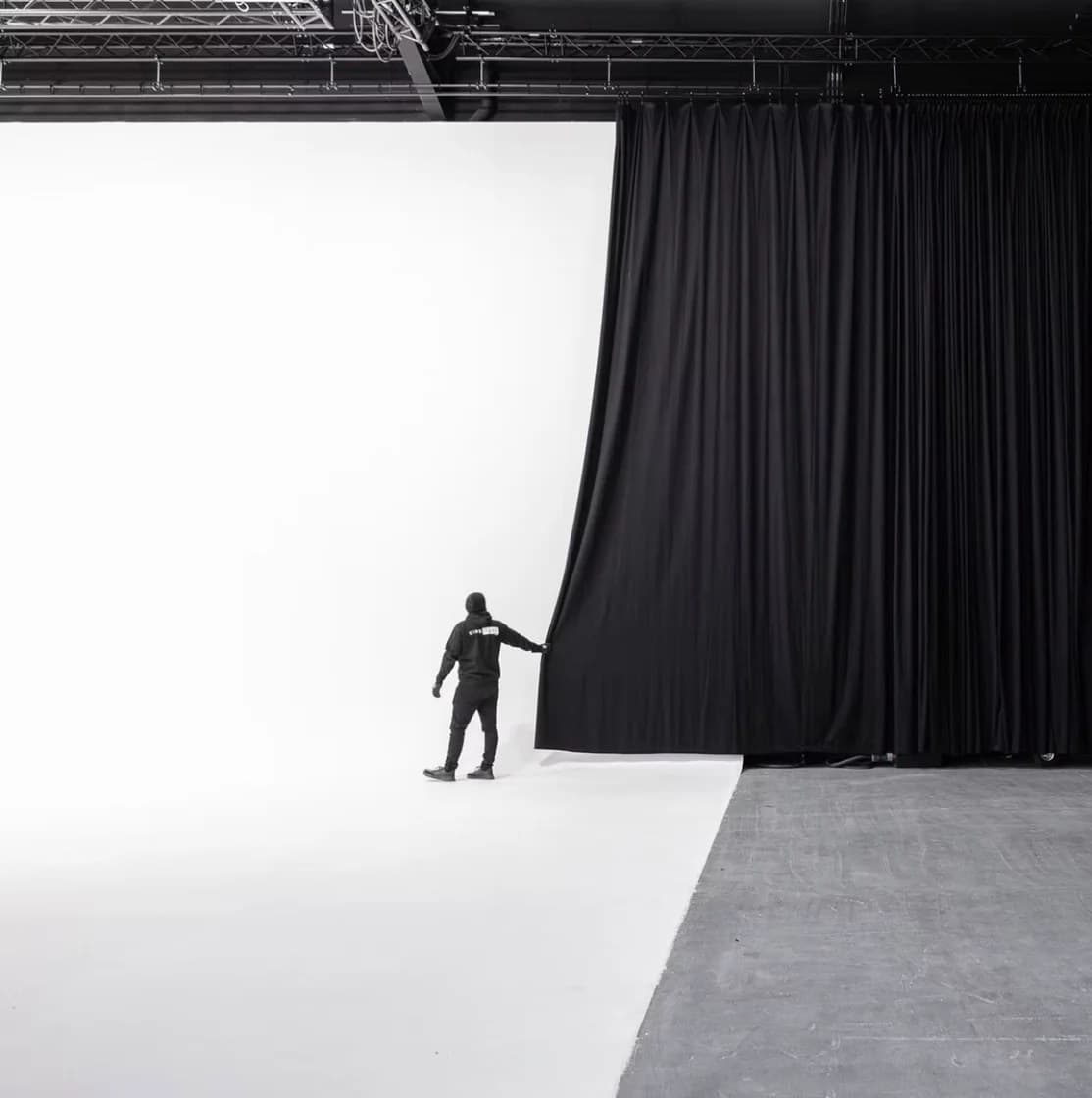
- An infinity cove studio uses a curved junction between wall and floor to remove visible edges and create a smooth background.
- A blackout space often suits dramatic lighting, reflections management and virtual production stage work.
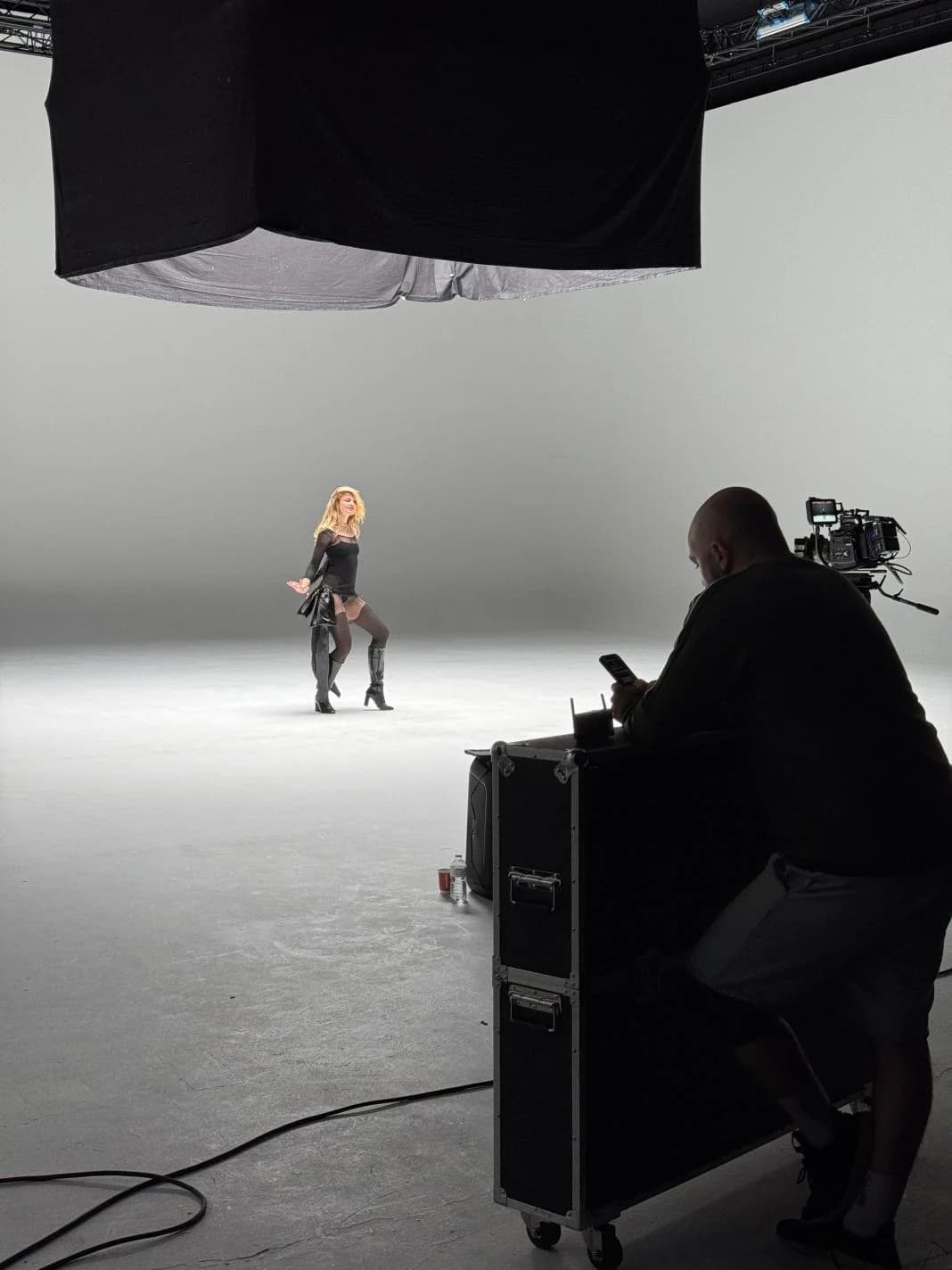
- A cove tends to suit white cove photography, product campaigns, fashion, automotive work and other shoots where a clean visual field matters.
Lighting control is the main dividing line. In a blackout studio, the crew can shape contrast without fighting daylight contamination or environmental inconsistency. In an infinity cove, the goal is often evenness, soft fall-off and a background that reads as continuous rather than architectural.
Misunderstandings usually begin when teams assume one setup can stand in for the other without compromise. A white cove can sometimes be darkened, but that does not make it a true blackout stage. A blackout studio can host set builds and stills work, yet it does not automatically provide the visual finish of a purpose-built smooth studio background.
At Mammoth Film Studios, that distinction is kept clear through separate spaces. Studio 1 is the large infinity cove and blackout-capable stage for traditional production demands, whereas Studio 2 is the dedicated blackout and virtual production space, which changes what each room can support in practice.
1. When to Choose a Blackout Studio
Some shoots rise or fall on lighting precision. In those cases, blackout is less a preference and more a requirement.
Typical use cases include:
- Beauty or fashion work with tightly controlled highlights and shadow detail
- Tabletop, glossy product or packshot shoots where spill and reflections need close management
- Music videos or branded films with stylised, high-contrast lighting
- LED volume shoots using a virtual production workflow
- Scenes that need repeatable conditions across long shooting hours
Studio 2 is a useful reference for this type of setup because it is built as a 360° blackout environment. That matters when the production wants full consistency across camera moves, screen content and interactive light. Once LED panels, playback systems and on-set technical crew enter the picture, the room itself becomes part of the workflow rather than a neutral container.
Reflection management is another reason to choose blackout. Darker surfaces and controlled spill can reduce unwanted bounce on cars, glass, polished packaging and glossy props. Productions chasing deep blacks or precise colour separation usually benefit from a controlled lighting studio where every source is intentional.
Even so, blackout is not automatically the best answer for every brief. If the desired result is a bright, clean, smooth white field with minimal retouching, a dedicated infinity cove often gets there faster than trying to build that look from scratch in a dark stage.
2. When to Choose an Infinity Cove
An infinity cove earns its place when the frame needs a smooth, edge-free background and enough space to light it properly. That is especially true for advertising photography, e-commerce campaigns and large set-piece commercial shoots.
Common scenarios include:
- Product and fashion campaigns that need a smooth white background
- Vehicle shoots requiring drive-in access and a wide visual sweep
- Large prop or set-led stills sessions where the cove extends the scene
- Commercial film work that needs a clean studio horizon without visible corners
Studio 1 offers a strong example of this format. Its 60 x 60 ft white infinity cove gives crews enough depth and width for large-format studio work, and the 24 ft grid height supports broader lighting layouts. Motorised truss systems also make rigging changes easier on productions with shifting camera and lighting plans.
Scale matters here. A cove that looks generous on paper can feel tight once a vehicle, a jib, a client monitor station and a working crew are all in the room. Drive-in access therefore shapes more than convenience. It can determine whether the transition from load-in to first shot is straightforward or slow.
A white cove also supports set extension in a very practical way. Scenic additions, floor treatments and controlled background lighting can change the visual character of the stage without losing the underlying seamlessness that many campaigns rely on.
3. Technical and Operational Considerations
Creative preference rarely settles the decision on its own. Studio technical specs, access and workflow support often decide whether the day runs smoothly.
A quick comparison helps:
Power and rigging are often the first practical filters. A large commercial shoot with heavy lighting, multiple departments and substantial overhead rigging may point naturally toward Studio 1. A virtual production day with LED content, supervision and repeatable scene control may fit Studio 2 more closely.
Crew movement also matters. Step-free access, production office space, HMU capacity, parking and unit vehicle flow shape the day in ways that clients may not see on screen but production managers feel immediately. Once those basics are working well, departments spend less time negotiating the building and more time making the shoot happen.
Modern production workflow studio planning also depends on connectivity. Dedicated streaming networks, internal LAN and hard-wired internet capacity affect live review, remote stakeholders and on-set data handling. In practical terms, those systems are part of the stage infrastructure, not an optional extra bolted on later.
4. Common Misconceptions and Decision Pitfalls
Many studio selection mistakes begin with a shorthand assumption. A team hears "blackout" and imagines complete flexibility, or hears "white cove" and assumes the room can be transformed for any lighting approach.
Common myths include:
- Every large white cove can function like a true blackout studio
- Every blackout stage can deliver the same smooth finish as a purpose-built cove
- Virtual production needs only an LED screen and enough floor space
- Technical compatibility can be solved on the day with minor adjustments
- Access, rigging and support rooms are secondary to the stage itself
One of the most frequent issues is overestimating convertibility. Blacking out a space and operating inside a blackout-designed space are different things. The same applies in reverse. A dark stage may support a white set build, yet that is not identical to working on a cove engineered for clean horizon lines and broad background lighting.
Another pitfall sits in workflow misalignment. A project may look simple in a treatment deck but become technically dense once playback, rigging loads, HMU, vehicle movement and client attendance are mapped out. Producers who match the studio to the actual shooting plan, rather than to the moodboard alone, usually avoid the awkward mid-prep realisations that cost time.
Industry studio standards matter here because names can blur across the market. One site may use broad labels for rooms with very different specifications, which means that reading the stage description closely is part of the production job.
5. Matching Studio Setup to Production Type
The most reliable way to choose between studio environment types is to map the shoot against its non-negotiables. Visual style matters, but so do scale, crew logistics and technical supervision.
Here is a practical guide:
If the production needs a clean white field for most of the day, Studio 1 is likely to make the process simpler. If the production depends on 360° blackout, LED integration or highly managed interactive light, Studio 2 is usually the clearer choice.
Hybrid workflows are becoming more common, so the right answer is sometimes about sequence rather than category. A campaign may need stills, motion and screen-based work in the same schedule, yet each setup imposes different constraints on lighting, crew positioning and art direction. In those cases, the best studio for shoot type is the one that reduces compromise in the most demanding part of the brief.
Looking Ahead: Changing Studio Needs in Modern Production
Studio selection is becoming less about labels and more about operational fit. Productions move across stills, motion, live review and virtual elements with far less separation than they once did.
That shift has increased the value of spaces built with clear roles. Large-format cove stages remain highly relevant for commercial image-making, especially where scale, cleanliness and vehicle access are part of the brief. Blackout environments have grown in importance as lighting control, screen integration and repeatable conditions become standard requirements on more shoots.
Mammoth Film Studios reflects that broader direction by separating a large traditional cove stage from a specialist blackout and virtual production stage delivered with Elsewhere Productions. That kind of infrastructure-led split is useful because it recognises a simple truth: modern studio design works best when each room is honest about what it is built to do.
For producers and creative teams, the strongest decisions still come back to the same point. Choose the setup that fits the image, the workflow and the real demands of the day, because the room itself can either simplify production or quietly fight it from call time onwards.