What should you look for in a London fashion photography studio?
Choose a studio that can carry the production day, not one that simply looks good online. For fashion editorial and campaign work, the key checks are controlled lighting, usable floor area, hair and make-up flow, styling space, client approvals, access, parking and the technical set-up behind the shoot.
Table of Contents
Fashion studio hire starts with production pressure

The real question behind fashion photography studio hire in London is simple: which space will let the day run without unnecessary friction? A fashion shoot studio has to handle people, kit, garments and decisions at the same time, usually under a call sheet that has little room for drift.
Appearance matters only when it serves the brief. Daylight, props and set character can all be useful, but they do not fix a slow load-in, a cramped styling area or a client approval point that blocks the main working route. Good London fashion studio hire starts with the movement of the production, then looks at the image.
For an editorial photoshoot studio in London, flexibility may matter most. For a campaign shoot studio hire, control and repeatability may matter more. Hair and make-up, often shortened to HMU, styling rails, garment handling, client seating and lighting continuity all have to coexist without turning the studio floor into a holding area.
A studio that works for a tight e-commerce day will not automatically suit an agency-attended campaign with larger sets and motion work. Suitability is operational before it is visual, and the right shortlist starts there.
Shoot type changes the studio brief
“Fashion shoot” is too broad to be useful as a studio brief. Editorial, lookbook, campaign and stills-plus-motion work all place different pressure on space, crew areas and technical support.
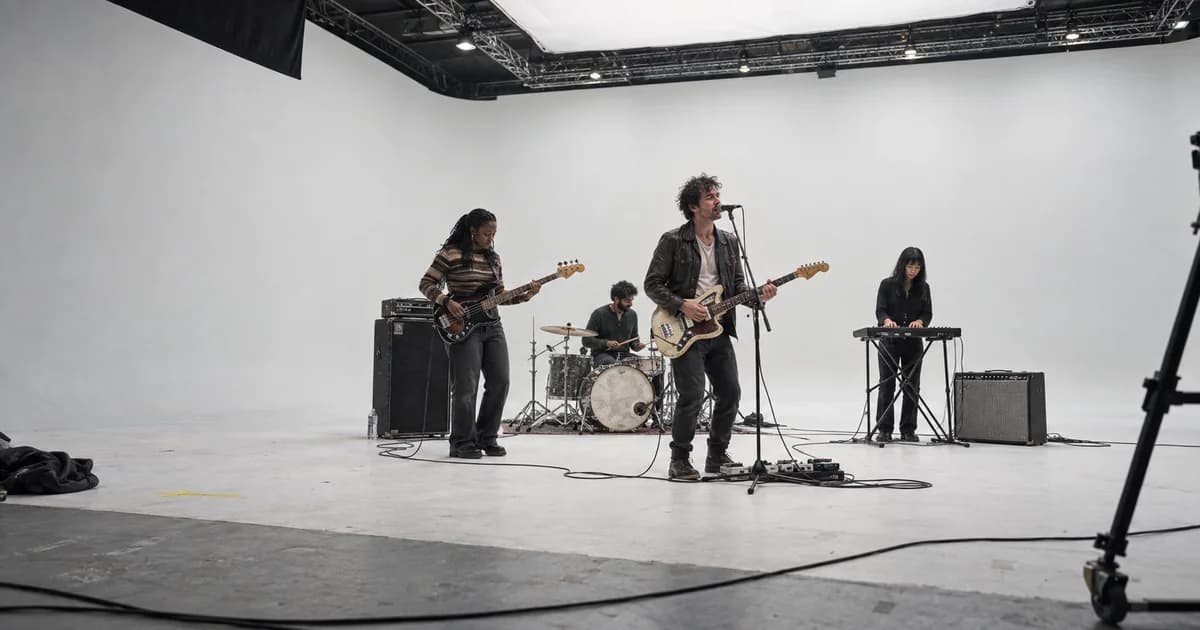
A studio shortlist should follow the deliverables, not the other way round. If the day includes stills, motion, agency review and multiple wardrobe changes, the studio needs to support that shape from the start. Treating motion as an add-on is where neat call sheets begin to fray.
Daylight, cove and blackout solve different problems

Which is better: daylight, an infinity cove or blackout? The answer sits inside the brief. Daylight gives a certain working method, an infinity cove gives scale and clean continuity, and blackout gives control when repeatable lighting matters.
Daylight suits selected briefs, with limits
Daylight can suit certain fashion editorials and looser content days where the look depends on available light. The trade-off is control. If the brief needs consistency across long shot lists, garment sets or approvals over several hours, changing light becomes a scheduling issue.
That does not make daylight wrong. It makes it specific. A production manager should judge it against the level of repeatability the job needs, especially where a fashion brand expects a tight visual match across campaign assets.
An infinity cove gives clean scale
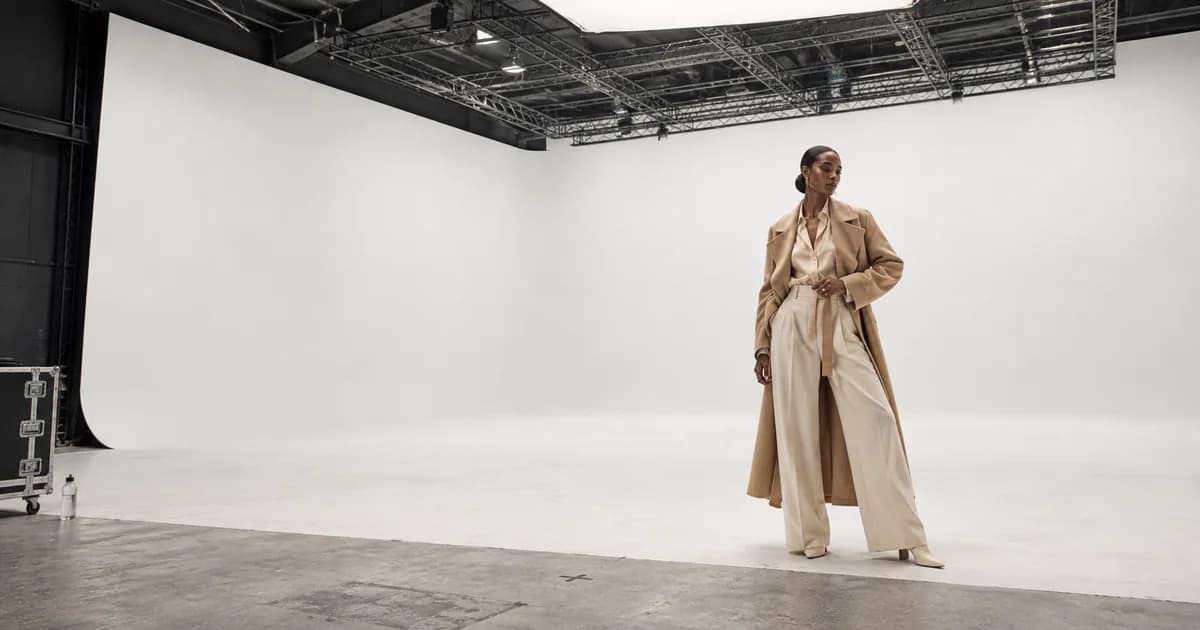
An infinity cove is useful for full-length styling, group work, product-led fashion, campaign stills and larger set pieces because the background reads cleanly without a hard corner line. For photography studio hire in London with infinity cove capability, the key issue is not just the cove itself. The surrounding working space matters because lighting, styling, crew and approvals still need room.
Mammoth Film Studios shows that split clearly: Studio 1 is an 8,000 sq ft infinity cove and blackout stage with a 60 x 60 ft cove, motorised grid, 200A 3-phase electrical supply, drive-in access and 20 parking spaces. Those details matter because they describe how a stage supports scale, not just what appears behind the model.
Blackout protects repeatable lighting and motion work
Blackout is the stronger choice when lighting has to stay consistent, reflections need control or motion work sits alongside stills. Full control over the light environment allows the crew to build the look, hold it and return to it after set resets or client notes.
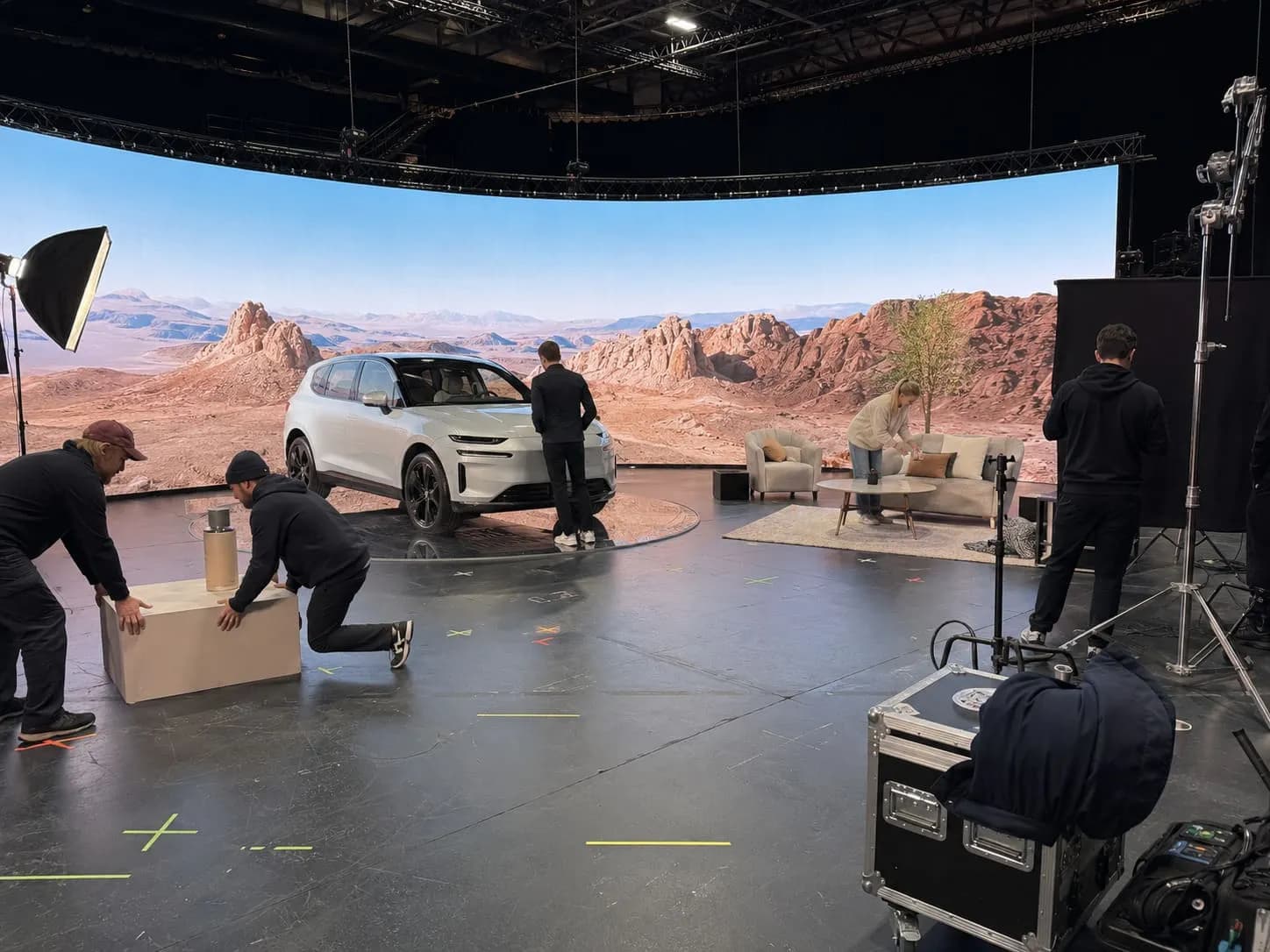
Studio 2 at the same site is a 5,000 sq ft virtual production and blackout stage with a light emitting diode volume, 360 degree blackout, 63A 3-phase electrical supply, drive-in access and 10 parking spaces. Virtual production belongs in the brief when controlled backgrounds, quick background changes or interactive light solve a real production problem. It is another practical route, and it is not a blanket substitute for location work.
London logistics belong in the studio decision
A fashion campaign can arrive with wardrobe rails, lighting, grip, props, agency producers, brand-side marketing leads and courier drops before the first frame is made. If access fails, the stage specification becomes less useful very quickly.
For studio hire London with parking or drive-in access, producers should check the route of people and kit through the building as closely as the floor area. London Zone 2 can work well for city-based crews and suppliers, especially where a London SE8 location sits near Overground and Jubilee line links, but the useful question is operational: how reliably can everyone get in, set up and keep moving?
Key checks include:
- Drive-in access for the right vehicles. Large wardrobe drops, set pieces and lighting packages need a load-in plan that matches the day.
- Parking allocation for crew, client stakeholders, couriers and unit vehicles should be agreed before the call sheet is locked.
- Public transport links. These matter for agency attendance, client approvals and crew members who are not travelling with kit.
- London driving charges need checking during production planning. Transport for London lists the Congestion Charge at £18 when paid in advance or on the same day, and £21 if paid by midnight on the third day after travel.
- Courier movement should be treated as part of the schedule when garments, samples or product pieces are moving in and out during the day.
Access is part of studio capability. A space that looks suitable but creates avoidable load-in pressure is already working against the production.
Technical readiness is more than a facilities list
“Fully equipped” is one of the least useful phrases in studio hire. Producers need to know what the lighting plan needs, how the electrical load will be handled, who supervises rigging, where monitoring happens and whether the production office can do real work during the shoot.
Electrical supply matters because fashion shoots rarely use the stage in isolation. Lighting, playback, monitors, HMU tools, production desks and file movement all draw on the wider set-up. A studio does not need to publish every technical answer upfront, but it does need a clear way of matching the brief to the available infrastructure.
Rigging needs the same plain treatment. Truss, hoists, suspended lighting and set pieces are normal production tools, but normal does not mean casual. Health and Safety Executive guidance under LOLER, the Lifting Operations and Lifting Equipment Regulations 1998, says lifting operations involving lifting equipment must be properly planned by a competent person, supervised and carried out safely.
Connectivity also deserves more attention than it gets. Agency review, remote approvals, streaming, production office work and file movement all depend on the studio network holding up under real use. Hard-wired internet, internal local area network links and serial digital interface video routing are not glamorous details, but they are the kind of details that keep approvals away from the studio floor.
Clear in-house structures help here. If rigging, lighting support and technical supervision sit inside a defined operating model, the production has fewer grey areas to solve on the day.
Long-term value comes from fit and control
The strongest studio choice is the one that protects the shoot day from avoidable friction. Broad facility claims do less work than a precise match between the brief, the stage, the access plan and the technical set-up.
Mammoth Film Studios is a useful example of infrastructure-led London studio provision because its stages are separated by production use: Studio 1 for large-format cove and blackout work, Studio 2 for blackout and virtual production workflows. That kind of distinction helps a producer choose a space for the actual production in front of them, rather than trying to make one room answer every brief.
For fashion photography studio hire in London, the priority is fit. When the studio supports the shoot’s scale, light control, crew flow and approval route, creative decisions stay on the work instead of being pulled into logistics.
Common questions about fashion studio hire in London
Can you shoot stills and video in the same studio?
Yes, if the studio has enough space, lighting control and technical support for both workflows. Stills and motion should be planned together from the start, because treating video as a late addition puts pressure on lighting, monitoring and schedule.
Is blackout better than daylight for a fashion campaign?
Blackout is better when the campaign needs repeatable lighting, controlled reflections or motion work alongside stills. Daylight can suit some editorial briefs, but it gives the crew less control over consistency during a long shoot day.
What should a brand-side team check before approving a studio?
Brand-side teams should check whether the studio supports the full approval route, including client seating, monitoring, production desk space and clear movement between set, styling and HMU. The studio also needs to match the deliverables, not just the visual reference.
Does drive-in access matter for a fashion shoot?
Drive-in access matters when the shoot involves heavy kit, garment rails, set pieces, props or multiple courier drops. A difficult load-in can take time out of the shoot before the lighting plan has even started.
Should virtual production be considered for fashion work?
Virtual production is worth considering when the brief needs controlled backgrounds, quick scene changes or interactive light. It is a production tool for specific problems, and it works best when the technical method is built into the shoot plan early.
This is general information, not professional advice.