What does blackout studio hire in London actually give your shoot?
Blackout studio hire gives your shoot repeatable light control by blocking outside light from interfering with the lighting plan. It is most useful when exposure, reflections, contrast and continuity have to stay consistent across prelight, camera tests, client review and long shoot days in a working London stage.
Table of Contents
Start With What Blackout Actually Controls
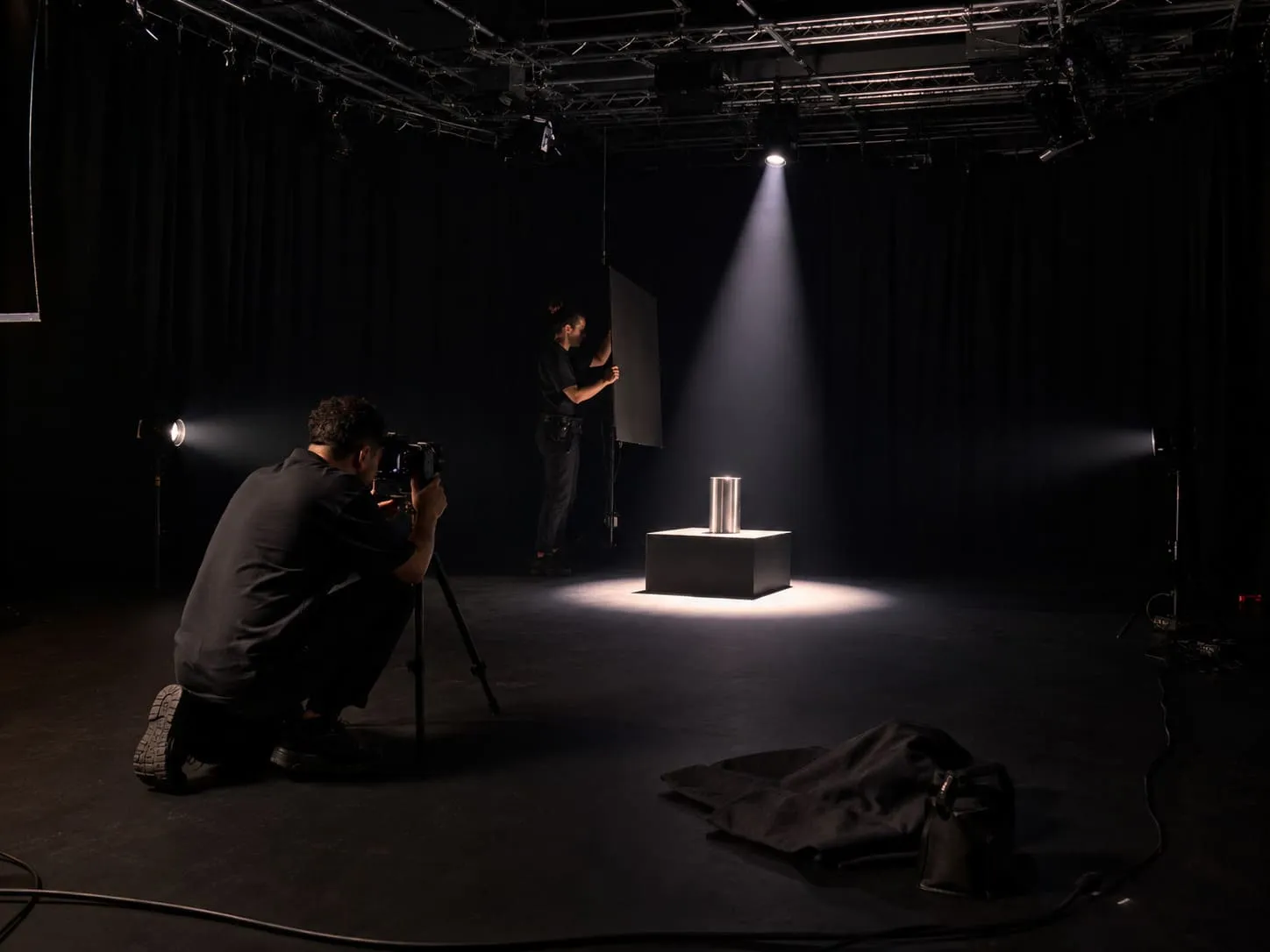
Blackout controls interference. The point is not simply that the room can be dark; the point is that ambient light stops shifting your exposure, changing contrast or appearing in reflective surfaces when the lighting plan needs to hold.
That distinction matters on commercial shoots, product photography, fashion photography and film stage work where continuity has a cost. A high-key set can need blackout just as much as a low-key setup if the DP or photographer needs the same controlled lighting at the start and end of the day.
Blackout also has limits. A blackout studio is not automatically a soundproof stage, and a black box studio does not automatically permit haze, smoke or every temporary rig. The phrase total light control studio is useful only when the room, drapes, surfaces and support systems match the job.
For a production team shortlisting a controlled lighting studio in London, the first filter is simple: the stage has to match the work, not just offer darkness.
Match the Stage Type to the Shoot
The right blackout studio depends on the shooting method. A conventional blackout and cove environment suits many large-format film and stills jobs, while LED-based blackout serves a different production plan with playback, interactive light and technical supervision built into the day.
A white infinity cove and blackout are not mutually exclusive where the studio has been built for both. For clean product work, car-adjacent commercial sets, fashion, packshot extensions or traditional film production, scale and load-in matter as much as drape coverage. You need room for the set, lighting positions, camera movement, client review and the inevitable kit that arrives after the first plan has already been agreed.
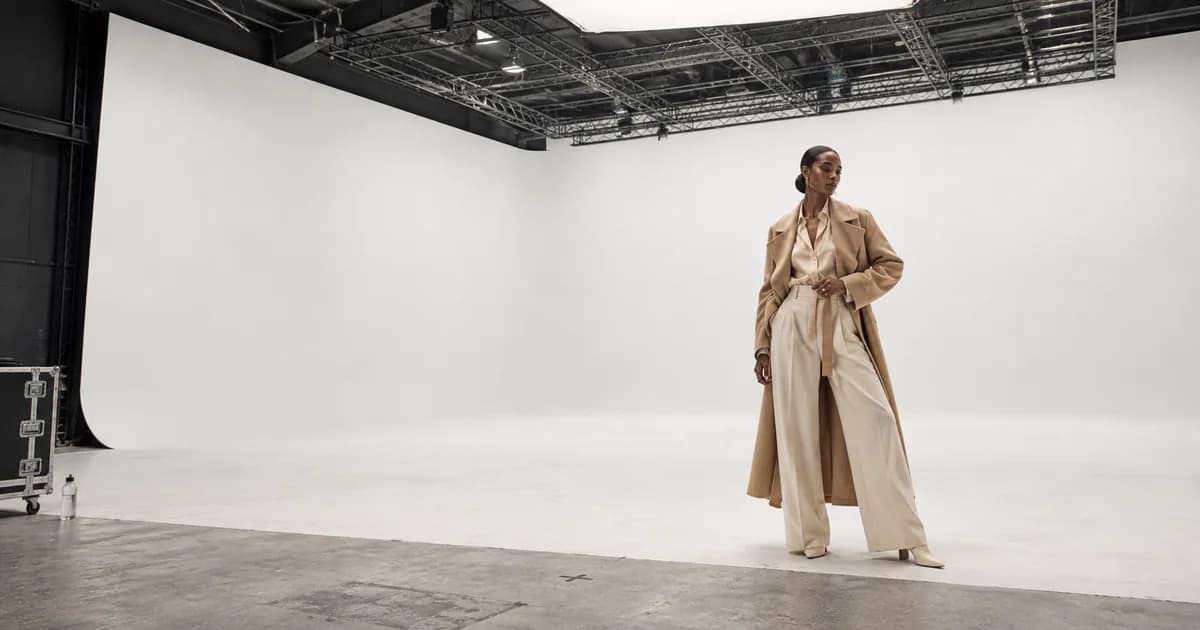
Mammoth Film Studios is a useful London example because it separates those roles clearly. Studio 1 is an 8,000 sq ft infinity cove and blackout stage with a 60 x 60 ft cove, 24 ft grid height, 200A 3-phase electrical supply, drive-in vehicle access and 20 on-site parking spaces. That is a large-format cove and blackout environment for conventional film, photography and commercial production.
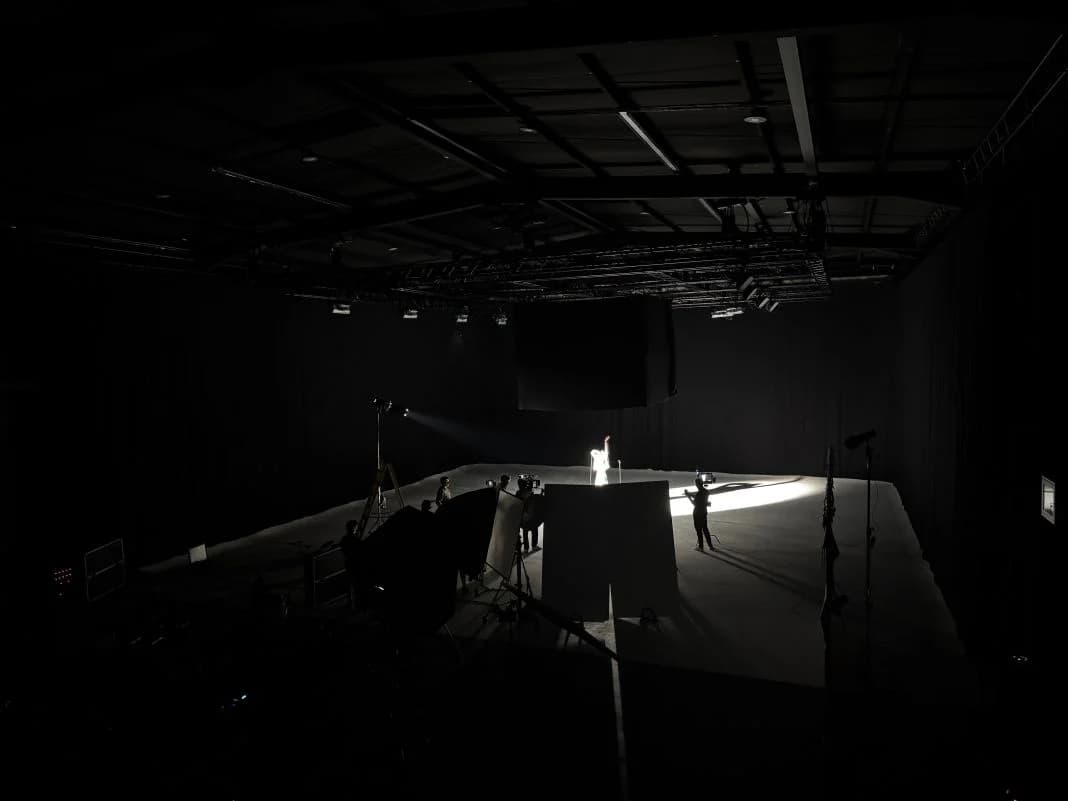
Studio 2 has a different role. It is a 5,000 sq ft blackout and virtual production stage with 360 degree blackout capability and an LED volume. Virtual production in Studio 2 is delivered with Elsewhere Productions, including content, playback systems and on-set supervision. That setup can be useful where interactive light, reflections or quick environment changes are part of the method.
None of this makes one stage type the default choice. The decision starts with how the images will be made, then moves to scale, rigging, electrical load, crew flow and production support.
Test the Room Before You Pencil Dates
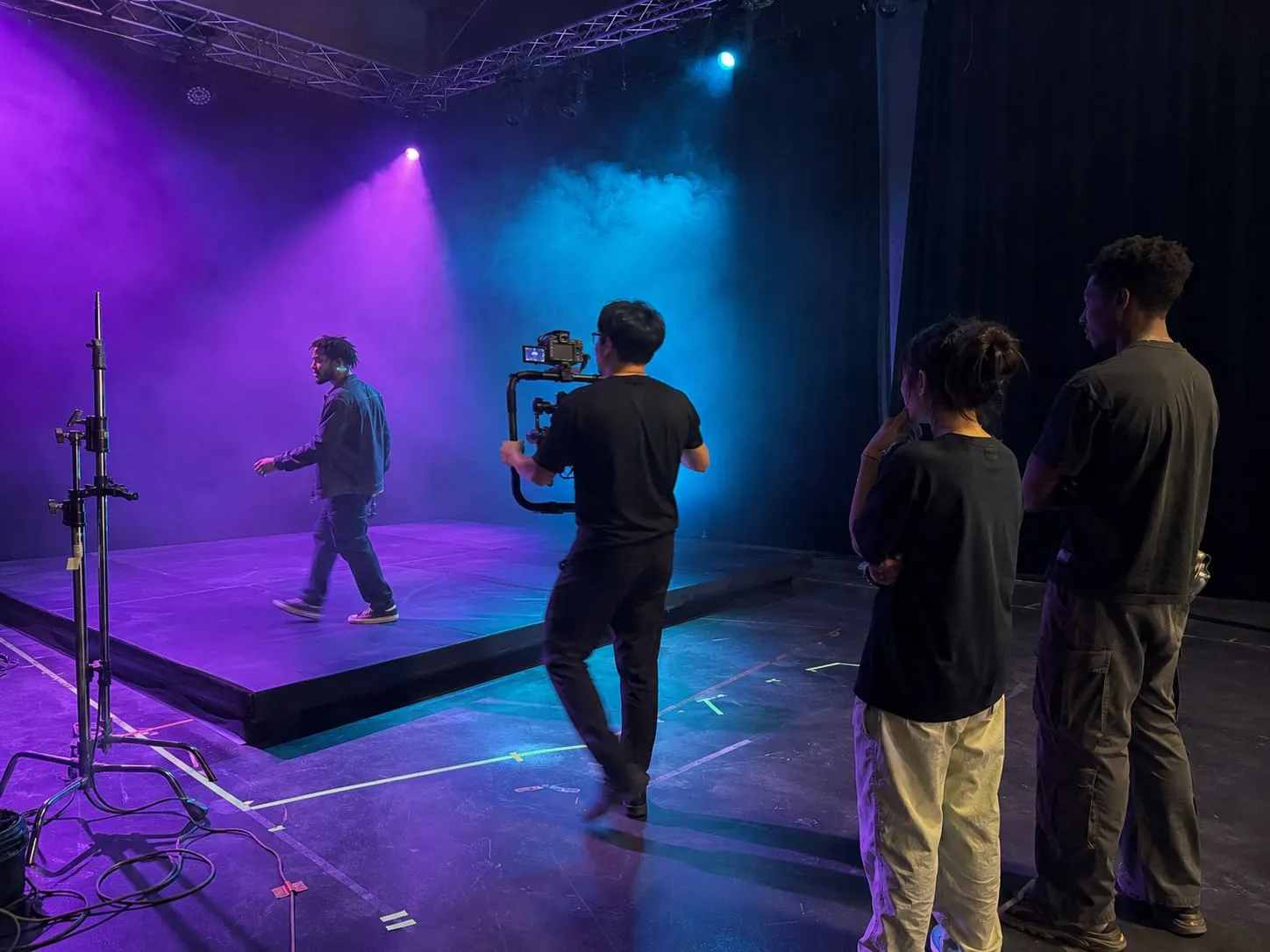
A blackout claim needs testing in the room. One reflective floor edge, one drape join with spill, or one awkward cable route can cost more time during prelight than a longer recce would have taken.
A strong technical recce brings the DP, gaffer, grip department and studio manager into the same practical conversation before the booking becomes locked. The point is to verify the working conditions, not admire the brochure line.
Use the recce to inspect the parts that affect the shooting plan:
- Light leaks. Look at door edges, roof spill, drape joins and any areas where daylight or spill from service spaces can reach the set.
- Drape coverage and surfaces. Confirm what is blacked out, what remains reflective and whether the floor or cove will affect contrast control.
- Grid, truss and access need to be read against the intended rig, with safe working and competent handling treated as part of the plan.
- Electrical load. Confirm the available supply, cable runs and practical routes before the lighting order hardens.
- Load-in. Vehicle access, lift routes and unit movement decide whether larger props, camera packages or scenic pieces move cleanly.
- Crew flow should cover where people wait, where kit lands, and how client review avoids blocking the floor.
- Haze or smoke needs production-specific approval, because blackout does not create automatic permission for atmospheric effects.
The best blackout studio technical recce feels practical and slightly unforgiving. It asks what will interrupt the lighting plan, then removes as much of that uncertainty as possible before the first unit arrives.
Plan London Logistics Around Access
Crew, kit, suppliers and clients all move through the day before the camera turns over. In London, the value of a studio location is practical: access affects call times, load-in, parking, agency attendance and how much of the day is spent solving avoidable movement problems.
London Zone 2 can work well for production teams because it can keep city-based crews, agencies and suppliers within realistic reach without reducing the studio to a small urban room. Proximity to Overground and Jubilee line routes helps attendance, while drive-in access changes the conversation for vehicles, heavy kit and larger scenic elements.
Mammoth Film Studios frames its Zone 2 location in those operational terms. Both studios have drive-in access, with parking and production support spaces that suit commercial and agency-led shoots where crew, client and unit movement need a workable base rather than a corridor full of flight cases.
Pricing also belongs in the logistics conversation, although not as a published guess. Rates vary by studio, duration and technical requirements, so a serious comparison should account for prelight time, access needs, specialist crew and the practical support required to run the day properly.
Access is the point where blackout studio hire in London stops being a room choice and becomes a schedule choice.
Separate Blackout From Soundproofing and Virtual Production
The common booking mistake is treating blackout as a single all-purpose label. Blackout controls light; sound, rigging, drapes, lifting and temporary electrical systems each need their own managed approach.
A conventional blackout film stage and an LED blackout studio can both be valid, but they answer different production questions.
Sound needs the same straight thinking. Sound treatment and soundproofing are different things, and blackout alone does not guarantee acoustic isolation. If clean sync sound is central to the shoot, confirm that requirement directly instead of assuming it follows from a blackout description.
Safety and technical control also sit behind the word blackout. BSI lists BS 5867-2:2008 for flammability requirements covering fabrics and fabric assemblies used in non-domestic curtains, drapes and window blinds, which is relevant when blackout drapes are part of the stage. BSI also lists BS 7909:2023 for temporary electrical systems in entertainment and related production environments. For lifting equipment, the HSE guidance on the Lifting Operations and Lifting Equipment Regulations 1998, known as LOLER, places duties on those who own, operate or control lifting equipment used at work.
Those points do not need to turn your shortlist into a compliance exercise. They do mean that truss, chain hoists, drapes and electrical supply are working systems, and a credible studio treats them that way.
The misconception worth dropping is this: a blackout studio is not automatically soundproof, technically unlimited or equivalent to an LED volume. Blackout is the starting condition; the right stage is the one whose room, systems and workflow fit the shoot.
Common questions about blackout studio hire in London
How much does blackout studio hire cost in London?
Costs vary by studio, duration and technical requirements. A proper comparison should include prelight access, load-in needs, support spaces and any specialist workflow, rather than looking at room hire in isolation.
Can you bring your own lighting equipment to a blackout studio?
Many professional productions bring their own lighting or specify a package through the studio’s lighting route. The practical issue is compatibility with the studio’s electrical supply, rigging plan and floor layout.
Can you use haze or smoke in a blackout studio?
Haze or smoke should never be assumed from the word blackout. Approval depends on the studio, the production plan and the controls needed for that specific shoot.
Can you drive a vehicle into a blackout studio?
Some London blackout studios offer drive-in access, and that can be decisive for vehicle shoots, large props and heavy kit. Confirm the access route, turning space and floor plan before basing a storyboard or load-in schedule on it.
Is an infinity cove blackout studio suitable for stills as well as film?
A cove that can be blacked out can suit both stills and film work where controlled light and repeatable conditions matter. The deciding factors are scale, height, surface behaviour and how the studio supports the crew around the set.
This is general information, not professional advice.