What’s the difference between an infinity cove and a blackout studio?
An infinity cove gives you a seamless white background; a blackout studio gives you control over unwanted light, spill and reflections. One controls the background, the other controls the light. Your choice should follow the subject, frame size, surface reflectivity, movement and technical workflow.
Table of Contents
The infinity cove creates a seamless frame
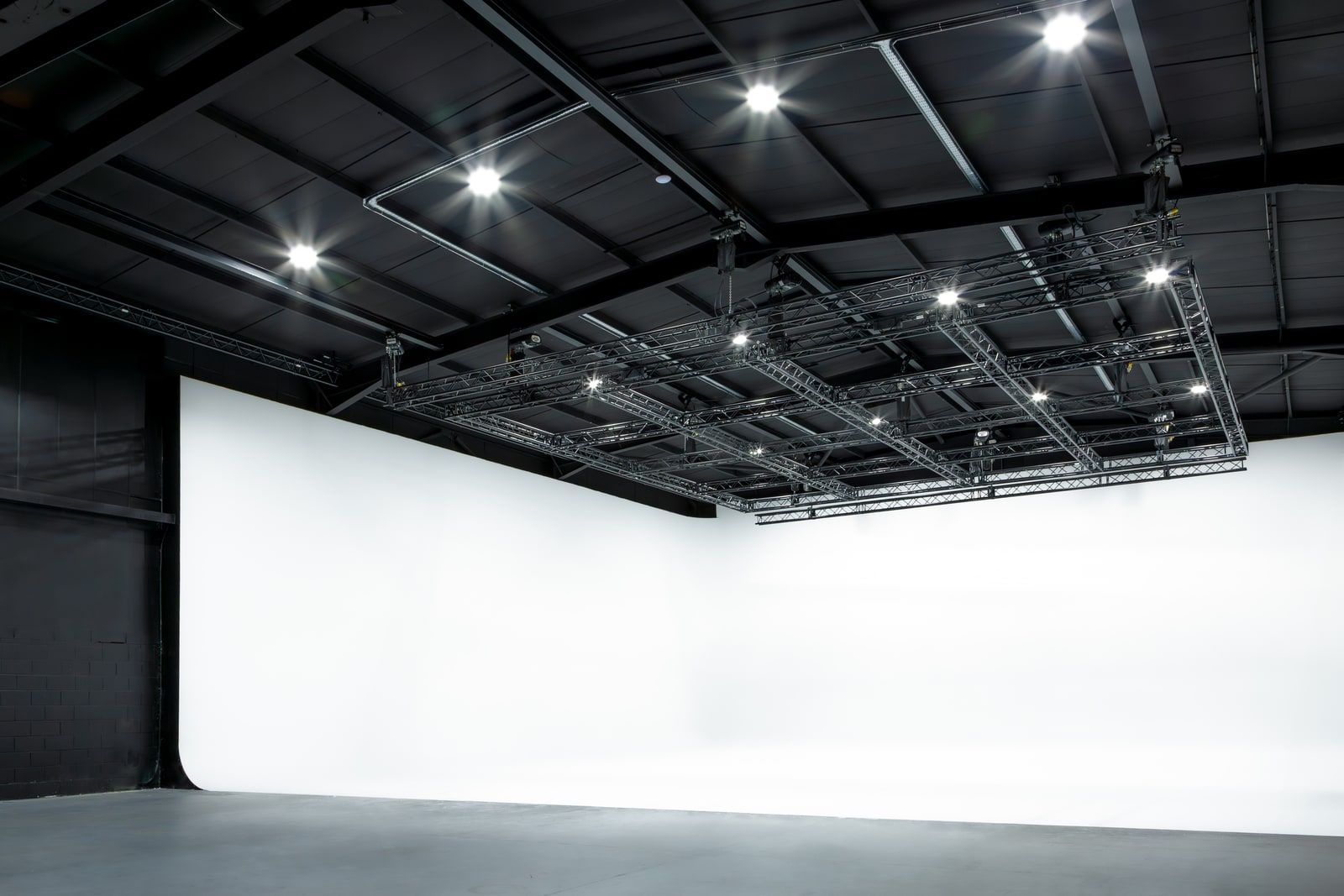
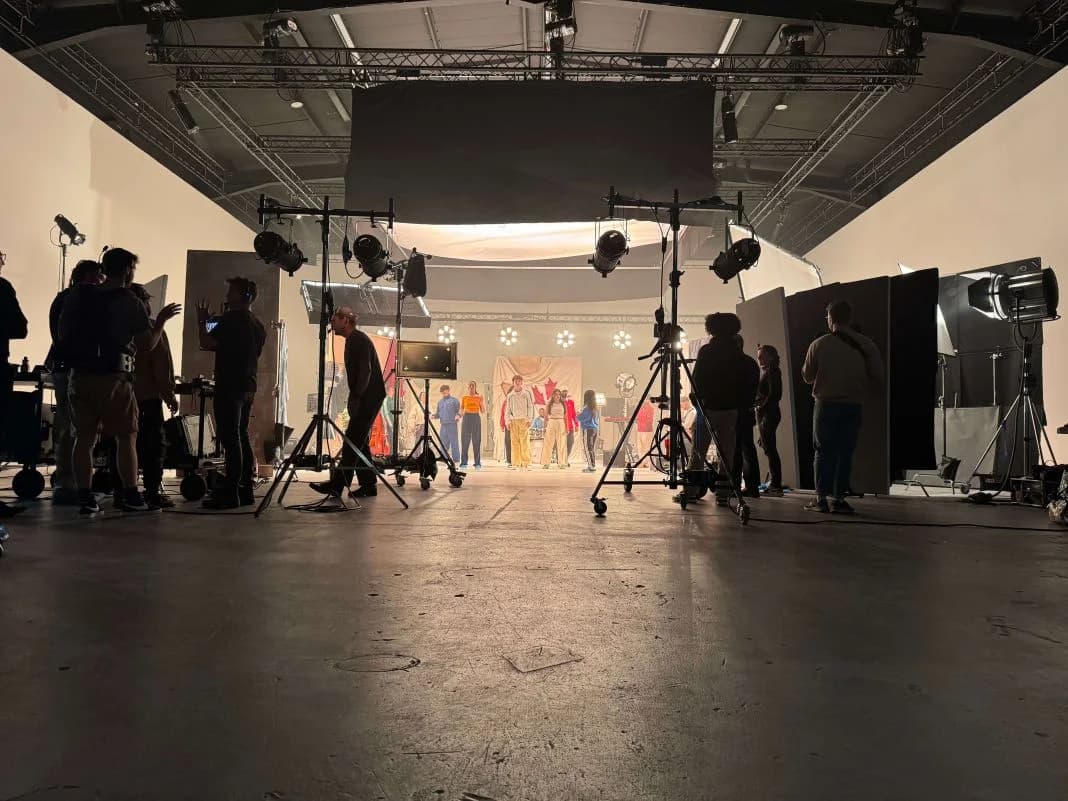
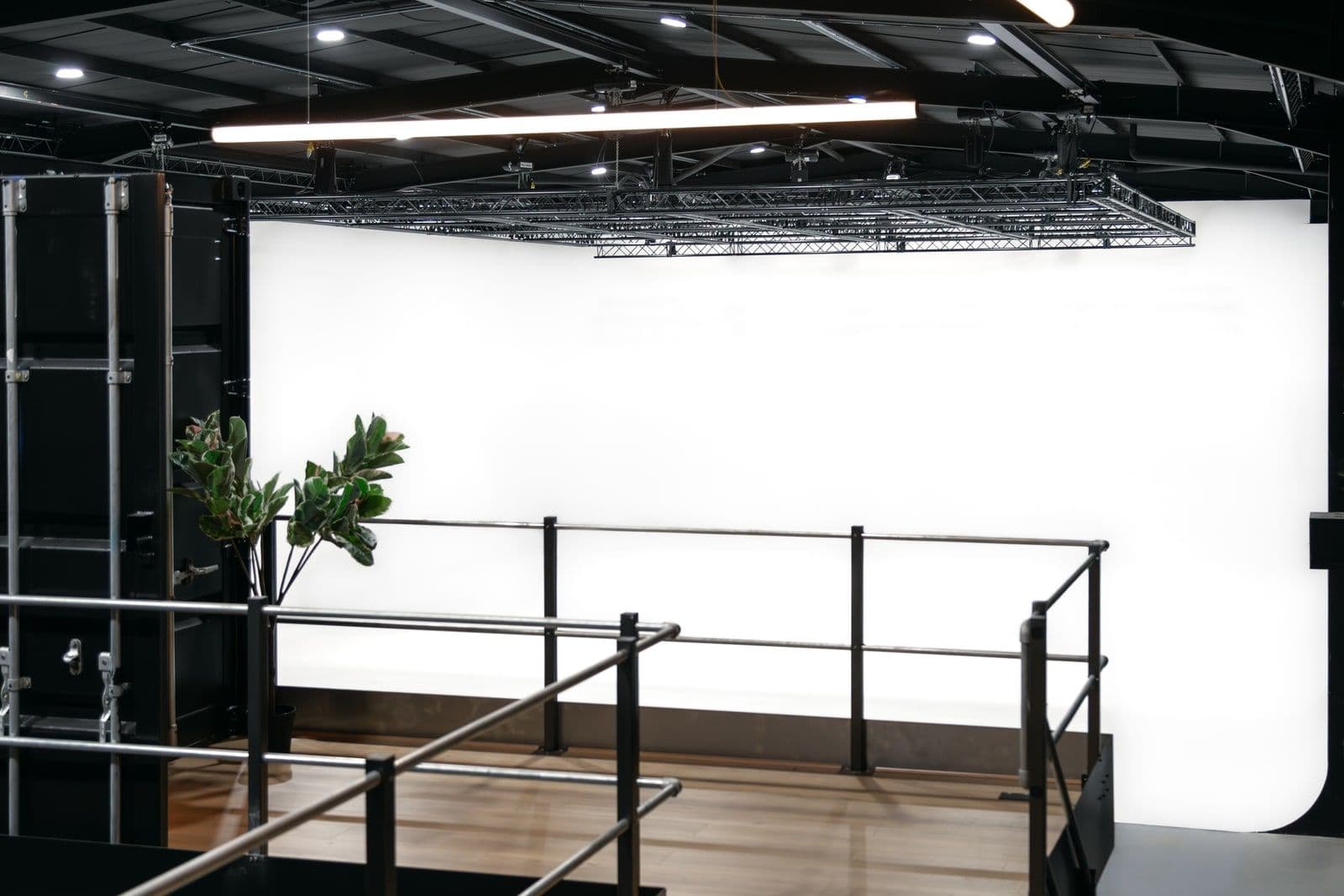
A brief that needs a clean studio environment can look simple on paper, yet the room will change the lighting plan before the first stand is set. In an infinity cove, the wall and floor meet through a curved transition, so the camera does not see a hard corner line. Pro Cyc describes this curved transition as the cove, which is why a cyc, cyclorama and cove are often discussed together.
White cove work suits briefs where the frame needs width, movement and a continuous background. Large-format photography, commercial setups, product work and clean brand films all use that continuity differently, but the shared requirement is the same: the set boundary should not draw attention to itself.
Cyclorama language is secondary to production fit
Terminology does not book the right stage. A cove may be described as a cyc or cyclorama, but the useful question is whether the room supports the subject, lensing and distance from background. A wide move with talent, product and camera shift needs a different cove than a locked-off pack shot.
White surfaces also return light. That can support high-key work, but it reduces your ability to pull shape out of the frame if the director of photography wants harder contrast or negative fill. A white infinity cove gives you space and continuity, with the trade-off that the room itself becomes part of the lighting plan.
Mammoth Film Studios Studio 1 is a useful London Zone 2 reference point for this distinction: it is listed as an Infinity Cove / Blackout stage, with an 8,000 square foot / 743 square metre stage and a 60 foot x 60 foot white cove. That is a large-format cove environment with blackout capability, not a virtual production stage.
The blackout studio controls light first
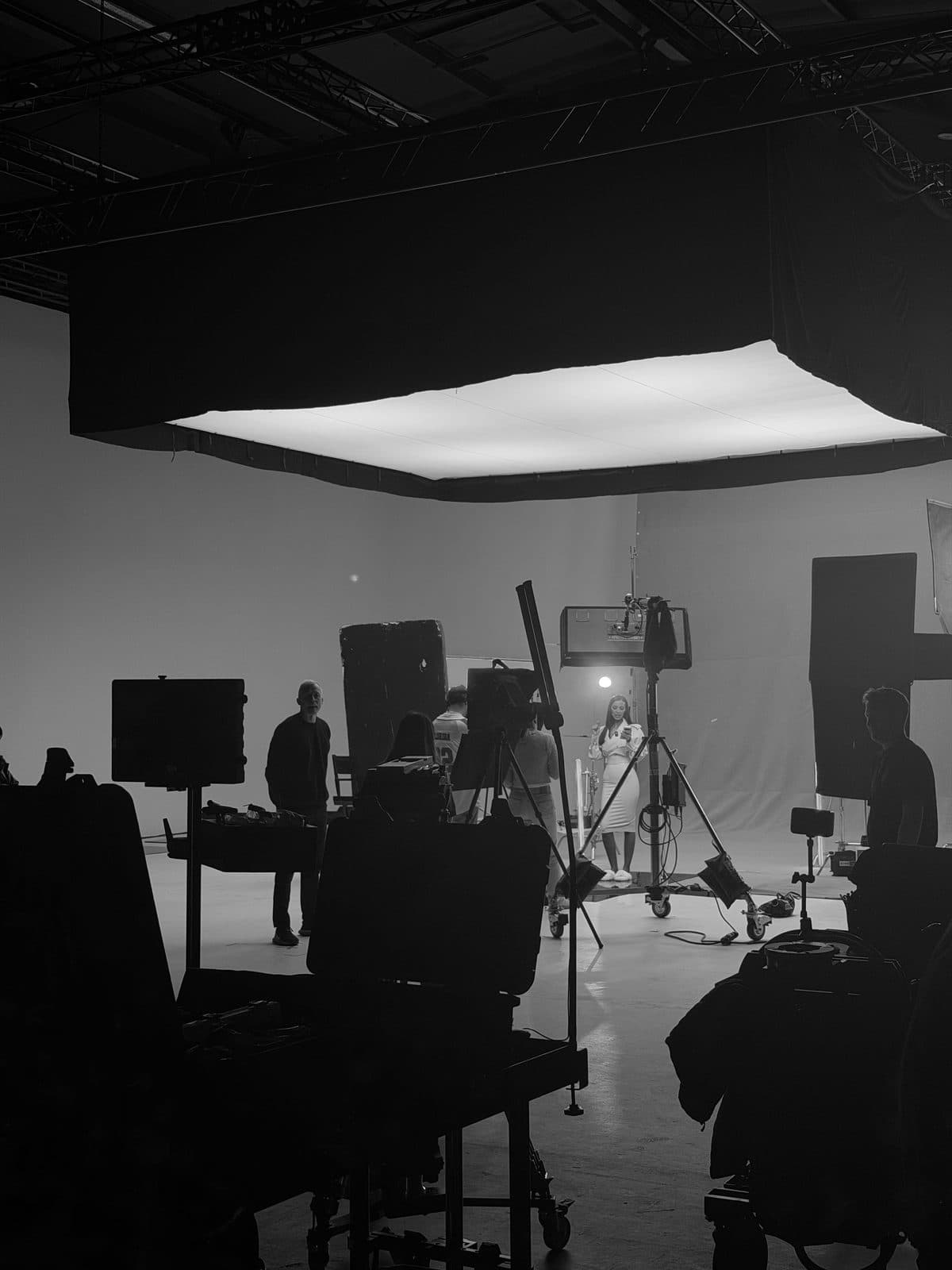
Blackout is a control condition before it is a visual treatment. A blackout studio reduces unwanted spill, bounce and reflection, which lets the lighting team decide what the camera sees and what it does not.
Reflections expose the room. Glossy products, vehicles, screens and metallic set pieces pick up whatever surrounds them. In a white cove, that may produce clean brightness. In a blackout stage, the team can place the reflected detail with greater precision.
Contrast holds better in a dark, matte space. Negative fill, flagged edges and controlled fall-off are easier to maintain when the room is not returning light from every surface. That matters across a long day because continuity depends on the environment staying predictable, and not merely on the first lighting setup looking right.
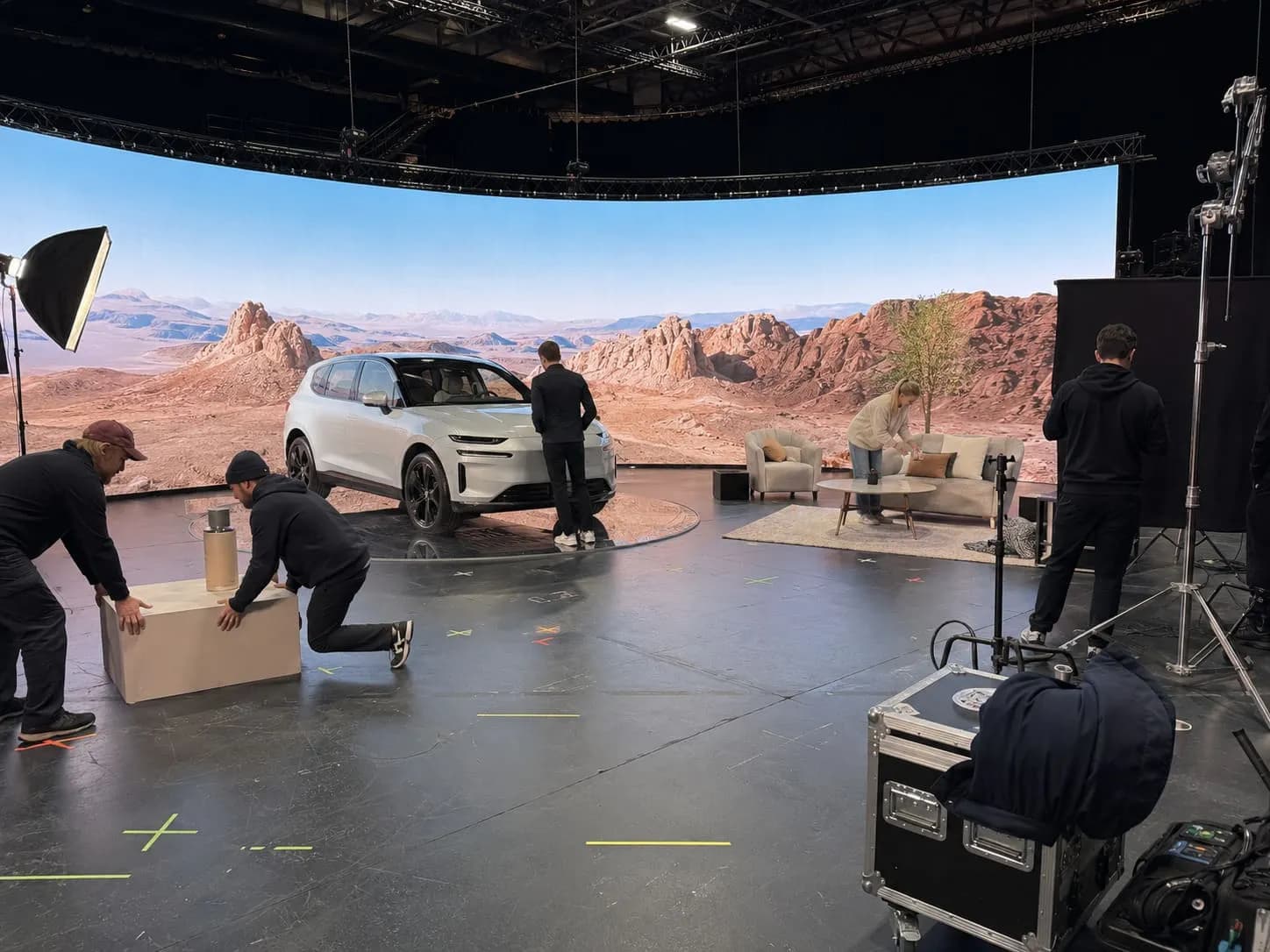
Screen-based workflows need the right blackout infrastructure. Projection, light-emitting diode (LED) screen work and virtual production depend on control over spill and reflections, plus the technical systems that support playback and monitoring. A room labelled blackout is not automatically built for that level of screen workflow.
Blackout also does not make a stage acoustically isolated. Dialogue, playback and live sound need their own acoustic checks, separate from whether the room can be made dark.
Why the choice changes lighting, rigging and workflow
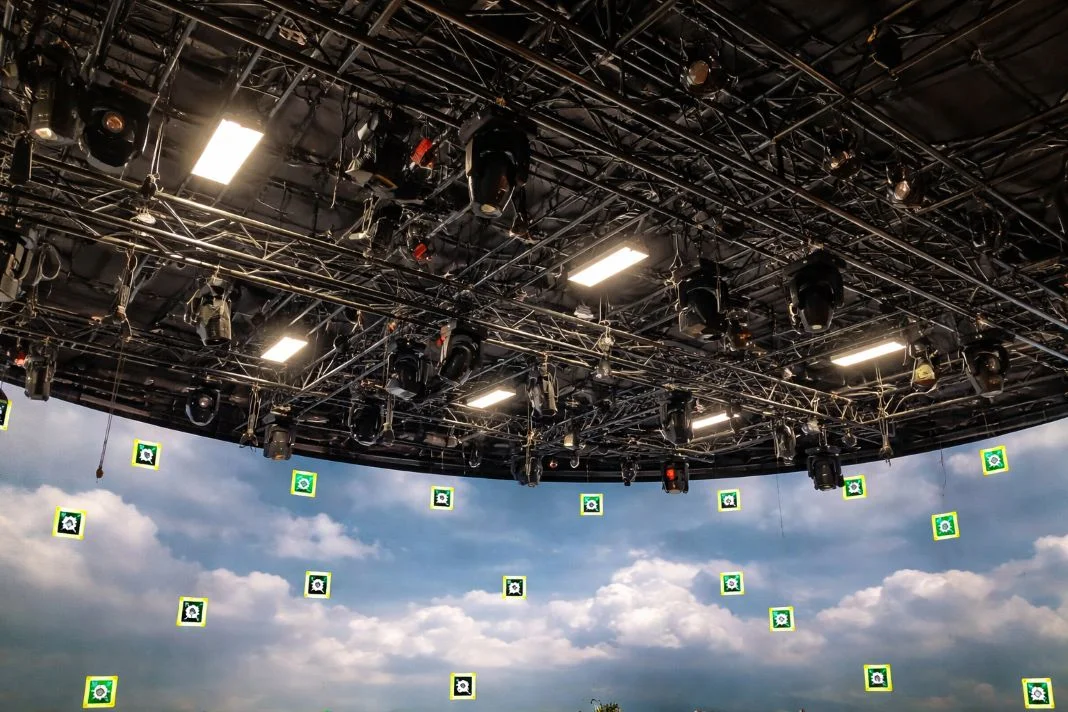
The room choice becomes visible in the lighting plot, the load-in plan and the reset schedule. A white cove and a blackout studio can both be professional stages, but they put pressure on different parts of the production.
Rigging deserves a separate conversation because the stage label tells you little on its own. Motorised truss, beams, hoists and fixture positions all need competent planning. The Health and Safety Executive is clear that lifting operations using lifting equipment must be properly planned by a competent person, supervised and carried out safely, and lifting equipment must show its safe working load.
Video monitoring has become part of the same booking judgement. If clients, agency teams or playback operators need to view from outside the stage, ask how the signal reaches production spaces. A route such as 12G Serial Digital Interface, usually written as 12G SDI, is a practical infrastructure detail, not a line-item luxury.
The London studio decision depends on the brief
When a London shoot is running with city-based crew, agency attendance, suppliers and unit vehicles, location matters because it affects the day’s movement. London Zone 2 can work well for that pattern, provided the stage also has the right access, load-in route and support areas for the brief.
A white cove that can be draped for blackout remains different from a specialist 360-degree blackout stage. That distinction is where many studio searches become too broad. The phrase “versatile studio” does not tell you whether the room is best for seamless white space, controlled darkness or LED-based work.
Mammoth Film Studios separates those roles clearly: Studio 1 is the Infinity Cove / Blackout stage, while Studio 2 is the Blackout / Virtual Production studio. Studio 2 has 360-degree blackout capability and an in-house 8 metre x 4 metre LED volume that can be made to specification, with virtual production delivered as a practical workflow rather than a catch-all answer to every brief.
Before booking, frame the enquiry around production risk, not around the broadest room description:
- Whether the brief needs seamless white space, controlled darkness or LED-based work.
- Frame width, subject distance and movement. A static interview and a wide movement piece test the room in different ways.
- How reflective the subject or set materials are, especially with vehicles, screens or polished product surfaces.
- Rigging, hoists, electrical supply and monitoring should be specified early if they affect the lighting plan.
- Load-in, parking and crew access. In London Zone 2, those details can affect the schedule as much as the stage surface.
Connectivity also belongs in the workflow discussion when review, file movement or streaming is part of the shoot. Mammoth Film Studios lists up to 4 gigabits per second symmetrical hard-wired internet across the site, which is the sort of infrastructure detail production teams should confirm before the day is built around remote viewing or transfer.
The right stage is the one that removes the main production variable
The best stage is the one that takes the biggest uncertainty out of the brief. If the risk is seeing the edge of the set, a cove solves that. If the risk is uncontrolled reflection, spill or screen workflow, blackout moves higher up the order.
Hybrid language needs careful reading. A cove with blackout drapes may be exactly right for a commercial shoot that moves between clean white and darker setups. A specialist blackout or virtual production stage is a different choice because the room is planned around control from every direction and the technical workflow that comes with it.
Once you separate background continuity from light control, the booking conversation becomes much sharper. You stop asking for the studio that sounds most flexible and start checking the specific thing the brief cannot afford to get wrong.
Common questions about infinity cove and blackout studios
Can a white cove be blacked out for filming?
A white cove can be blacked out if the studio has the right drapes and setup, but that does not make it the same as a specialist 360-degree blackout stage. Ask what level of blackout the room offers and where any remaining spill may come from.
Is green screen the same decision as an infinity cove?
Green screen is a background replacement workflow, while an infinity cove is a physical seamless background. The right choice depends on whether the final image needs a real clean space in camera or a controlled surface for later keying work.
Can reflective products be shot in a white cove?
Reflective products can be shot in a white cove, but the white room will appear in some surfaces unless the lighting team controls what is reflected. Blackout gives more control when the reflection itself is part of the image.
Does a blackout studio mean the stage is soundproof?
Blackout and sound isolation are separate properties. A room can block light without being suitable for demanding sync sound, so acoustic suitability should be checked as its own requirement.
Should the art department be involved in the studio choice?
The art department should be involved where set materials, reflective finishes or build size affect the room choice. A surface that works visually in a cove can behave differently under blackout, especially once lighting and camera angles are fixed.
This is general information, not professional advice.