Is virtual production cheaper and easier to control than a traditional studio build?
Virtual production is cheaper only when it replaces costly uncertainty, such as location resets, weather exposure or repeated background changes. Traditional builds can be the better spend when the shot needs physical scale, surface detail and direct interaction. The decision turns on where you want cost and control to sit.
Table of Contents
Compare the real cost centres first
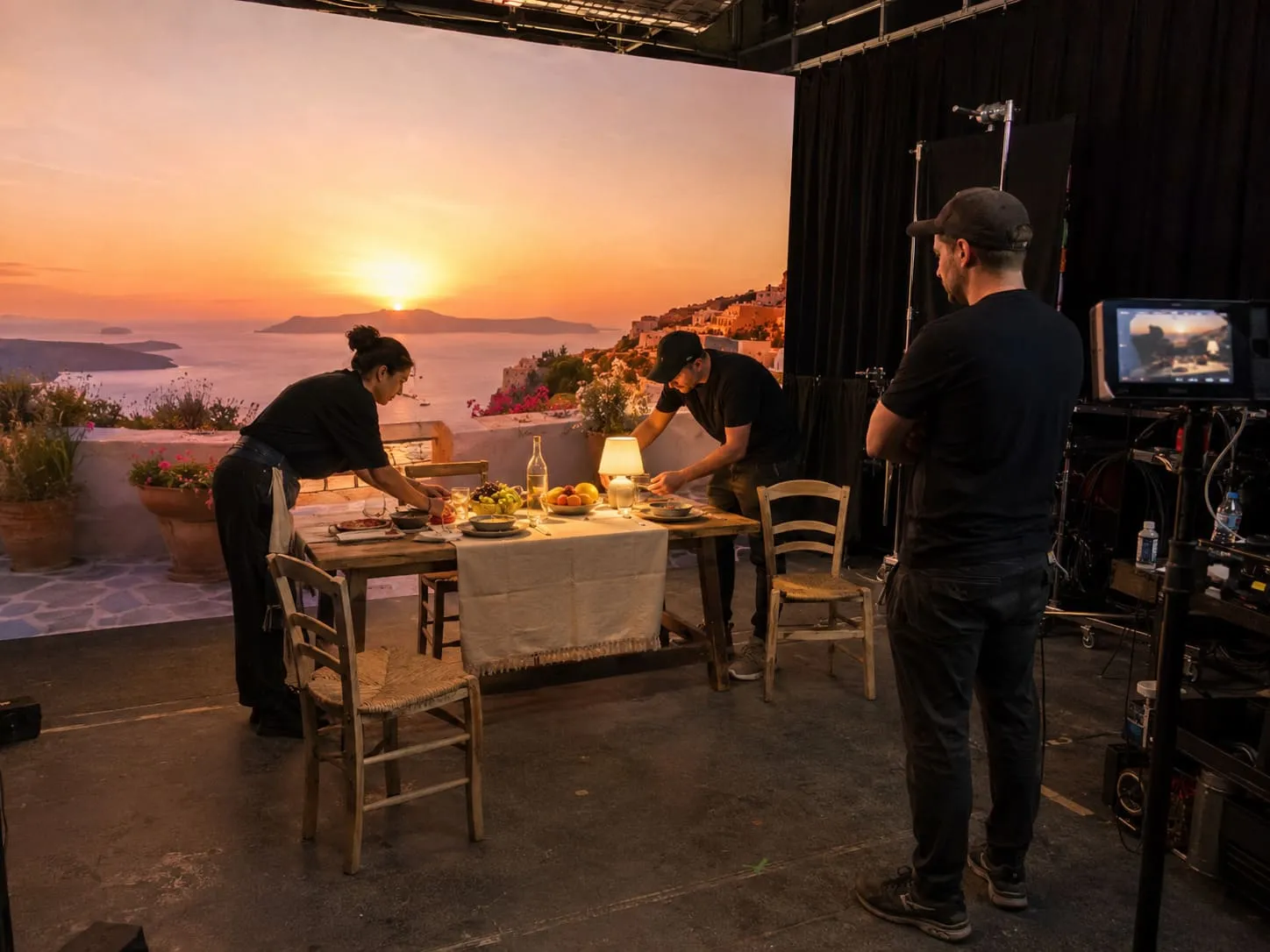
Virtual production is not the discount version of a physical build. It moves spend from construction labour, materials and clearance into digital environments, LED operation, playback systems, camera tracking, technical crew and earlier sign-off.
A May 2026 European market guide from The Nice Guys lists entry-level compact LED volume studio rental with an existing environment library at €3,000 to €6,000 per shoot day for studio rental only. The same guide places a mid-range production with a custom environment, full crew and half-day talent at €10,000 to €25,000 total project spend.
Those figures matter because they show the trap in headline comparison. LED volume cost is not the whole virtual production cost, just as stage hire is not the full cost of building a set. A fair comparison has to include approvals, prep days, the risk of client changes and what happens when the unit loses time.
Cheaper is the wrong first test. The better planning number is the route that gives you the least exposed spend once the brief, schedule and sign-off pattern are known.
Separate control from convenience
Control means approvals happen before crew time is exposed. It also means lighting, resets and known failure points sit inside the production plan.
Control the image
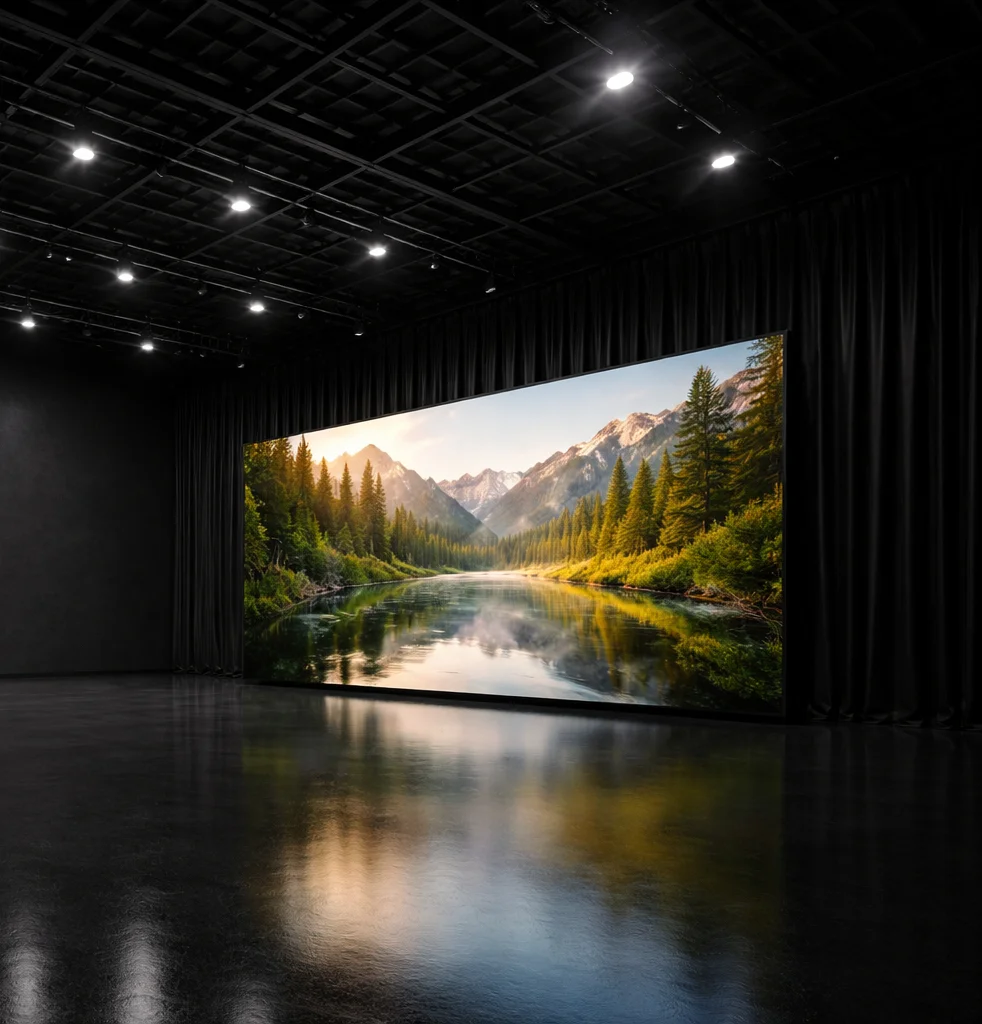
With in-camera visual effects, often shortened to ICVFX, the camera records the LED background during the take rather than adding every background later. That gives strong control over repeatable environments, location continuity and interactive reflections, especially where a brand film, fashion sequence or music video needs several settings in one controlled shoot window.
Physical builds give a different kind of authority. Real geometry matters when talent touches the set, when the lens needs deep movement through foreground detail, or when surface texture carries the image. Practical scenery also gives the director and director of photography direct sightlines without depending on tracking alignment or playback readiness.
Control the operation
An LED volume workflow adds technical control points. Playback systems, camera tracking, colour alignment and latency need a proper test before the day becomes expensive. When those pieces are planned well, the production gains repeatability; when they are squeezed, the wall becomes another live variable.
Construction has its own pressure points. Build time, dressing time and late art department changes all draw on labour, materials and access. Recognised UK construction rate-card structures also remind producers that physical build labour is a live cost line, not a background assumption.
Convenience looks like changing a background quickly. Control is knowing whether that change has already been approved, tested and made safe for the schedule.
Budget for preparation, not just shoot days
A late client request can be cheap in one workflow and expensive in another. Changing a sky in a ready digital environment may be manageable; rebuilding a foreground wall after sign-off can pull labour back onto the floor, but a new digital asset at the last minute can be just as disruptive.
Virtual production preparation needs the same discipline as a physical build. Unreal Engine environments, the virtual art department, playback systems and camera tracking all have to be ready before the crew depends on them. The art department still matters too, because foreground scenery, props, eyelines and practical lighting are what connect the real stage to the digital background.
A sensible planning sequence looks like this:
- Lock what the camera must see physically. Foreground platforms, hero props and surfaces that talent touches need real build decisions early.
- Decide what becomes pixels. Backgrounds, location extensions and repeatable conditions can sit in the LED volume when they are approved in time.
- Test the technical chain early. Camera tracking, playback and colour need time on stage, not a quick look before the first setup.
- Protect approval points. Client sign-off has to match the workflow, because late digital and late physical changes both cost money.
- Keep practical lighting in the plan. LED light can help the image, but the director of photography still needs planned control on faces, products and foreground objects.
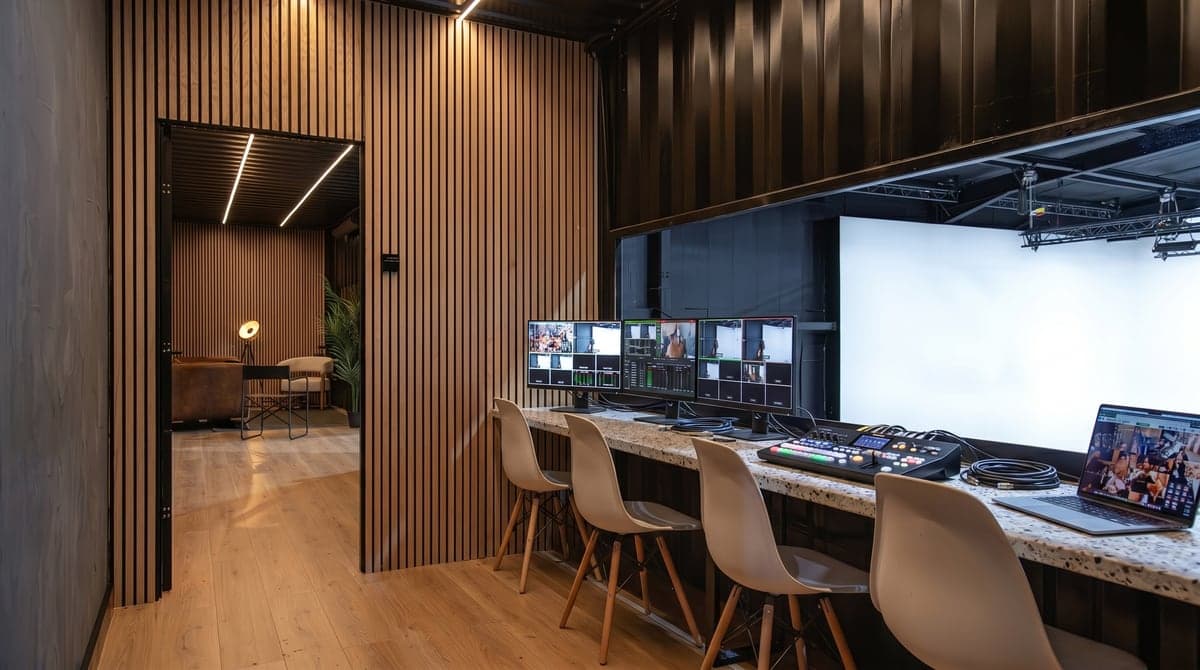
In London Zone 2, Mammoth Film Studios gives a useful example of what sits around the wall. Studio 2 virtual production hire is built around a ROE 2.8mm HDR LED volume and 360 degree blackout, with real-time playback operated by specialist technical crew through Elsewhere Productions. Hard-wired data points, drive-in entry and support areas are part of the working setup.
Lighting needs the same joined-up thinking. Integrated support, including Cinelight London as the studio’s lighting partner, matters because the foreground and the LED background have to be planned as one image. Prep is where both cost control and shoot-day control are won.
Match the method to the brief
When the brief asks for repeatable environments, quick location shifts or weather-independent continuity, virtual production deserves serious attention. When the brief depends on tactile space, large physical interaction or complex movement through a built environment, a traditional studio build remains the cleaner answer.
Virtual production suits controlled repeats. Commercials with multiple location looks, reflective surfaces or continuity-sensitive schedules can benefit from putting the background into an LED volume, provided the environment is ready and the technical crew has time to test it.
Traditional builds suit physical authority. A set that needs to be climbed, redressed heavily or shot from many angles may gain more from a large stage, real materials and direct art department control than from a digital background.
Hybrid production is often the practical middle. Build the foreground, dress the parts the camera and talent rely on, then use the LED volume for the exterior, extension or condition that would otherwise add travel, uncertainty or repeated resets.
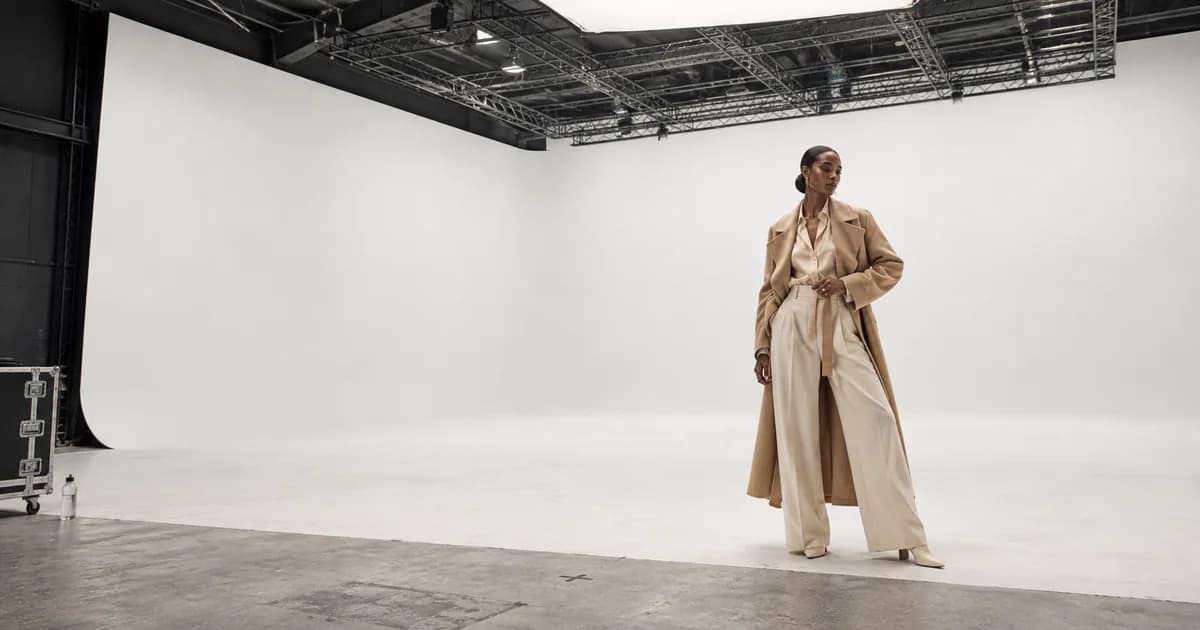
At Mammoth Film Studios, the split is explicit. Studio 1 is a traditional large-format stage with an 8,000 sq ft footprint, a 60 x 60 ft white infinity cove, blackout via drapes, 24 ft height, 200A 3-phase electrical supply, drive-in access and 20 parking spaces. Studio 2 is the 5,000 sq ft blackout and virtual production stage, with an 8 m x 4 m in-house LED volume screen, 24 ft rigging height, 63A 3-phase electrical supply, drive-in access and 10 parking spaces.
London Zone 2 logistics can decide as much as the method. Drive-in loading, parking, blackout, rigging and production areas affect how smoothly the crew, agency and suppliers can work. The right stage is the one that supports the workflow the brief actually needs.
Reframe the choice around controllable spend
A production rarely wins by choosing the newest method or the most familiar one by default. The stronger decision comes from asking where uncertainty belongs. If weather, travel, location resets or continuity changes are the risk, virtual production can move those variables into prep, systems and approvals. If physical interaction, scale and surface truth are carrying the shot, a studio build keeps control where the camera needs it.
Hybrid thinking removes a false choice. Some parts of the image need art department hands on them. Other parts can live in pixels and be repeated with discipline. Good studio infrastructure makes that separation easier because the space, blackout, rigging, technical crew and production areas support the plan rather than forcing the production into one route.
The real comparison is not LED volume or set build. It is exposed spend or controllable spend.
Common questions about virtual production and studio builds
Do you still need a physical set on an LED volume shoot?
Yes. Virtual production still needs foreground scenery, props, dressing and practical lighting where the camera or talent interacts with the scene.
What is the difference between an LED volume and green screen?
An LED volume displays the background during the take, so the camera can record it with the foreground. Green screen records talent or objects against a plain screen, then the background is added later.
How early should client sign-off happen for virtual production?
Client sign-off needs to happen early enough for the digital environment, playback setup and camera tests to be ready before the shoot. Late approval can move cost into the most expensive part of the schedule.
What should be included in a virtual production studio hire discussion?
A proper discussion should cover the LED volume, playback systems, camera tracking, technical crew, blackout, rigging, electrical supply, data points and support areas. The wall is one part of the setup.
Does a hybrid setup add production risk?
A hybrid setup adds planning points, but it can reduce risk when each part of the image is assigned to the right method. The foreground needs physical control, and the background needs technical readiness.
This is general information, not professional advice.