How does virtual production help your commercial shoot in a London studio?
Virtual production helps most when it turns location variables into planned studio decisions before the shoot day. For commercial work, its value sits in controlled light, repeatable backgrounds, clearer client review and less dependence on travel or physical builds, provided the technical workflow is tested before cameras roll.
Table of Contents
The real advantage is controlled production time
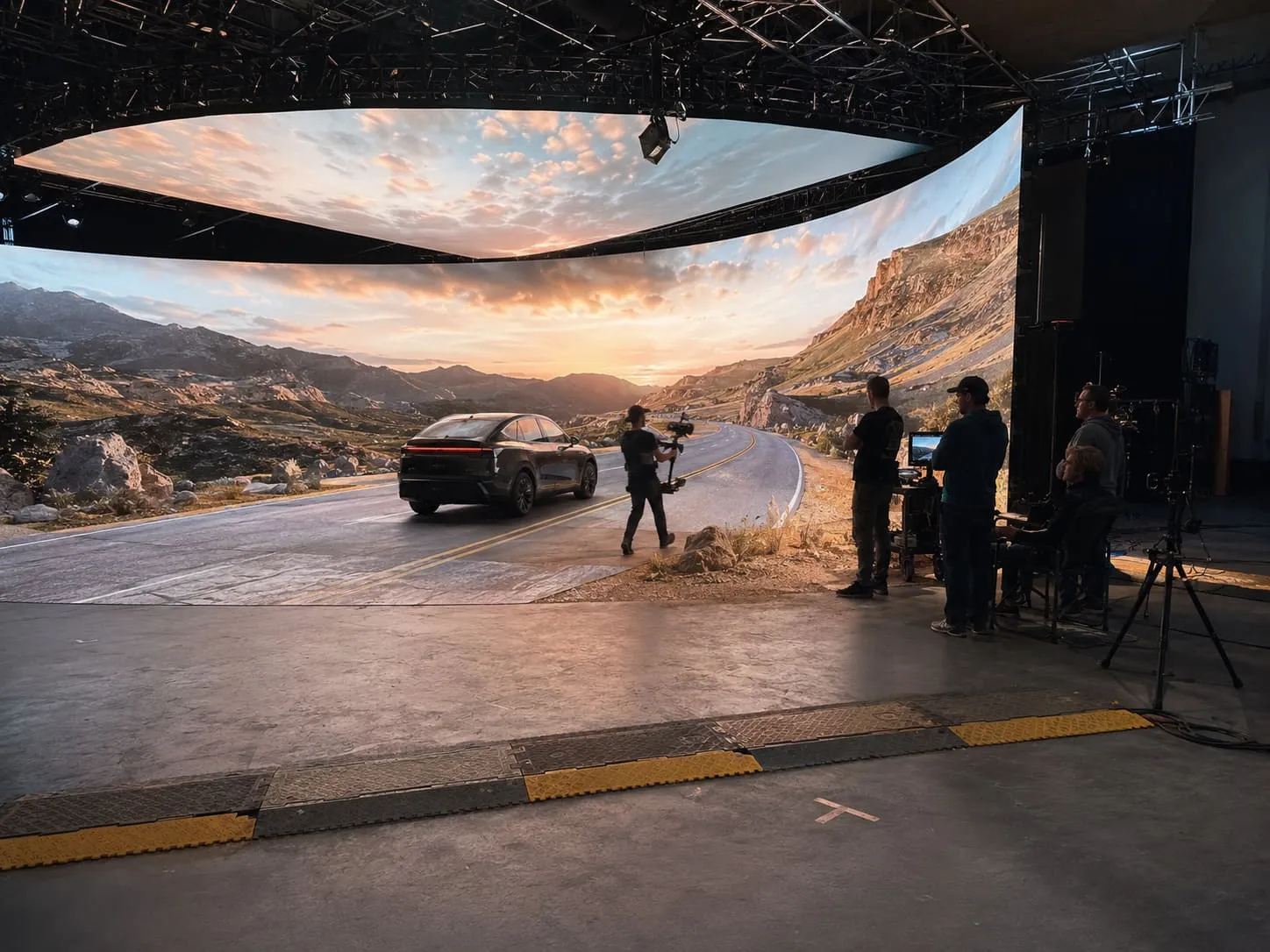
Teams often assume virtual production is a visual novelty. In practice, the better commercial case is tighter control over time, review and risk on the stage day.
Virtual production is a group of on-set methods. It can mean two-dimensional plate playback, real-time three-dimensional environments, green screen workflows, light-emitting diode, or LED, volume work, and in-camera visual effects, or ICVFX, where background content is captured through the camera during the shoot. Each method gives you a different level of control, so the first decision is matching the method to the brief.
Commercial shoots put pressure on approval chains. Agency, brand and production teams need to see whether the shot is working before the day runs away from them. A controlled background, consistent lighting state and repeatable setup reduce the number of variables being debated at the monitor.
The cost case needs care. Virtual production does not automatically make a shoot cheaper. It can reduce travel, company moves and some physical set-build demands, yet it can also move spend into pre-production, technical supervision, content preparation and testing. That shift is useful when it protects the day that has clients, crew and kit waiting on it.
Sustainability claims need the same discipline. The AdGreen Carbon Calculator is built for advertising motion, stills and audio projects, and it lets teams compare options such as shooting locally or abroad at bid stage. That kind of comparison is more useful than a blanket claim about any single production method.
Virtual production for commercials works best as one option in the production plan, alongside location filming and conventional stage work. The advantage becomes clear when you judge it by what it removes from the shoot day.
Why London logistics make virtual production practical
A commercial shoot in London rarely fails because the idea was too ambitious. It more commonly strains when agency clients are on site, crew arrive from across the city, suppliers need clean access and unit vehicles have nowhere sensible to go.
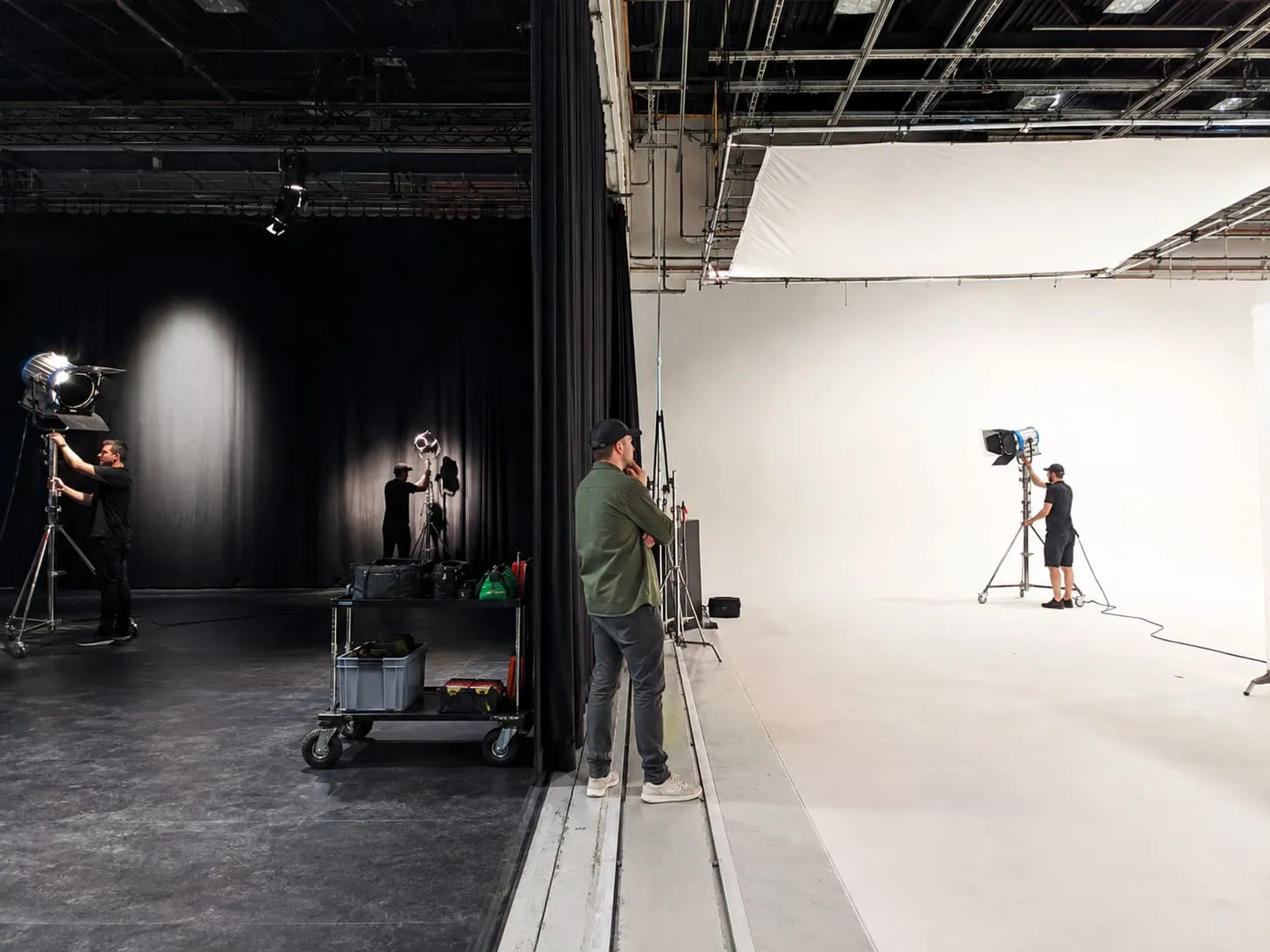
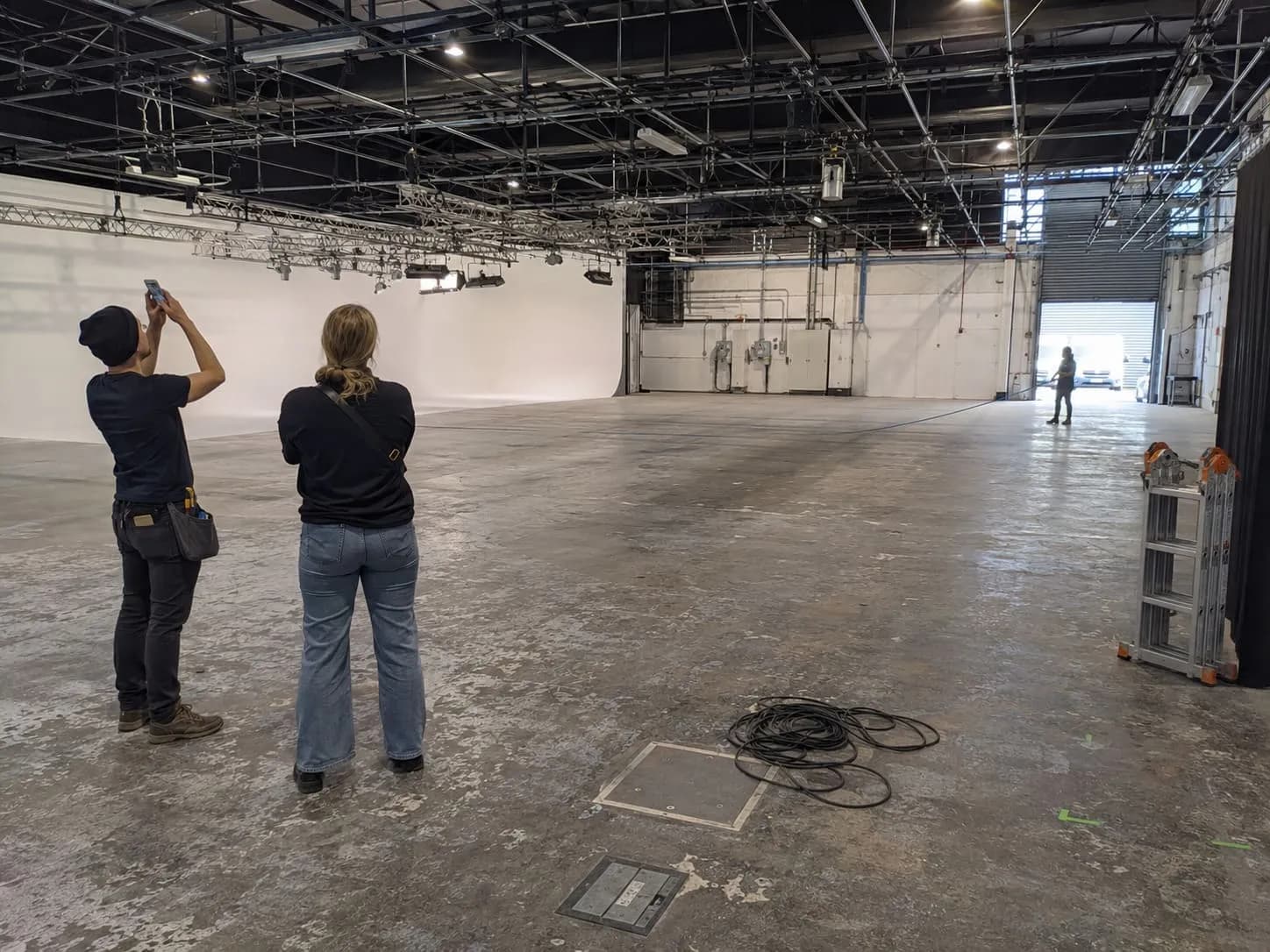
London studio logistics make virtual production either practical or awkward. A virtual production studio in London has to handle more than the LED image. Your production still needs hair and make-up, usually shortened to HMU, somewhere for clients to work, a route for kit movement and clear access for vehicles. If those pieces are weak, the technical setup becomes another pressure point.
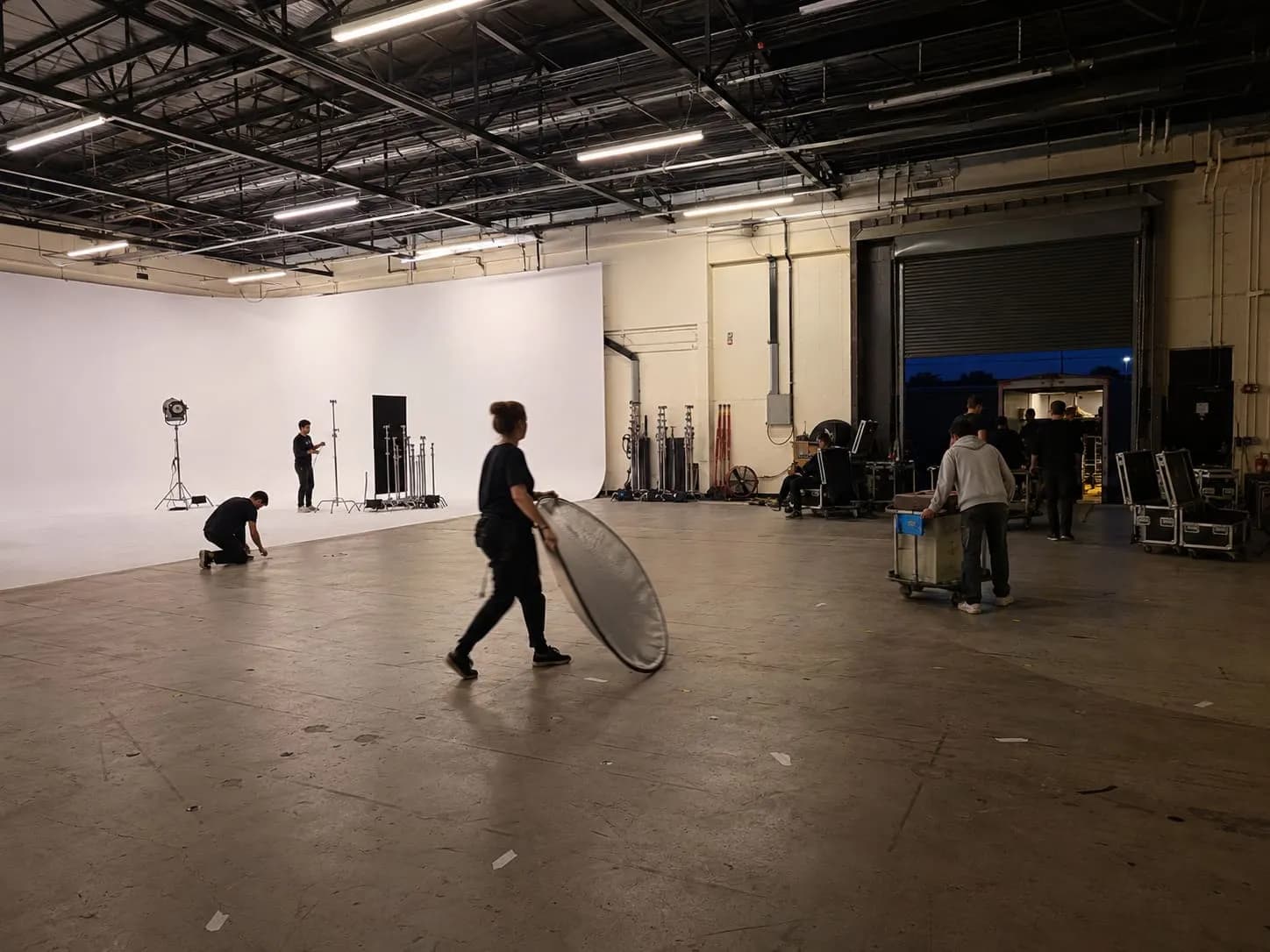
London Zone 2 matters because city-based production teams need a workable base without turning the day into a transport exercise. Proximity to Overground and Jubilee line routes helps with crew and client movement, but the studio still needs internal discipline once people arrive. Parking allocation, vehicle load-in and production areas decide whether the location feels controlled under call time pressure.
Mammoth Film Studios is a useful London example because its planning treats virtual production as part of the building’s operating logic. Its Zone 2 setup brings together public transport access, drive-in access and on-site parking for crew and unit vehicles. That is the kind of practical infrastructure that gives a London studio production workflow real value. Convenience only counts when the space can absorb the movement that a commercial shoot creates.
The LED wall earns its keep in repeatable visuals
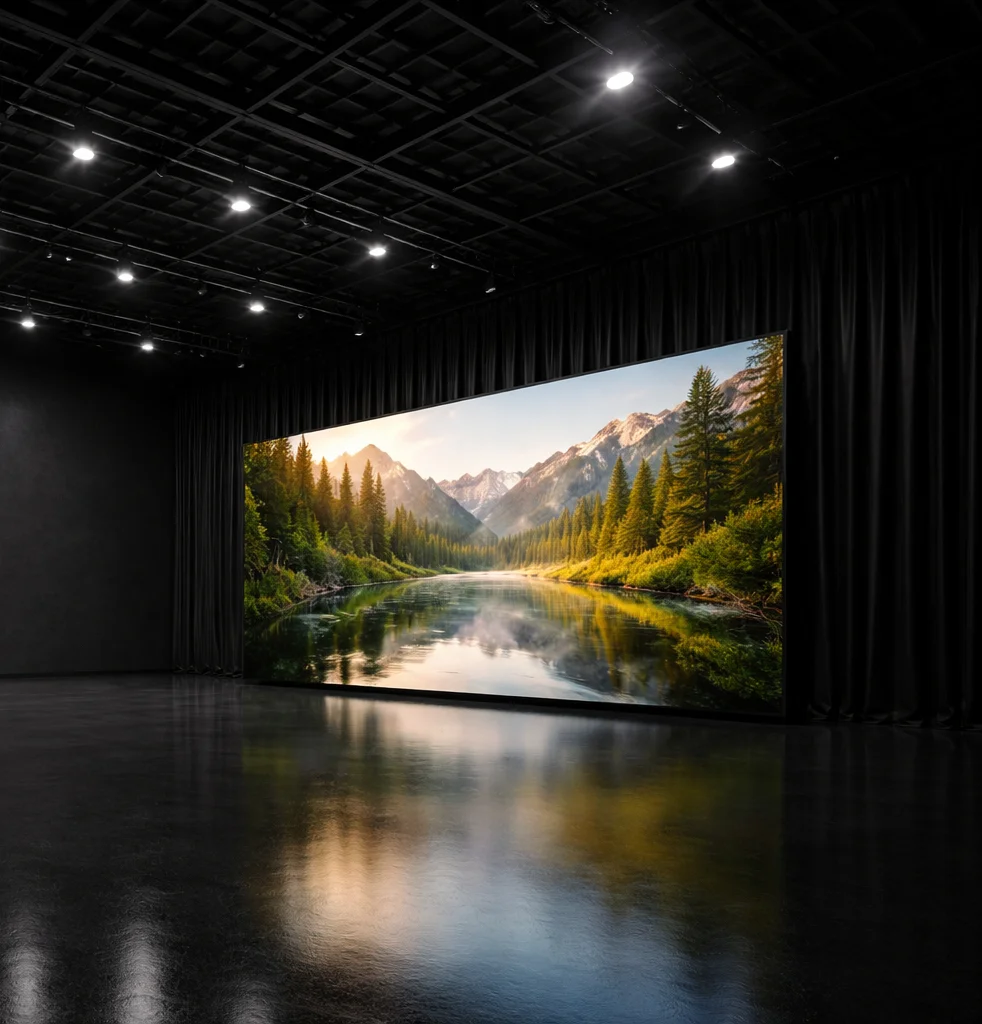
LED volume work is strongest when a brief needs repeatable backgrounds, controlled conditions and useful interaction between screen content and the subject. That matters for automotive work, glass, packaging and reflective products, where the background can influence the shot directly.
A LED wall commercial shoot can change location feel or lighting condition without a full company move. That has obvious appeal for commercial video shoots in London, where moving people, vehicles and approvals across the city consumes time. The stronger visual advantage, though, is continuity. A product can sit in the same lighting logic across takes, and the approval team can assess the shot with more context than a green screen plate allows.
On-set review changes the approval conversation
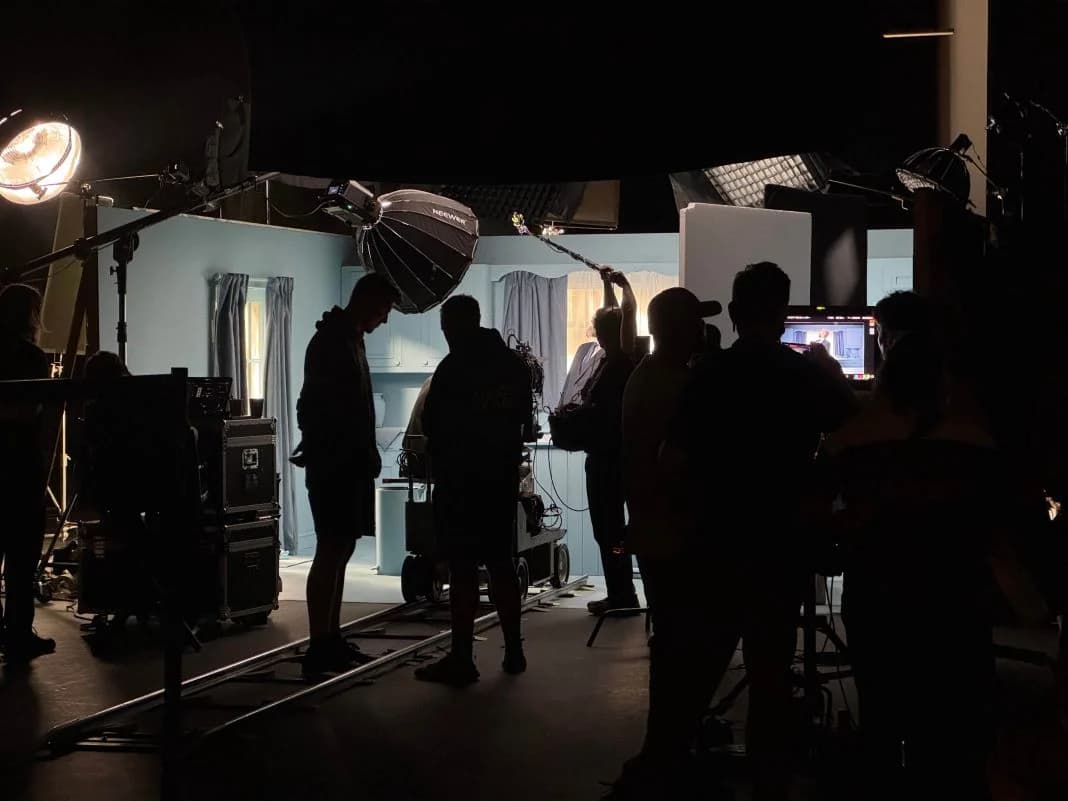
Green screen remains useful, especially where the background will be built heavily in post-production. LED volume for advertising shoots gives you a different review path because the background, reflections and foreground lighting can be judged closer to the camera result on set.
That does not make one method universally better. Green screen can suit shots with wide framing, heavy compositing or background work that is still open. LED volume work suits briefs where the production benefits from seeing more of the final intent during the shoot. Client monitor review becomes more meaningful when the foreground subject and background are already interacting.
Workflow control decides the result
LED walls do not automatically deliver perfect reflections or final-pixel images. Blackout, camera movement, LED configuration, blocking and content quality decide whether the wall helps the shot or exposes a mismatch.
The relevant technical details are practical, not decorative. A modular 8 x 4 metre ROE 2.8mm LED wall in a full blackout stage creates a controlled base for ICVFX and plate work, but the result still depends on calibration, playback and the way lighting is managed around the subject. Image-based lighting, where screen or image content influences the light in the scene, also needs planning because colour and brightness choices carry through the whole production chain.
A 360-degree expectation needs early scrutiny. Some briefs need a full wraparound approach, others need a narrower camera path with careful blocking. Treat that as a production design question, because a casual promise at the estimate stage can become a technical argument once the lens is up.
Why pre-production carries the risk reduction
A smooth virtual production shoot day usually reflects decisions made before anyone is waiting on set. The stage becomes more controlled because content, colour and crew responsibilities have already been tested.
Virtual production pre-production is where the real risk reduction happens. The work can feel heavier at the front end, but that is the point: uncertainty moves into a phase where you can still change the plan without burning stage time.
- Settle the content route early. Decide whether the job needs plate playback, a real-time three-dimensional environment or ICVFX. Each route changes what must be ready before the shoot.
- Lock the assets that affect framing and approvals. Late background changes can touch lighting, camera tracking and client review, so loose content decisions carry real production risk.
- Test the playback path. Agree whether the workflow uses tools such as Unreal Engine, Disguise, Mo-Sys, Pixotope or Ncam, then make sure production and technical teams know where responsibility sits.
- Check the colour pipeline before the approval monitor becomes the argument. The Society of Motion Picture and Television Engineers, known as SMPTE, treats colour management as a workflow issue across on-set viewing and post-production. SMPTE also warns that approving colour from a display that is not calibrated to a known standard can create downstream colour errors that are difficult, time-consuming and expensive to correct.
- Put the crew interface in writing. A technical supervisor and playback operator need a clear route into the production team, because technical notes have to reach the person who can make a shoot-day decision.
Prep-shifted cost is not a flaw when it buys control. The weak version of virtual production promises speed first and deals with the details later. The stronger version tests the details early enough that the shoot day is used for shooting.
The strongest studio choice is workflow-led
Choosing a virtual production studio is a workflow decision before it is a screen decision. The LED volume matters, but its value depends on blackout, rigging, load-in, production space, client review and the technical crew around it.
A fair comparison looks like this:
For a London virtual production stage, the better question is how the stage behaves under commercial pressure. Can vehicles load in cleanly? Can HMU, production and client areas support the day without slowing it down? Can the technical team speak to production in time for decisions to change the shot?
Mammoth Film Studios Studio 2 shows the more useful model for this kind of evaluation. Its virtual production delivery is run with Elsewhere Productions, with technical supervisors, playback systems and crew built into the stage infrastructure. That matters because virtual production is at its weakest when the screen is treated as a hired object, separate from the people and systems needed to run it.
Two approaches sit in front of most production teams. One books the most impressive-looking LED setup and hopes the day will absorb the gaps. The other chooses a studio where the stage, crew interface and review path have already been thought through. The second approach holds up better over a run of commercial jobs because it reduces the number of problems that reach the shoot day in the first place.
Common questions about virtual production for commercial shoots
Is virtual production cheaper than filming on location?
Virtual production is not automatically cheaper than location filming. It can reduce travel, company moves and some physical builds, but it can also add pre-production, testing and technical crew costs.
Does virtual production always need an LED wall?
Virtual production does not always need an LED wall. Some shoots use plate playback, green screen workflows or real-time content in other ways, but LED volume work gives stronger on-set review and lighting interaction when the brief suits it.
Can you shoot multiple locations in one day with virtual production?
Virtual production can support multiple location looks in one studio day when the content, lighting plan and approval path are ready before the shoot. The time saving comes from avoiding physical moves, not from skipping preparation.
Can an LED volume be used for a 360-degree shoot?
A 360-degree result depends on the LED configuration, blackout, camera movement and blocking. The production team should treat it as a specific technical requirement, not as a default feature of every LED stage.
What crew roles matter most on a virtual production stage?
A technical supervisor and playback operator are usually the key interface roles for the virtual production workflow. Their job is to keep the content, playback and camera-side decisions aligned with the production plan.