What should agency producers check before booking any London studio for a TV commercial?
Agency producers should confirm that a studio fits the shoot in five practical ways: the stage must suit the set and lighting plan, the technical infrastructure must support the workflow, access must work for crew and vehicles, support spaces must match the size of the production, and the booking terms must be clear about what is included. A strong studio booking is usually the result of matching the space to the job, rather than picking the most impressive spec sheet.
Table of Contents
A studio can look right on paper and still be wrong for the production. Commercial shoots often run on tight timings, layered approvals, and complex kit movements, so a mismatch tends to show up quickly once prep starts.
Studio suitability starts with the job, not the brochure
A car build, a tabletop setup, and a cast-heavy beauty campaign can all sit under the label of TV commercial production, yet their studio space requirements are completely different. Stage size in London matters, but dimensions alone do not tell the full story. Rigging height, floor area, blackout capability, cove design, and vehicle access all shape what can actually happen on the day.
Producers usually save time by checking a few points first:
- Whether the stage dimensions fit the set, camera moves, and lighting plan.
- Whether the rigging height supports the fixtures, truss, or scenic requirements.
- Whether the space needs a white infinity cove, full blackout, or both.
- Whether drive-in access is required for vehicles, scenery, or large kit.
A common mistake happens when a studio is booked for its headline feature, but the rest of the configuration does not support the production. A large set build inside a blackout studio with limited support space can create friction, just as a cove stage may be unnecessary for a fully controlled dark environment shoot.
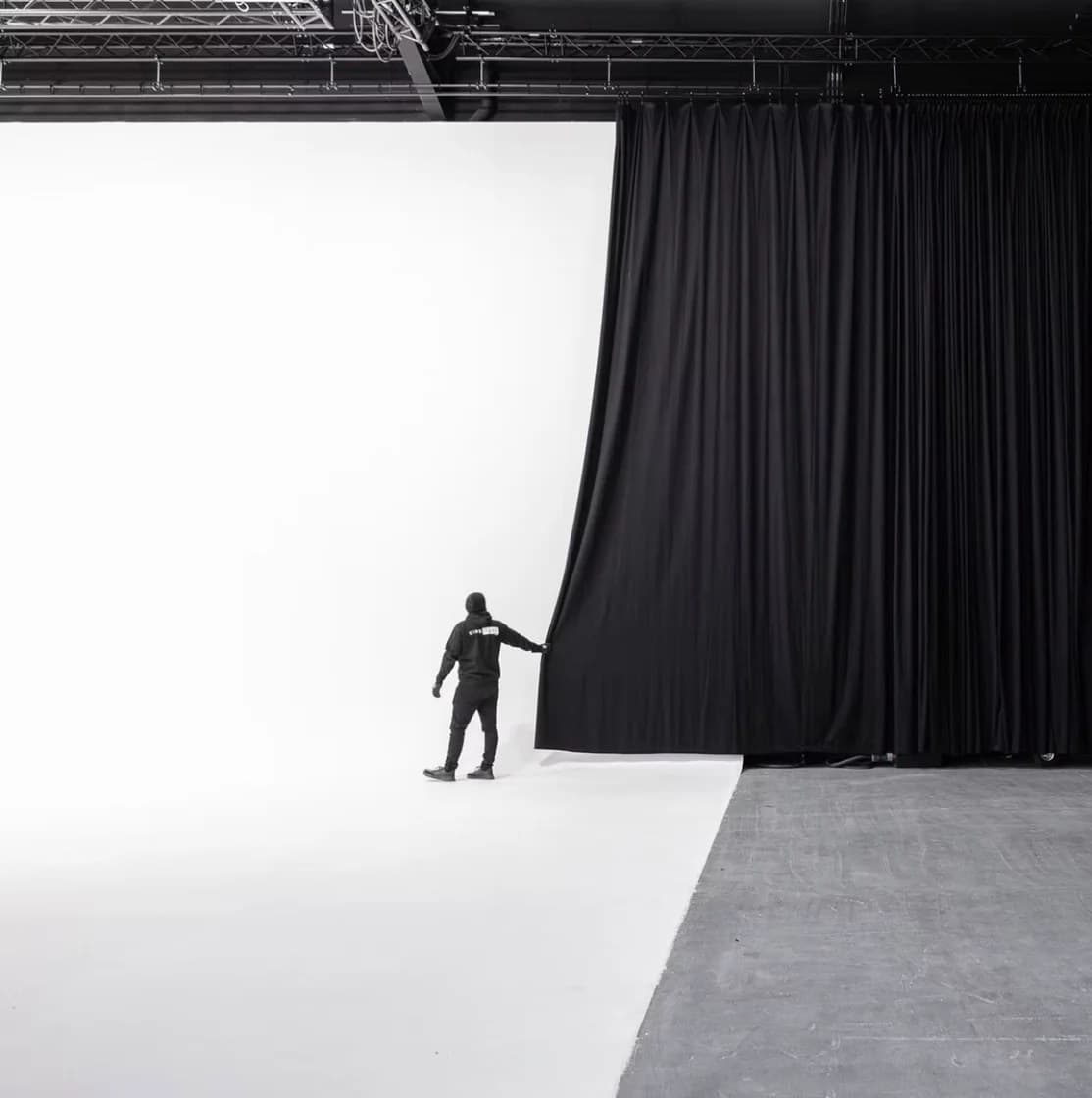
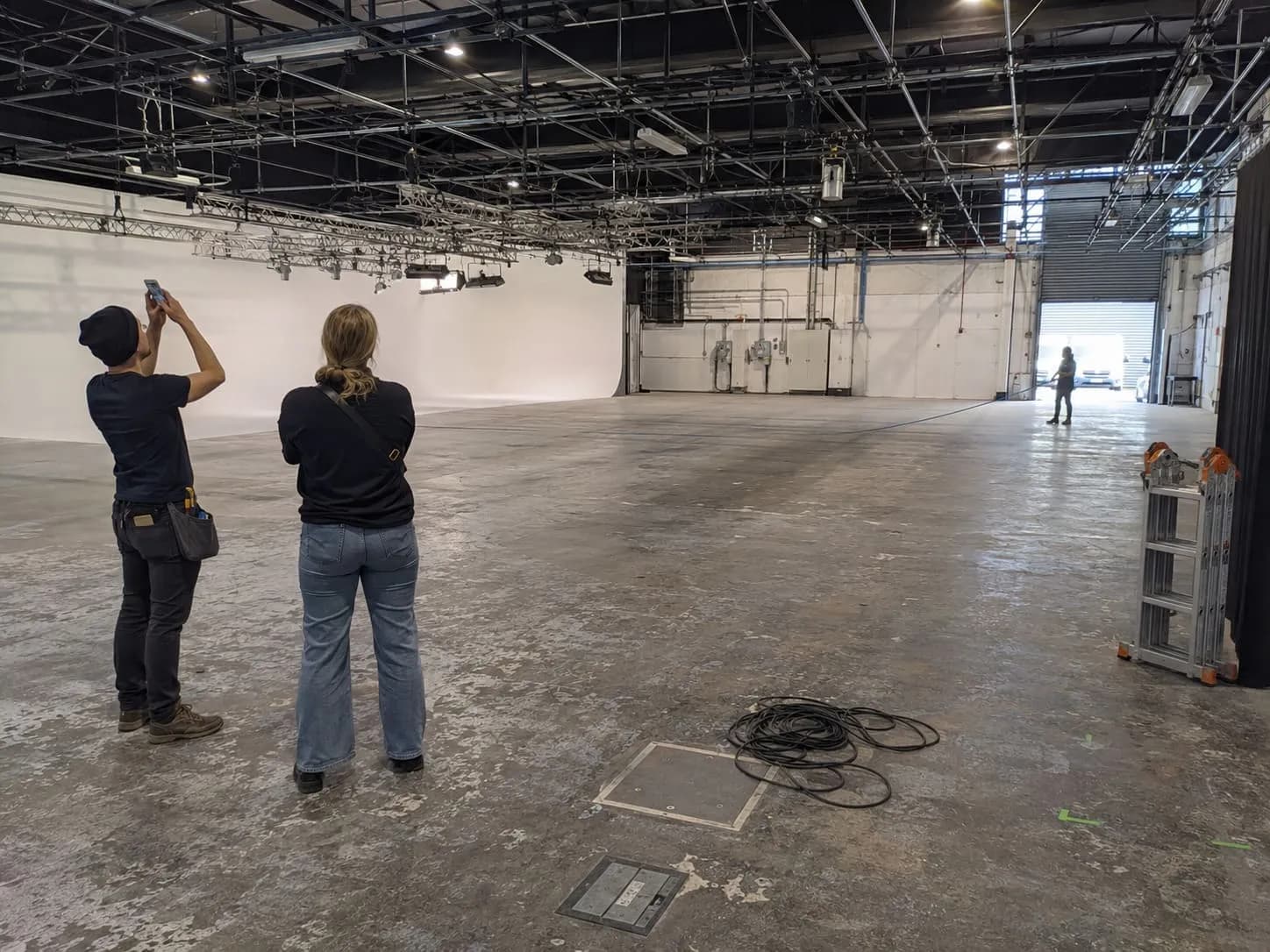
That distinction matters more now because many London studios operate with clearly different stage types. At Mammoth Film Studios, Studio 1 is an 8,000 sq ft infinity cove and blackout stage with drive-in access, which suits large-format photography, commercial filming, and productions that need a broad white or dark environment. Studio 2 is a separate 5,000 sq ft blackout and virtual production stage, built around a different technical fit.
Traditional stage or virtual stage?
A traditional stage generally suits shoots that need physical set construction, broad lighting flexibility, simple art direction changes, or a large white background. An infinity cove studio can be especially useful for automotive, fashion, product, and high-key commercial work where the surface and horizon line are part of the image.
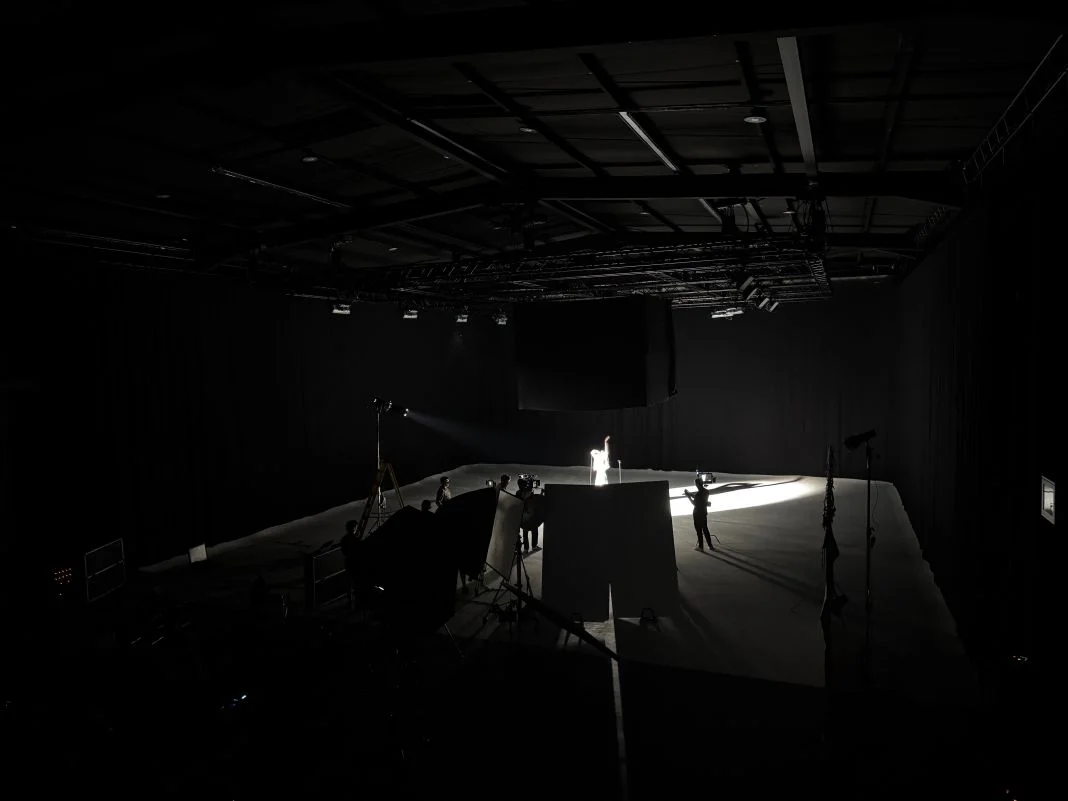
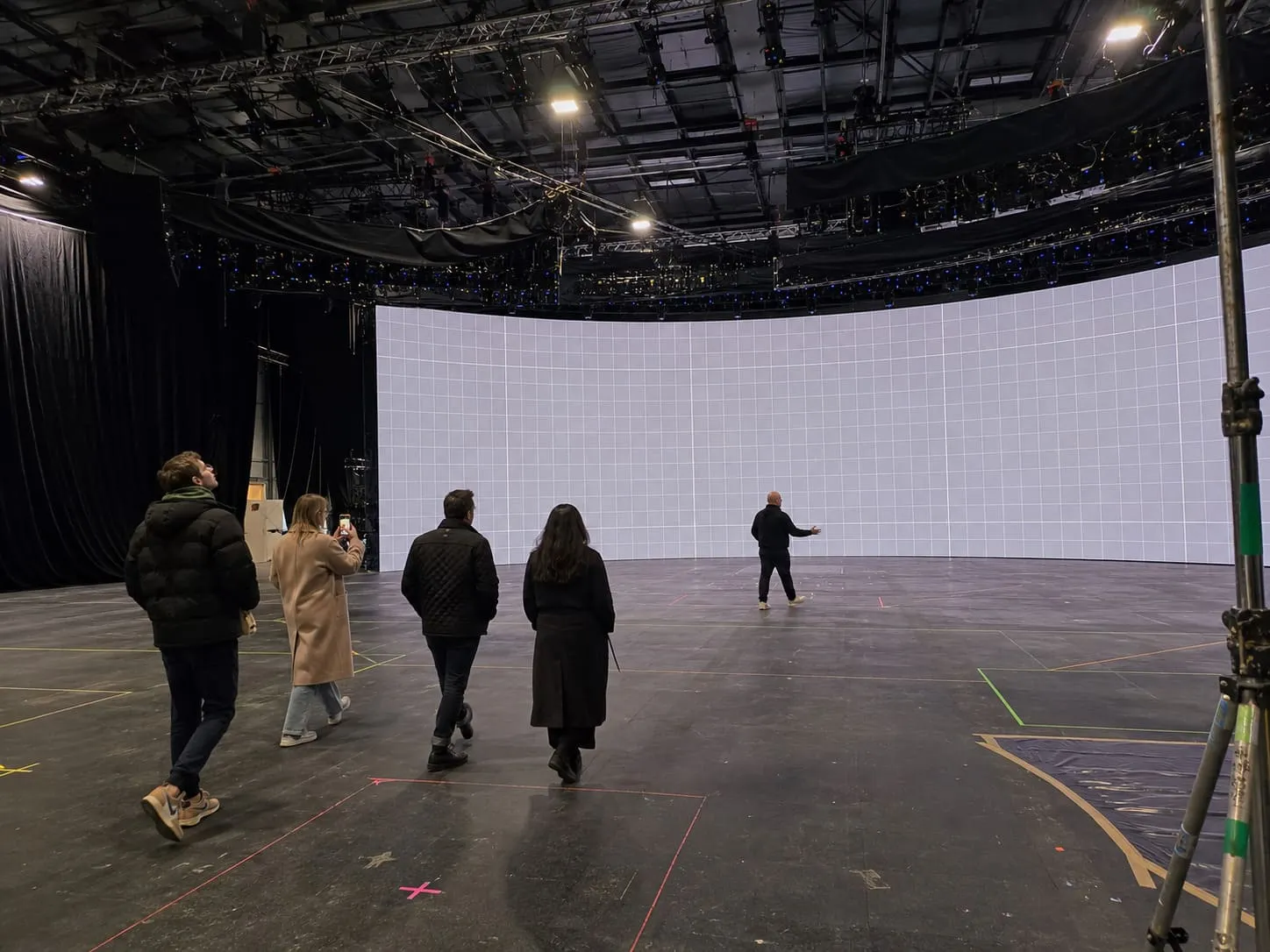
Virtual production asks a different set of questions. Studio 2, for example, includes an in-house modular ROE LED volume and virtual production support delivered with Elsewhere Productions. That setup may suit shoots needing controlled environments, repeatable lighting conditions, or location changes without physical travel. It does not mean every commercial belongs on an LED stage.
The right choice depends on technical fit, not novelty.
Technical infrastructure shapes the day more than the viewing
Studio tours often focus on the stage itself. Production workflow problems usually start elsewhere, namely in the systems behind the walls and above the grid.
Power is one obvious check. A studio technical spec should state the available 3-phase power clearly, because lighting, playback, LED workflows, and ancillary production needs can add up fast. Rigging systems matter just as much, especially where truss movement, beam loading, or chain hoists affect how quickly a lighting plan can be installed or revised.
Connectivity has moved from convenience to core infrastructure. Commercial productions may need live client viewing, remote approvals, streaming, media transfer, or internal playback across several spaces. A studio with an internal LAN, a dedicated streaming network, and 12G SDI routing between stage and production areas gives a producer much more control over how departments work in parallel.
Some features are usually non-negotiable, others depend on the job:
- Important: adequate power, rigging capacity, stable internet, reliable video routing, and clear technical support.
- Useful where relevant: live streaming setup, dedicated playback systems, integrated lighting support, and specialist virtual production infrastructure.
Missed workflow checks tend to be mundane rather than dramatic. A live stream may be planned, but the production team later learns that the client room cannot receive a direct routed feed. A stage may have enough floor space, yet there is no sensible path for video village, DIT, and agency review to work without crossing crew traffic. A rigging plan may be possible in theory, but slow to execute because the support model was not discussed in advance.
Studios with an in-house technical structure can reduce that ambiguity. Where lighting support is integrated through a partner such as Cinelight London, the producer can usually get clearer answers earlier about supply, compatibility, and stage workflow.
Access, location, and on-site logistics
A delayed start in London is often blamed on traffic, although the real issue is usually a weak access plan. The practical value of a London Zone 2 studio is not the postcode itself. The value lies in how quickly crew, suppliers, and unit vehicles can get in, unload, and move through the site.
Rail access still matters because many commercial crews arrive from different parts of the city. A studio near the Overground and Jubilee line can ease call times and reduce late arrivals across agency, client, and freelance teams. That benefit is strongest when public transport sits alongside sensible vehicle access, rather than replacing it.
Before booking, producers usually need to confirm:
- Whether the stage has true drive-in access or only nearby loading.
- How many on-site parking spaces are available for crew and production vehicles.
- Whether large items can move through the building on step-free routes.
- How loading, holding, and wrap will work during peak call times.
Drive-in access can change the shape of the day. Scenic pieces, props, tracking kit, and sometimes hero vehicles move faster and with less handling risk when the stage can take them directly. Parking also has a direct production effect, especially where recce teams, clients, HMU, and technical crew all overlap during the same call window.
Step-free movement is easy to overlook until heavy cases, wardrobe rails, or cast access become part of the plan. Once those flows are mapped properly, a studio often feels either efficient or awkward very quickly.
Some sites also have flexible external space. On certain jobs, on-site parking can double as a backlot area or temporary operational spill space, but producers should treat that as conditional use rather than assume a permanent exterior set is part of the booking.
Facilities, support spaces, and crew comfort
The main stage carries the visual ambition of the commercial. Support spaces carry the working day.
A studio facilities check should cover more than whether a client room exists. The real issue is whether the rooms are configured in a way that supports parallel activity without constant interruption. Hair and make-up, styling, agency review, production coordination, talent holding, and meal breaks all need space, but they do not need to happen on top of one another.
A few support rooms often matter more than producers expect:
- HMU room capacity, especially for cast-heavy or beauty-led shoots.
- Client area placement, so approvals happen without blocking production movement.
- Production office space for schedules, paperwork, and private problem-solving.
- Styling room and wardrobe handling where look changes are frequent.
Layout matters as much as quantity. A good HMU room loses value if cast then has to cross active loading routes to reach set. A client area can become a bottleneck if playback, agency notes, and catering all collapse into the same space. Production offices tend to prove their worth when timings slip and decisions need to be made away from the floor.
Support spaces also affect stamina. Long commercial days are easier to run when work zones and rest zones are separated properly, particularly where clients remain on site for the full schedule. Studio 1 at Mammoth Film Studios, for example, includes a styling room, client room, production office, and mezzanine, while Studio 2 has an 8-bay HMU room, client area, production area, and kitchenette. Those details sound secondary until multiple departments need to function at once.
Virtual production: practical use, practical limits
Virtual production has become a serious option for selected commercial workflows, but it still needs to be judged against the brief rather than the trend cycle. A virtual production studio can solve some problems very effectively, especially where a production needs environmental control, repeatable light, or several location looks within a compressed schedule.
A hybrid stage such as Studio 2, with blackout capability and a modular ROE LED volume, can suit automotive content, presenter-led work, controlled branded environments, and shoots where interactive light and reflections are part of the visual plan. Real-time playback and on-set technical crew also make a difference where agency and client teams need to evaluate changes quickly.
Still, virtual production is not a universal answer. It may be unnecessary for a straightforward physical set, a cove-based shoot, or a job where location texture matters more than controlled screen content. Producers also need to check the size of the LED volume against the framing plan, lensing, blocking, and intended set extension. A wall that works for one treatment may be too limited for another.
When virtual production tends to make sense
A practical fit often appears where the production needs fast shifts between visual environments, controlled blackout conditions, or reduced dependence on weather and travel. Consistency can be especially useful for campaigns that need multiple edits or versions across the same shooting day.
What to check before booking an LED stage
The first point is supervision. Virtual production works best when playback, content handling, colour response, and on-set operation are all defined clearly before the shoot. At Mammoth Film Studios, virtual production in Studio 2 is delivered with Elsewhere Productions, which gives producers a clearer picture of who manages the technical layer.
The second point is integration with the wider shoot. LED workflow does not sit apart from camera, lighting, art direction, and agency approval. It sits inside them, which means prep needs to cover the whole system rather than the wall alone.
Operational structure and in-house partners
A studio can be technically well specified and still be difficult to use if the service model is vague. Operational clarity matters because producers need to know who is responsible for rigging, lighting support, technical problem-solving, and stage readiness before the first truck arrives.
Some teams still assume that a blank-shell studio offers more freedom. In practice, that depends on how the site runs. If external suppliers are welcome but key systems remain unclear, freedom can turn into duplication, delay, or crossed responsibilities. An integrated model may actually create more room for a production team to focus on execution because the operational boundaries are defined in advance.
An in-house rigging team is one useful example. Where the studio controls that function directly, timings, load planning, and technical sign-off are often easier to coordinate. The same applies to an exclusive lighting partner, provided the arrangement is framed as a workflow choice rather than a creative restriction. Cinelight London fits that model well because the relationship supports consistency in stage delivery and technical communication.
The same logic applies to specialist services. Virtual production delivered through a named partner is usually easier for agency producers to assess than a loosely described offer attached to the space. Clear lines of responsibility tend to make recce notes more meaningful.
Transparency, pricing structure, and booking process
Pricing misunderstandings rarely come from the day rate alone. They usually come from assumptions about what the rate covers.
Structured rates are easier to work with because they give producers a basis for comparing one studio with another on equal terms. That does not mean every commercial should be priced in the same way. Scope still shifts according to stage, duration, crew, technical requirements, and support needs. What matters is that the booking terms make inclusions and exclusions plain.
A producer should pin down a few points before confirming a booking:
- What is included in the studio hire itself, including prep, shoot, and wrap timings.
- Which services sit outside the base rate, such as lighting, rigging, virtual production support, or additional spaces.
- Whether technical crew, cleaning, overtime, parking, or network use are separately costed.
- How option holds, confirmation deadlines, and cancellation terms are handled.
Trouble often starts with language such as "included where available" or "standard support", because neither phrase says enough. A clear cost breakdown and service scope allow agency teams to budget properly and defend the plan internally. Booking process studio friction usually drops once those terms are settled at the start, not revised during prep.
Common misconceptions and what they reveal about the London studio sector
Several booking mistakes come from assumptions that no longer hold up well in the London studio sector.
One misconception is that any large studio can absorb any commercial brief. Size helps, but one-size-fits-all thinking ignores the practical differences between a cove stage, a blackout stage, and an LED-based hybrid stage. Another weak assumption is that external space will always be available for overflow, parking, or exterior shooting without constraints. Flexible backlot use can be useful, but it is rarely a blank cheque.
Virtual production also gets misunderstood from both directions. Some teams treat it as the future of every shoot, while others dismiss it as unnecessary challenge. The stronger view sits in the middle. It is one production tool among several, and its value depends on whether it answers a specific shooting problem.
A further shift is happening in how studios are judged. Producers are paying closer attention to infrastructure, service boundaries, and workflow discipline, rather than headline claims or generic flexibility. Mammoth Film Studios is one example of that broader change, particularly in the way it separates a large-format traditional stage from a specialist virtual production environment instead of blending both under one vague description.
That approach reflects a wider lesson for agency producers. The best studio booking is usually the one that feels least dramatic once prep begins, because the stage, systems, access, and support model were aligned with the job from the outset.