What does it take to plan a load-in day at a London film studio so a shoot starts on time?
A smooth load-in depends on early coordination across studio access, vehicle movement, technical setup, documentation, and final readiness checks. In London, those moving parts sit inside tighter transport, parking, and scheduling constraints than many crews expect, so the productions that start cleanly are usually the ones that treat load-in as a structured production phase in its own right.
Table of Contents
Understanding the operational realities of London film studios
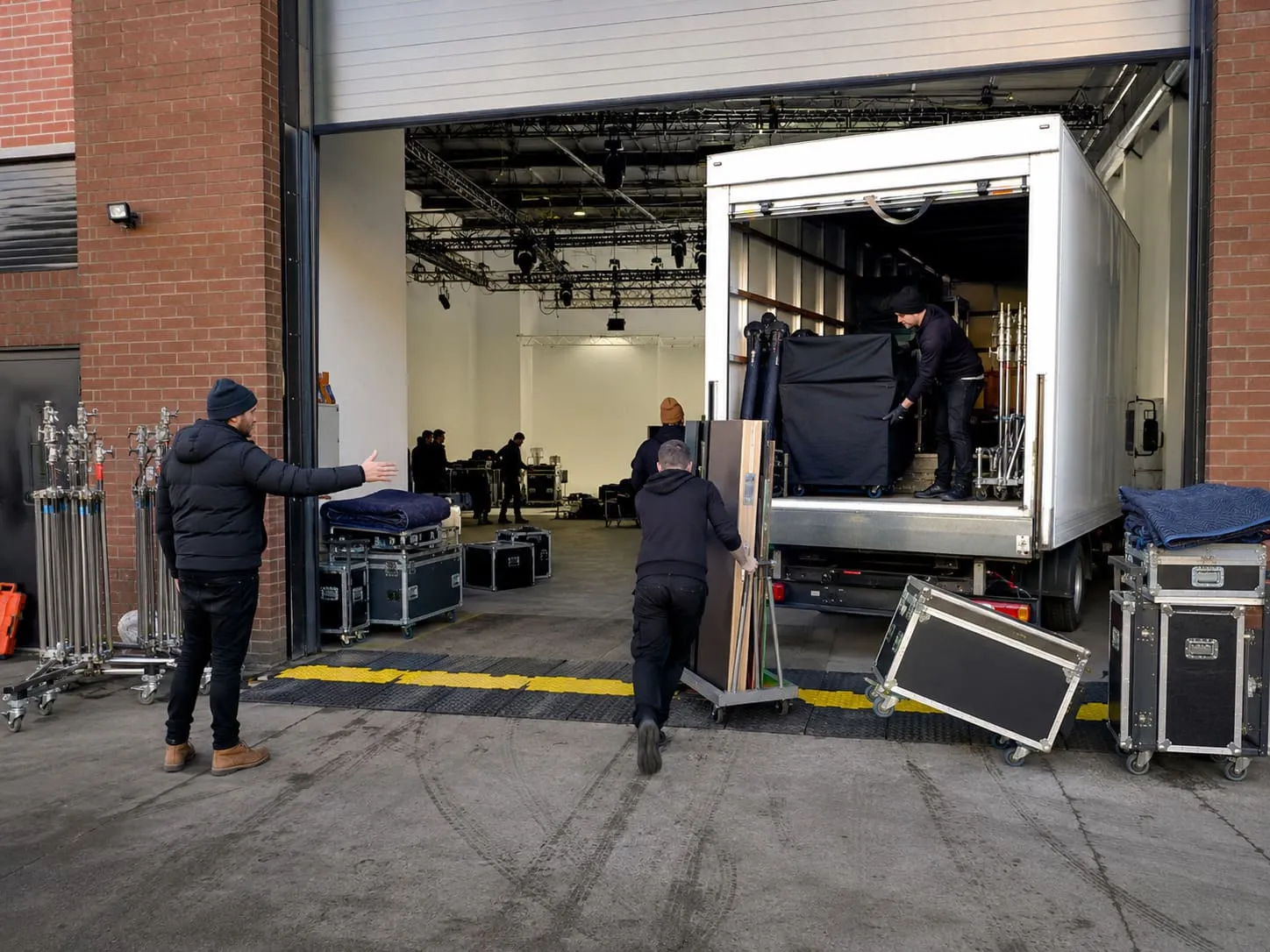
A load-in day in London rarely forgives loose planning. Access windows can be tighter, vehicle movements need more control, and crew travel patterns are often shaped by road congestion, rail timing, and site-specific operational hours.
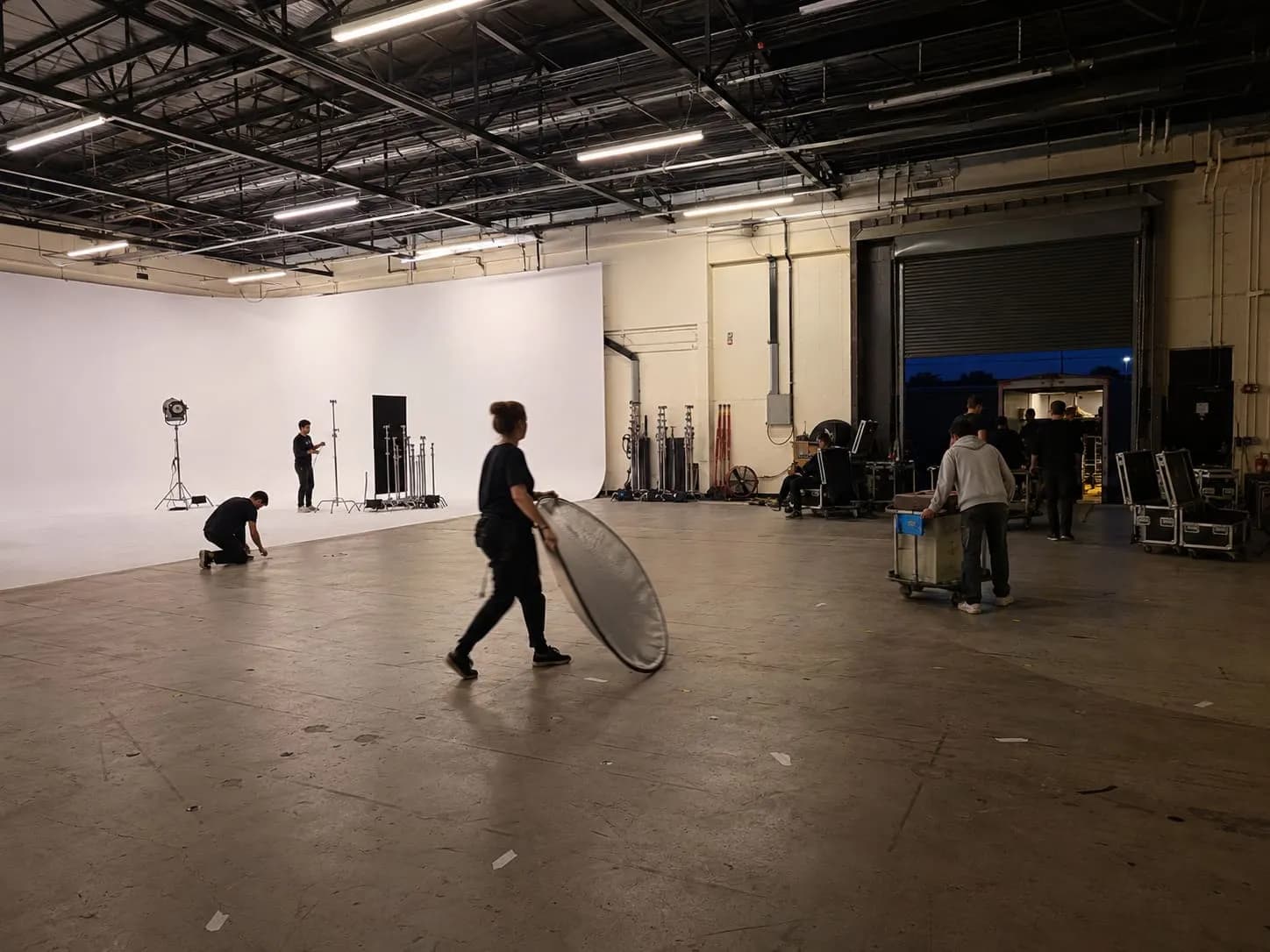
Studios in the city also vary more than a simple floorplan suggests. One stage may be built around large-format physical production with straightforward drive-in loading, while another may support blackout work, heavier rigging demands, or LED-based workflows that change the order of arrival for departments.
Common assumptions tend to cause the earliest delays:
- Crews often assume that a London studio with vehicle access can absorb multiple arrivals at once, when many sites still need staggered loading.
- Suppliers sometimes expect parking to function as open holding space, although allocations are usually planned in advance.
- Production teams may treat rail proximity as a convenience rather than a scheduling variable, even though services on the London Overground and Jubilee line can affect crew call reliability.
- Departments occasionally assume all studio infrastructure is interchangeable, despite major differences in power, rigging, connectivity, and technical support.
Transport for London links matter because they shape who arrives by rail, who needs unit vehicle space, and how quickly late changes can be absorbed. A site in London Zone 2 may be efficient for crew movement, but that does not remove the need for a proper access plan.
Well-run studio operations reduce friction through infrastructure, including drive-in loading, clear parking allocation, and defined production areas. Those features do not remove the need for discipline on the production side. They simply give the day a workable structure.
Studio selection: matching space and technical needs to your shoot
If the stage is wrong for the job, the load-in day starts under pressure before the first van arrives. Scale, blackout requirements, power, rigging, and vehicle access all affect what gets unloaded first, where it lands, and how quickly departments can work in parallel.
At Mammoth Film Studios, the distinction between Studio 1 and Studio 2 is operationally important, not cosmetic.
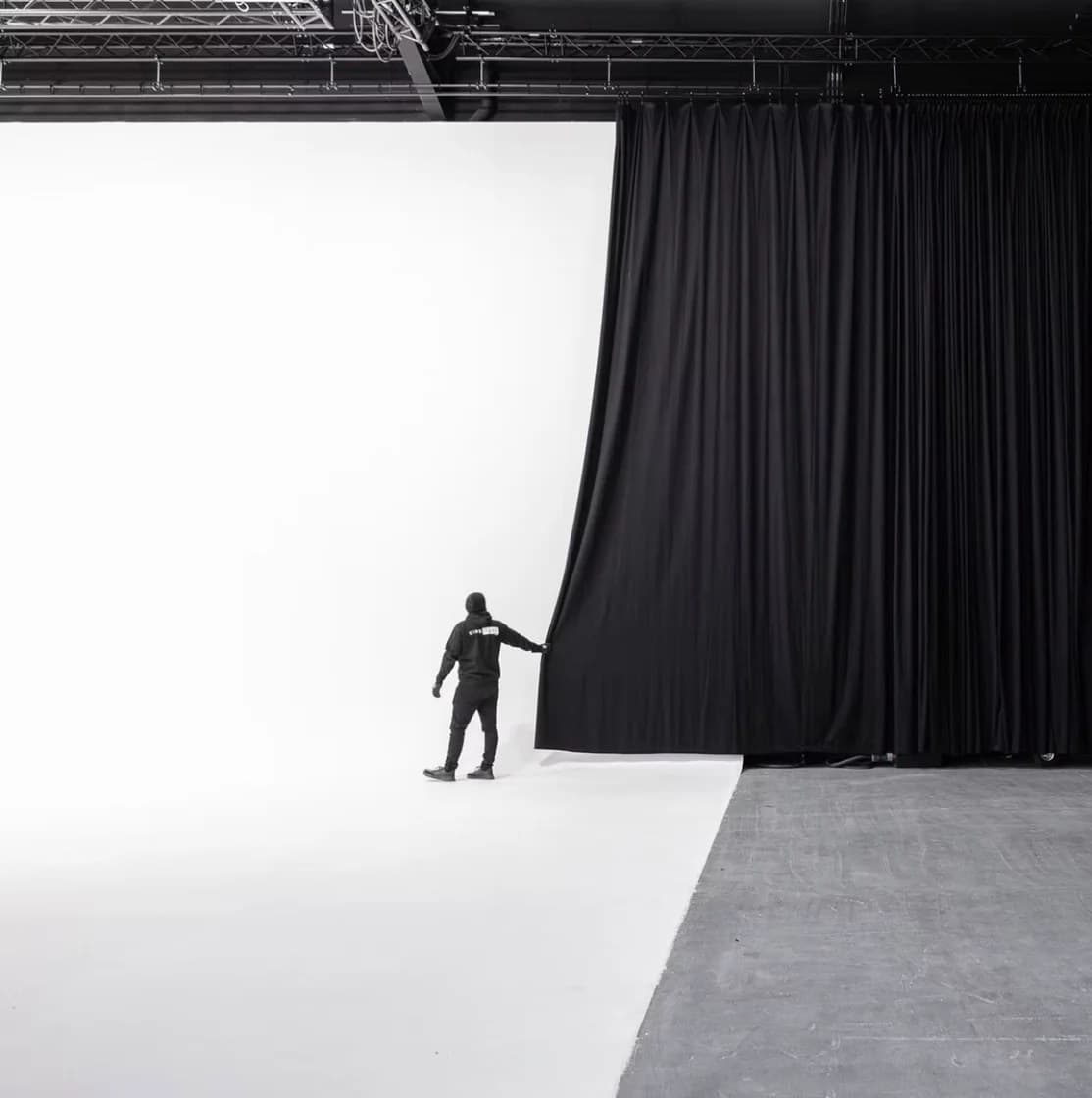
A production that needs a large white cove, heavy scenic movement, or higher-power traditional stage support will read the day differently from one built around LED playback and virtual production supervision. Studio 2, delivered with virtual production support through Elsewhere Productions, requires tighter alignment between content, playback, rigging, and on-set technical crew before the first cases are rolled in.
Lighting plans also influence studio choice earlier than many schedules reflect. Where an exclusive partner such as Cinelight London forms part of the studio’s operating model, that should be treated as part of the planning framework so rigging calls, delivery timing, and distribution plans are set before load-in morning.
Vehicle access can be the deciding factor in practice. A stage may fit the brief on paper, but if your unit size, parking demand, or equipment profile does not match the site’s actual loading rhythm, the timetable will start slipping in the car park rather than on the floor.
Coordinating crew, suppliers, and deliveries for a smooth load-in
Most late starts are not caused by one large failure. They usually come from several small overlaps, including art arriving before clearance, lighting waiting on access, or camera cases being delivered into a route still blocked by scenic.
A production manager or line producer needs one shared schedule that covers people, vehicles, departments, and handover responsibility. Separate call sheets and delivery emails are rarely enough on their own.
A simple coordination sequence keeps the day moving:
- Confirm the first-access team, usually production, studio operations, and whichever department needs the floor first.
- Assign timed delivery windows for each supplier rather than giving everyone the same arrival slot.
- Circulate one access note covering entry procedure, named contacts, parking instructions, unloading routes, and site rules.
- Match equipment manifests against each vehicle so priority items are unloaded first.
- Set a handover point for every supplier, with one person authorised to sign off receipt or flag missing items.
- Build a short reset gap between major arrivals so the route clears before the next vehicle enters.
Named responsibility matters. If studio operations teams are handling gate access and site movement, production needs one person who can make immediate decisions on the day. If delivery companies cannot reach the right contact at the point of arrival, small delays compound quickly.
Paperwork should travel with the load-in plan rather than behind it. Access lists, manifests, parking allocations, and induction information need to be in circulation early enough for suppliers to act on them, particularly where equipment is coming from multiple depots or where crew call times differ by department.
Working through access, parking, and external space constraints
Parking is often treated as a convenience issue, although on a London shoot it is part of the schedule. Every bay given to a non-important vehicle can slow a later arrival that actually needs direct access to the stage.
Drive-in loading should be planned around sequence, vehicle size, and unload duration. Large box vehicles, art trucks, and specialist technical deliveries need different treatment from crew cars or couriers. A site manager or parking coordinator should know in advance which vehicles need priority placement and which can be held off-site until called.
Key points usually need explicit allocation:
- Stage-adjacent access for the first unloading vehicles
- Spaces reserved for unit vehicles that support the working day
- Clear rules on crew parking versus supplier parking
- A holding plan for early arrivals
- Step-free routes for kit and personnel where relevant
- Overflow arrangements if vehicles turn up outside their slot
Some London studios also have flexible exterior areas that can support production logistics, but availability should never be assumed. At Mammoth Film Studios, on-site parking can function as conditional external backlot space of roughly 6,000 sq ft, depending on the day’s operational needs. That kind of space can be useful for temporary holding, support activity, or specific production tasks, yet it still requires prior agreement and a clear boundary between parking use and external shoot use.
Restrictions need to be repeated, not implied. Drivers, suppliers, and department heads should all receive the same instructions on access times, turning space, unloading order, and where vehicles go once empty. Vague wording usually produces very concrete congestion.
Integrating technical infrastructure and on-site systems
Technical assumptions can waste the first hour of a shoot more quickly than a late van. Power, rigging, signal flow, and network requirements need to be verified against the actual stage well before load-in day.
Studios differ sharply in what is built in and what still needs to be brought, patched, rigged, or supervised. A proper pre-flight check with studio technical managers keeps that distinction clear.
- Confirm power requirements by department and match them to the selected stage supply.
- Lock the rigging schedule with the in-house rigging team so access order reflects overhead work.
- Align lighting deliveries and support needs with the studio’s operating model, including any involvement from Cinelight London.
- Map video routing needs, especially where feeds must move from stage to production spaces through 12G SDI infrastructure.
- Check network demand for streaming, playback, file transfer, and client monitoring against the available crew Wi-Fi, dedicated streaming network, internal LAN, and hard-wired internet.
- Verify any specialist virtual production requirements separately if Studio 2 is in use.
A stage with up to 4 Gbps symmetrical hard-wired internet offers meaningful production flexibility, but only if departments know who needs that connection, where it terminates, and when it must be live. The same applies to internal routing. Video villages, client areas, and production offices should be treated as part of the signal plan rather than afterthoughts.
Rigging order often determines the whole morning. Once overhead work starts, floor access can tighten, which means camera, lighting, scenic, and playback teams need a sequence that reflects the real build, not a general call time.
Managing documentation, compliance, and site induction
Documentation is a gatekeeping issue, not an admin extra. Missing paperwork can stop people, vehicles, or equipment before the working day has properly begun.
Production coordinators usually carry the load here, but every department head should know what has been submitted and what still needs to be presented on arrival. Insurance details, risk assessments, access lists, and supplier information all need to be aligned with the actual attendance plan.
Site induction should be treated as part of the timetable. If crew and suppliers need briefing before they can begin work, that time belongs in the load-in schedule rather than at the margins of it.
The clearest approach is to lock four elements in advance. First, confirm who is coming and when, with named personnel rather than loose department counts. Second, make sure compliance documents match the work actually being carried out on site. Third, circulate induction requirements before the day so no supplier arrives unaware of site rules. Fourth, keep one current version of the paperwork set, because multiple near-identical versions usually create confusion at access control.
Health and safety officers or studio teams may have site-specific procedures for vehicle movement, rigging activity, fire routes, and restricted areas. Those procedures need to be integrated into the production plan early enough for call sheets and supplier instructions to reflect them.
Final checks and contingency planning before the shoot
The last stretch before crew go live should be short, deliberate, and visible to every department lead. A final walk-through is where planning becomes proof.
Before camera call, most productions should confirm:
- Access routes are clear and empty vehicles have been moved
- Priority equipment has arrived and been checked against manifests
- Power, network, and signal paths are live where required
- Department leads are present and ready to start work
- Client, production, HMU, and support spaces are set for use
- Any unresolved issue has a named owner and a decision time
Buffer time matters because the most common problems are ordinary ones, including a missing adaptor, an unlabelled case, a delayed supplier, or a crew member held up on the network. A realistic contingency plan does not need drama. It needs a decision chain, a spare margin in the call structure, and a shared understanding of what gets deprioritised first if time starts to tighten.
Studios supervisors and technical crew should be included in that final communication loop. A quick floor check with the right people often resolves an issue in minutes that might otherwise sit between departments for half the morning.
Rethinking load-in: why operational discipline sets the tone for the entire shoot
Load-in is often treated as the practical preface to the real work. In studio production, it does much more than that. It shapes tempo, departmental confidence, and the quality of the first few hours on set.
When the morning begins with clear access, ordered unloading, live systems, and known responsibilities, the production workflow feels settled. When it begins with congestion, unanswered calls, and unresolved setup questions, every later task becomes harder than it needs to be.
A few misconceptions are worth leaving behind:
- Load-in is not a minor logistical phase that can absorb loose planning.
- Parking is not separate from the shooting schedule.
- Technical setup is not something to sort out once everyone is inside.
- Infrastructure only works well when production uses it with discipline.
Infrastructure-first sites such as Mammoth Film Studios show how much modern studio design now depends on operational clarity as much as square footage. Across the London production community, that shift is becoming easier to recognise: the teams that start on time usually planned the load-in day with the same care they gave the shoot itself.