What can production teams expect from film studio hire in inner London?
Production teams can expect a practical mix of studio space, transport access and technical infrastructure, especially in London Zone 2 locations. The main variables are studio type, site layout, drive-in capability, rigging and power provision, and how well the studio supports crew movement, client handling and production workflow across a full day.
Understanding the landscape of film studio hire in South East London
South East London has become a more functional part of the London production map for crews that need access without losing time to difficult city logistics. For many teams, the appeal is less about postcode prestige and more about whether unit vehicles, kit, crew and clients can get in and out of the site with reasonable efficiency.
A common misconception is that South East London only offers smaller, improvised studio space hire. In practice, the area includes studio complexes built for commercial shoots, film work and hybrid production models, with a stronger focus on operations than image.
Several factors usually shape the decision:
- London Zone 2 locations can reduce travel friction for city-based crews while still supporting vehicle access.
- Proximity to the Overground and Jubilee line matters because call times, staggered arrivals and agency attendance often depend on reliable transport links.
- Site infrastructure, including parking, loading routes and internal production areas, often has more impact on the day than the address alone.
- Film studio rental in London is a space and systems decision, not a substitute for hiring a creative agency.
That last distinction matters. London production studios provide controlled environments, technical support and operational structure. They do not originate campaigns, direct shoots or run post-production, which changes how teams should brief them from the outset.
Types of studios available: traditional stages and virtual production spaces
Most professional hires in London fall into two broad categories: traditional film stages and blackout studios configured for virtual production. The right choice depends on the demands of the shoot, not on whichever format sounds newer.
Traditional stages
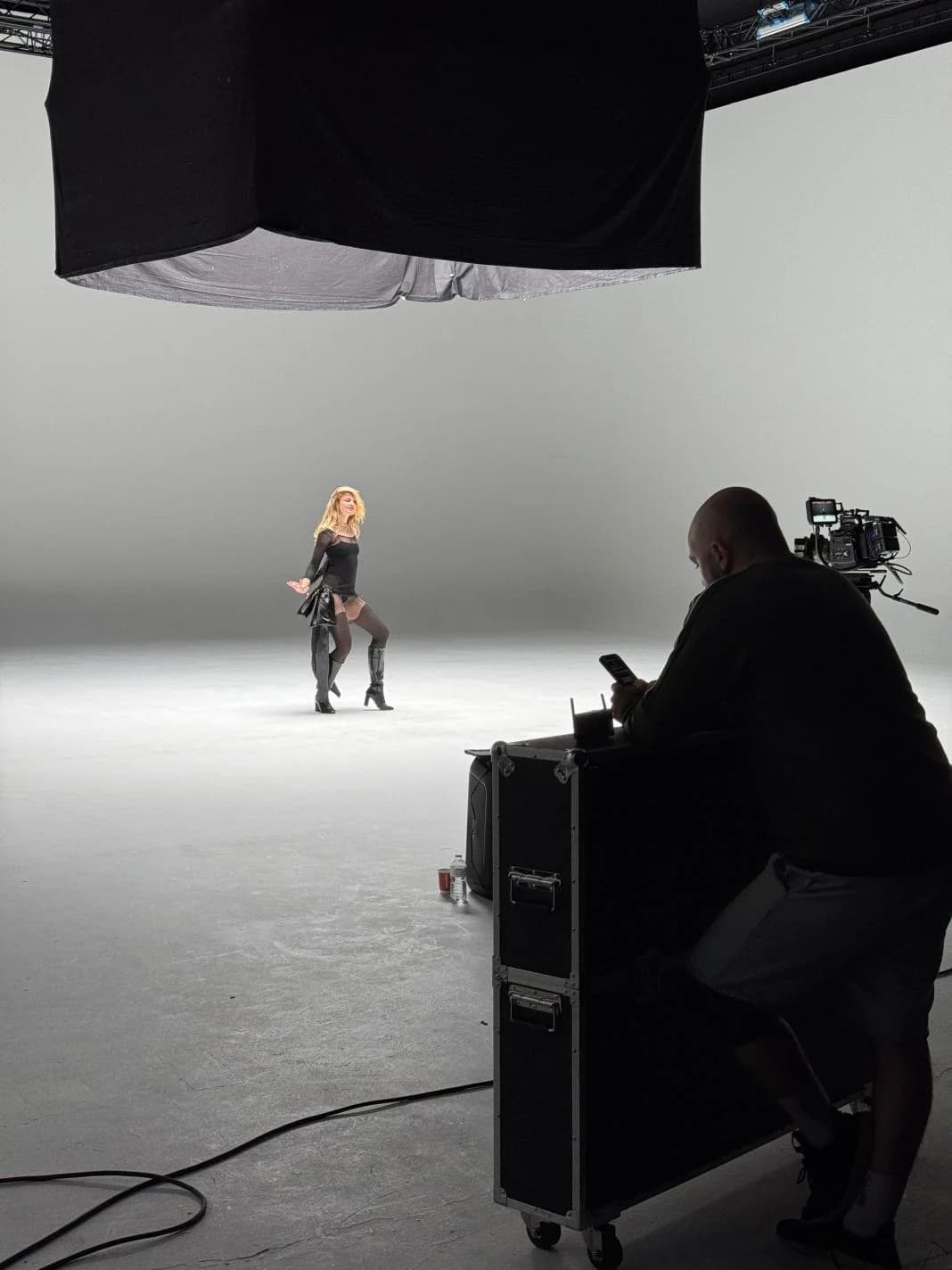
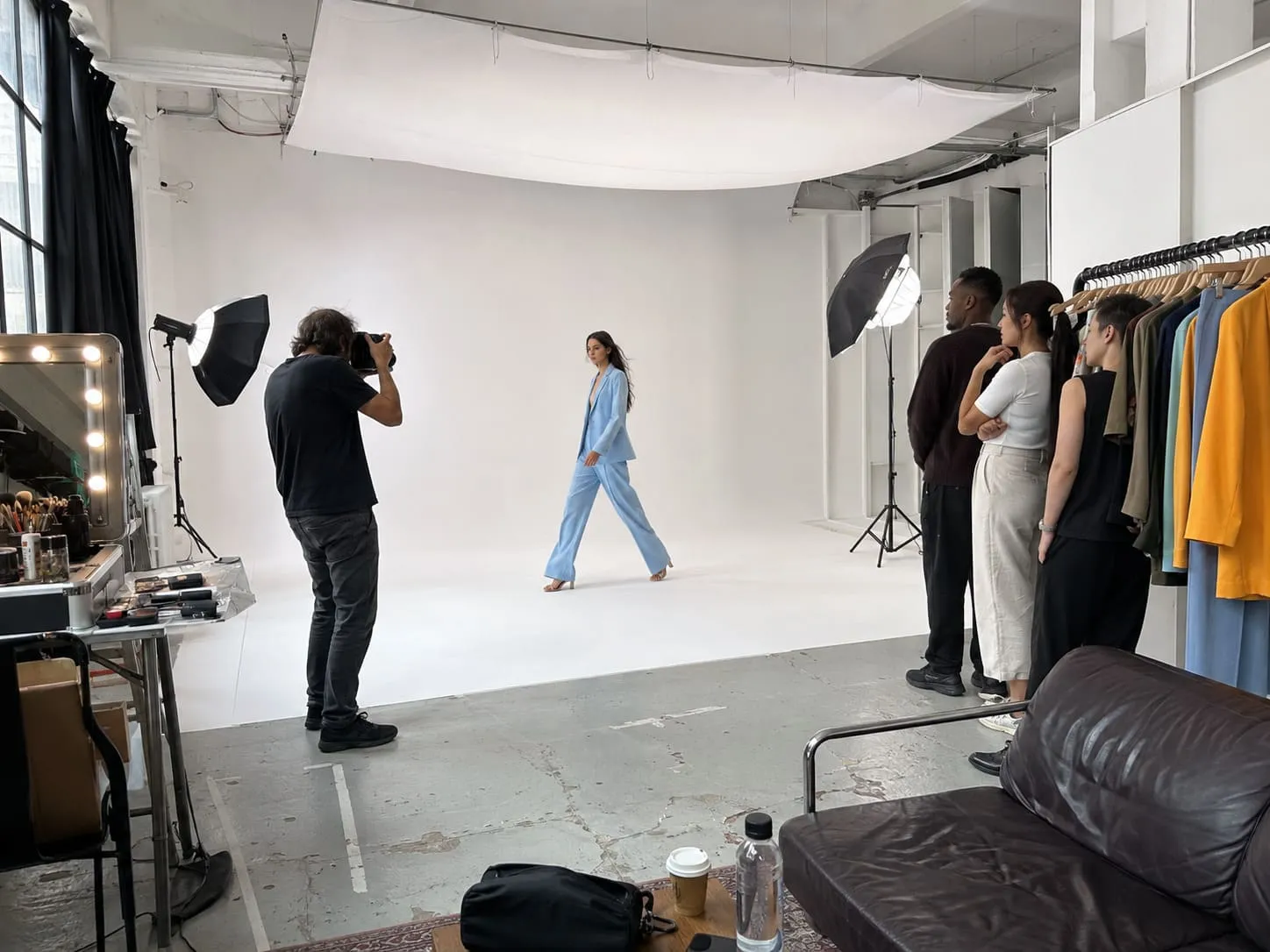
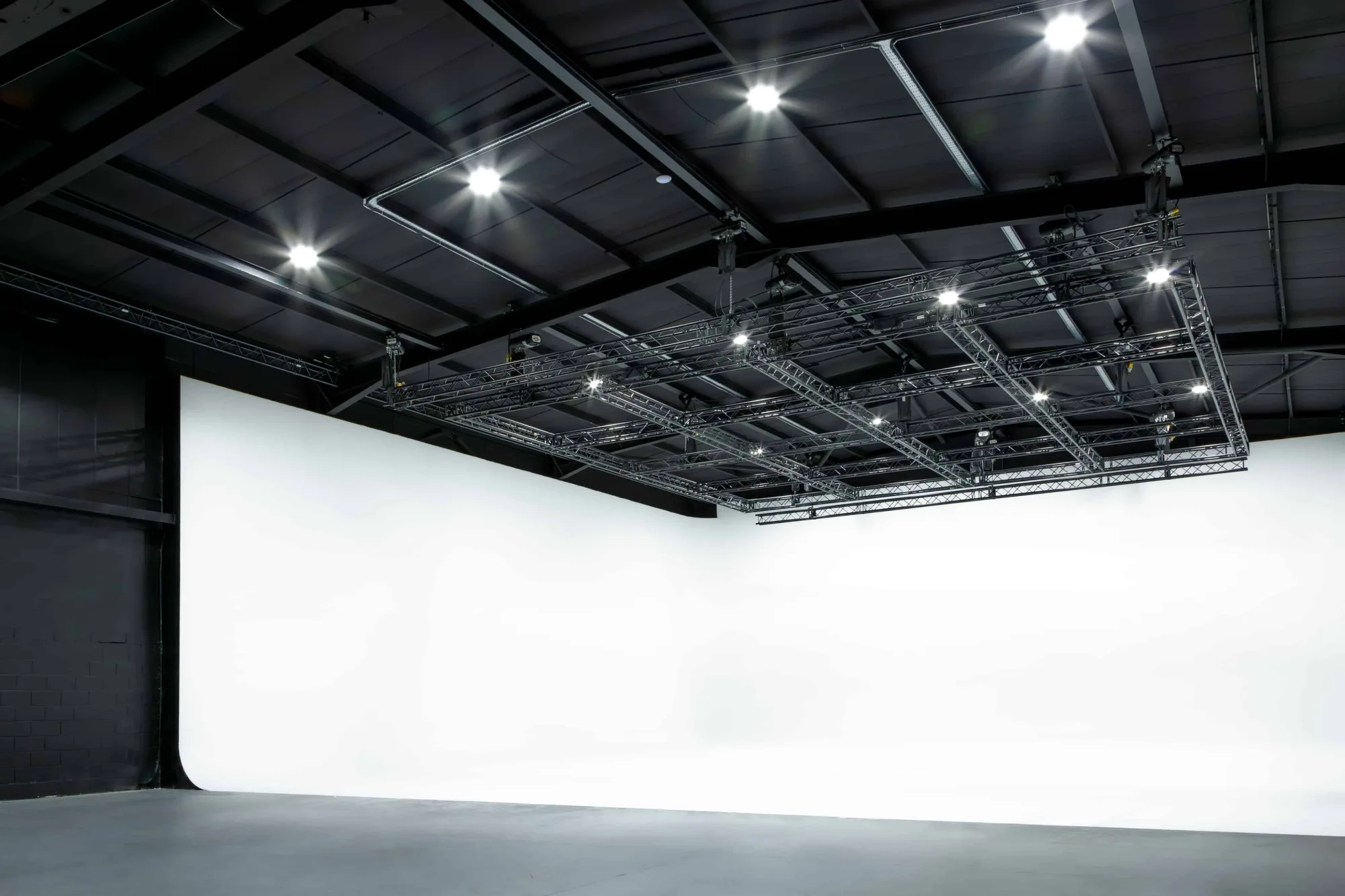
Traditional film studio hire usually suits productions that need physical set builds, large-format photography, vehicle shots, broad lighting setups or a white cove. Infinity coves remain especially useful for automotive, fashion, product and commercial work where clean horizons and repeatable lighting are more important than location simulation.
At Mammoth Film Studios, Studio 1 is a clear example of this category. It is an 8,000 sq ft stage with a 60 x 60 ft white infinity cove, blackout drapes, a 24 ft grid height, motorised truss systems, 200A 3-phase power and drive-in access for large vehicles. That mix supports shoots that need scale, controlled light and a straightforward technical base.
Virtual production spaces
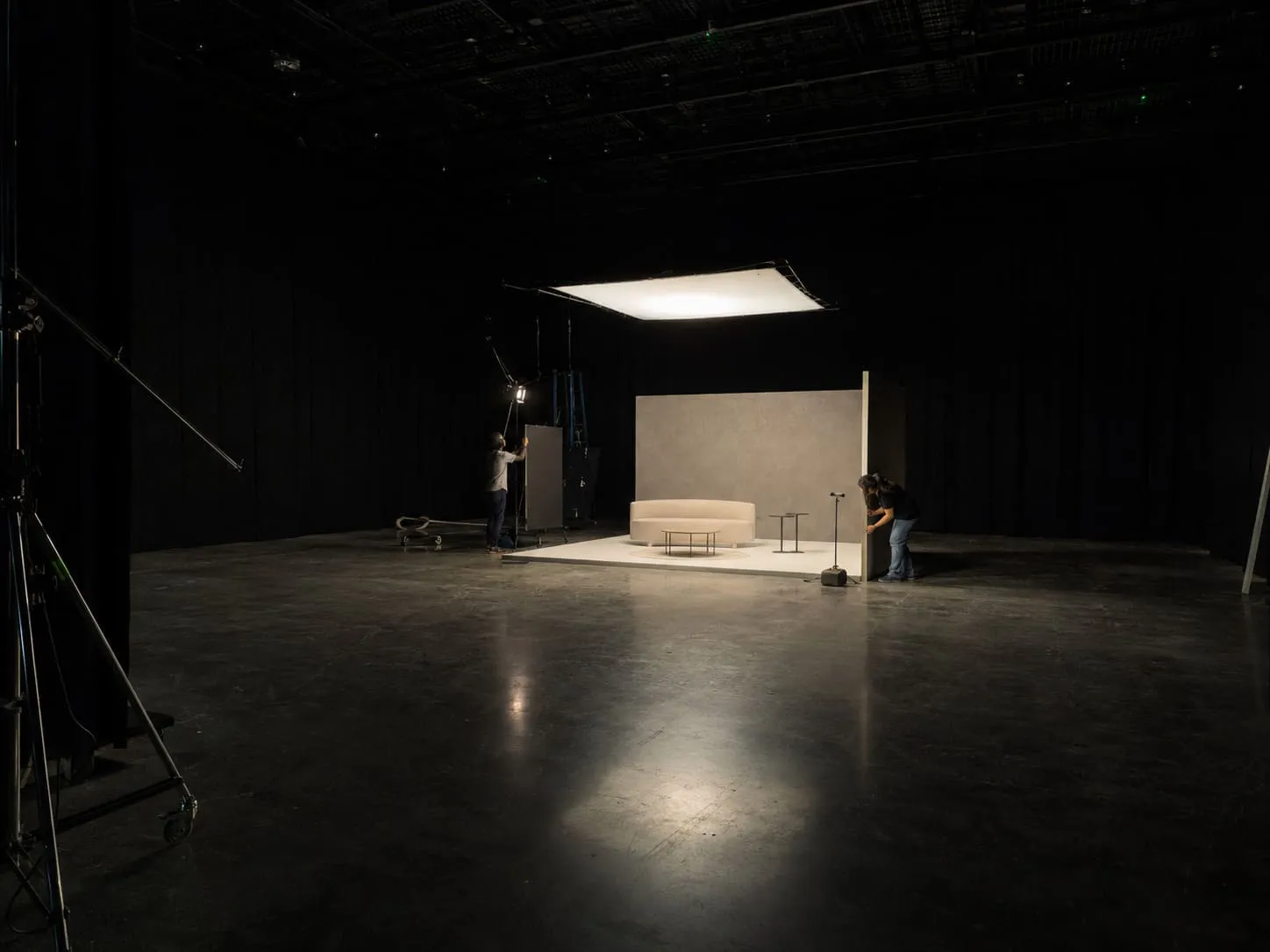
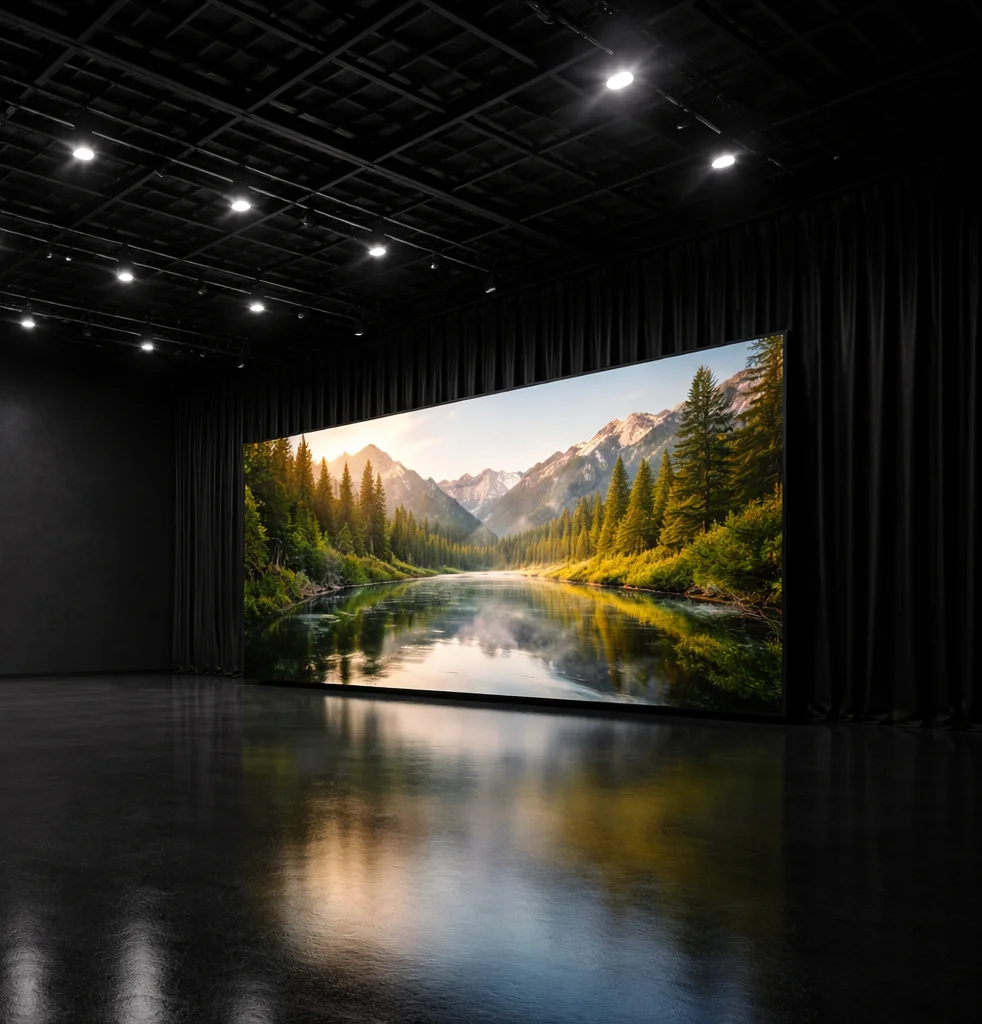
A virtual production studio in London is better understood as a specialist blackout environment that uses an LED volume as part of the production method. It can reduce the need for travel, support interactive light and allow rapid scene changes, but it does not make conventional shooting methods obsolete.
Studio 2 at the same site sits in this category. It is a 5,000 sq ft blackout stage with a modular 8 x 4 m ROE 2.8mm HDR LED volume, 24 ft rigging height, steel beams, chain hoists, 63A 3-phase power and step-free access. That specification points to a hybrid working stage, not a generic black box.
How the choice usually plays out
A traditional stage is often the better fit when the production needs physical depth, larger scenic work, broad crew movement or a cove-based setup. A virtual production space tends to suit controlled scene changes, repeatable conditions and shoots where LED playback has a clear production purpose, including branded content, table-top work with controlled reflections, certain commercial setups and selected narrative scenes.
The mistake is assuming that LED stage rental automatically replaces location work or large stages. In practice, the two formats often sit alongside each other in the same production plan.
Key facilities and technical capabilities to expect
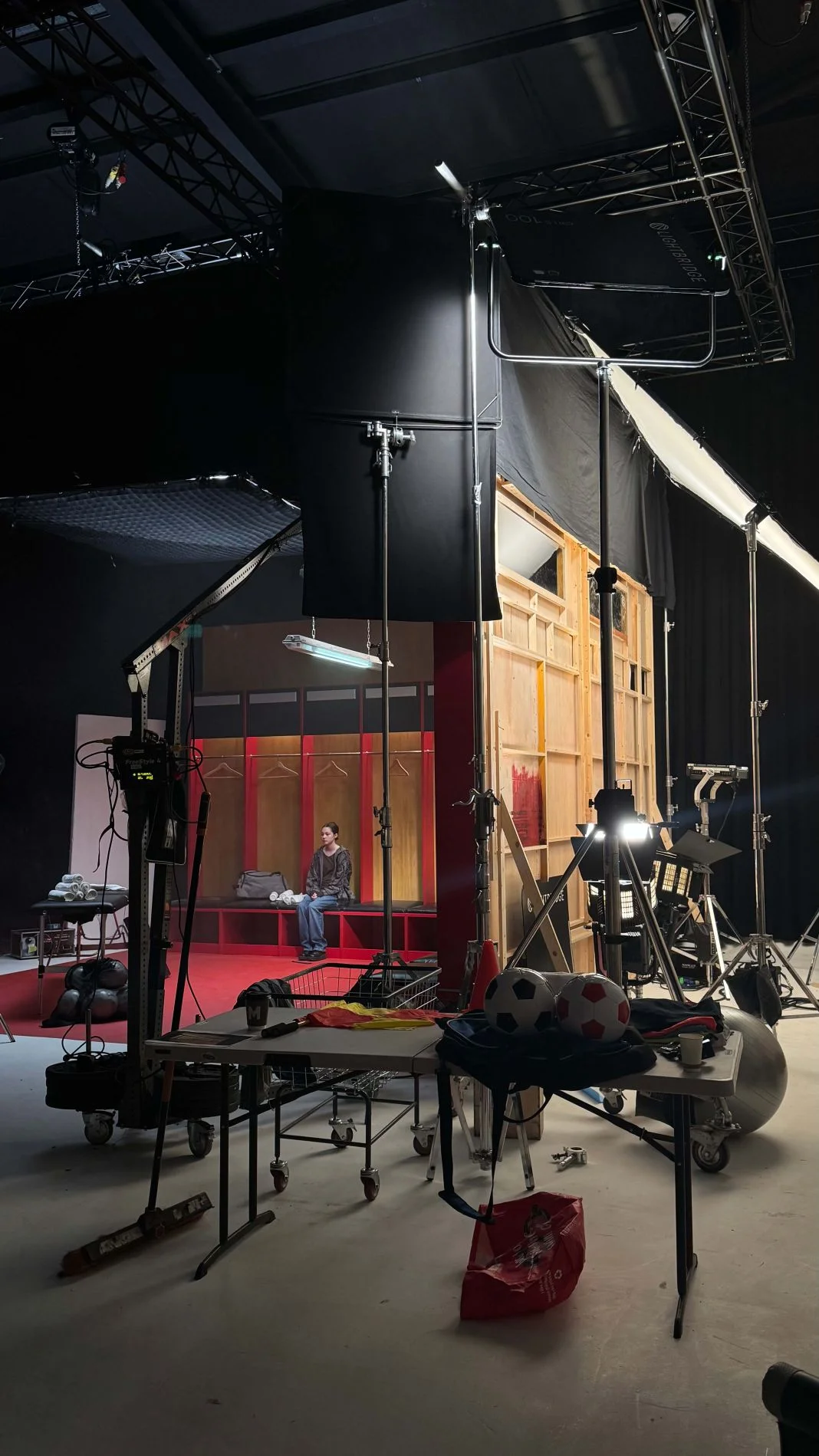
A professional studio hire should be judged by what the space can support under pressure, not by a short feature list. Grid height, rigging, power distribution, internal routing and support rooms all affect whether the day runs cleanly once departments are in.
Key facilities worth checking include:
- Power supply, including whether the stage has the right 3-phase provision for the package you are bringing in
- Rigging infrastructure, such as motorised truss systems, fixed beams, chain hoists and overall load capacity
- Grid height, because apparent floor area can be misleading if vertical working room is limited
- Drive-in studio access for scenery, vehicles and fast turnarounds at load-in and wrap
- On-site parking for crew, clients and unit vehicles
- Production offices, client rooms, styling space and HMU areas that keep departments off the stage floor
- Internal video and data infrastructure, including 12G SDI video routing, streaming networks and hard-wired internet
- Step-free circulation where mixed crew movement, wheeled kit and client access need to happen at the same time
Some of the most useful features are easy to overlook during an initial recce. A separate photography area can stop stills work from interrupting the main stage. Internal LAN and dedicated streaming capacity can simplify live review, remote sign-off and playback-heavy workflows. Parking that can also function as conditional external space may be useful on one production and irrelevant on the next, which is exactly why it needs to be discussed precisely.
Operational considerations: access, logistics, and workflow
A studio can look right on paper and still lose time if access is awkward. London works best for production when transport links and road access support different arrival patterns across the day, from early rigging calls to agency drop-ins and evening collections.
Close access to the London Overground and Jubilee line has a direct scheduling effect. Crews travelling light, agency teams joining for selected setups and freelancers moving between jobs all benefit from routes that do not depend entirely on cars or runners.
Vehicle movement matters just as much. Drive-in access changes the pace of load-in, especially for set pieces, heavy lighting packages or shoots involving hero vehicles. Sites with on-site parking can also reduce the stop-start disruption that comes from off-site holding and repeated gate coordination.
A few workflow points are worth checking early:
- Whether both stages can take vehicles directly inside, or whether access differs by studio
- How many parking spaces are actually available for production use on the booked day
- Where production offices, client areas, styling rooms and HMU sit in relation to the stage
- Whether any external area can function as flexible backlot space, and under what conditions
Backlot language can be misleading if it is used loosely. In some London studios, external space is useful because it is adaptable, not because it operates as a permanent exterior set. If parking can become a 6,000 sq ft working area, that may support base activity, overflow holding or selected exterior requirements, but availability still depends on the production footprint and site operations.
Integrated services and in-house partnerships
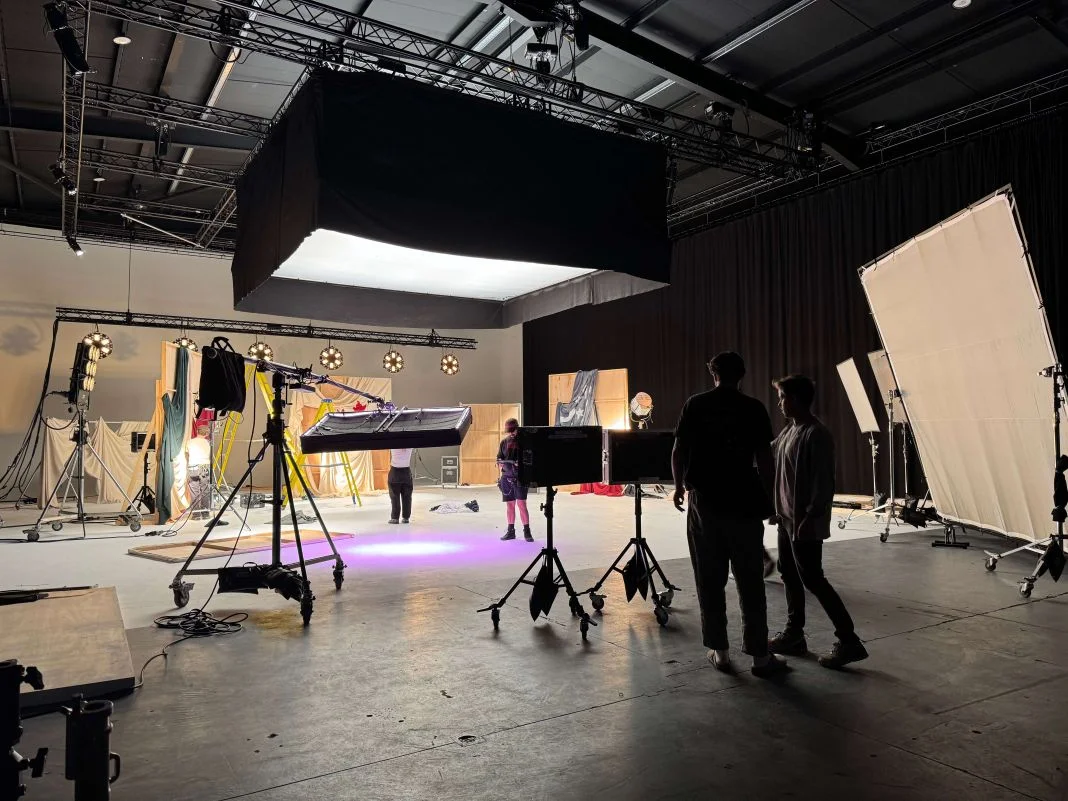
Integrated technical teams often make the difference between a stage that is merely hired and a stage that actually functions well under production pressure. The main point is consistency of operation, not control over the creative work.
An in-house rigging team usually means the building, load paths and stage systems are being handled by people who know the site in detail. That can simplify prep, reduce ambiguity around hanging points and tighten communication between the floor and the technical team.
Lighting partnerships can work in a similar way. Where a studio has an exclusive lighting partner, the benefit is usually operational alignment between the stage, the installed infrastructure and the package arriving on site. Cinelight London is one such example in this model, with the partnership framed around practical coordination rather than artistic direction.
Virtual production support needs even tighter integration because the stage, LED volume, playback system and on-set supervision all need to behave as one workflow. At Mammoth Film Studios, virtual production in Studio 2 is delivered with Elsewhere Productions, which gives production teams a defined technical structure for LED-based work. That arrangement does not dictate how a scene is shot. It sets clear responsibility for the systems that have to operate reliably during the day.
What to expect from the booking process and pricing structure
The booking process for studio hire is usually straightforward when the production brief is clear. Delays often come from incomplete technical information rather than from the studio side.
A structured enquiry normally needs the following:
- The preferred studio type, including whether the job needs a traditional stage, a blackout studio or virtual production capability.
- The working dates, prep days, shoot days and derig requirements.
- The broad technical package, including power, rigging, lighting, vehicle access and connectivity needs.
- The expected crew size, client attendance and parking requirement.
- Any support spaces needed, such as HMU, styling, production offices or a separate photography area.
Once that information is in place, studio management or booking teams can usually confirm availability, identify technical considerations and outline the pricing structure. Rates are generally shaped by the studio selected, the duration of the hire and the technical requirements attached to the booking.
Misunderstandings often arise around inclusions. A production may assume that stage hire and specialist services sit in one simple line item, even though rigging, lighting support, LED workflows or extended access hours may be treated separately. Clear booking conversations tend to be less about negotiation style and more about making sure the schedule and scope are accurately represented before confirmation.
Common misconceptions and forward-looking considerations
One persistent misconception is that virtual production has made traditional stages less relevant. The opposite pattern is often visible in practice. Productions are using different spaces more selectively, with larger traditional stages retained for work that needs physical scale and specialist blackout studios used where LED-based control genuinely suits the brief.
Another assumption is that any external yard or parking area described as a backlot will function like a standing exterior stage. Contemporary studio infrastructure rarely works that way. Flexible outside space can be very useful, but only if the production treats it as conditional working area rather than fixed scenery.
A further shift is happening in how teams assess studios in the first place. The conversation has moved away from simple square footage and into infrastructure planning, including connectivity, routing, support rooms, loading logic and whether one site can support film, photography and hybrid production models without forcing awkward compromises.
That is why newer studio environments are increasingly defined by operational discipline. The strongest sites do not try to be everything at once. They separate use cases clearly, state what each stage can actually do, and support productions with spaces that match the way crews now work across formats, departments and schedules.