What do dry hire, wet hire and full service mean for film studio hire in London?
Dry hire usually means the production books the stage and core site infrastructure, then brings its own crew, kit and technical support. Wet hire adds selected equipment and operational support from the studio, often including rigging, lighting coordination or technical crew. Full service goes further, with the studio or an appointed team managing a broader part of delivery, including equipment, supervision and production support. In London, those distinctions matter because access, crew time, transport, regulations and turnaround pressure can turn a vague brief into a costly mismatch.
Table of Contents
Understanding Studio Hire Models in London
Three studio rental types dominate most conversations in London film studios, yet the terms are often used loosely in studio hire contracts. That creates confusion at the exact moment productions need precision.
A simple working breakdown looks like this:
- Dry hire: stage space and site infrastructure, with equipment provision, crew and most technical support arranged by the hirer.
- Wet hire: stage space plus selected equipment, staffing levels and operational support provided by the studio.
- Full service: a broader managed setup that can include the stage, kit, crew, supervision and parts of production logistics.
Terminology matters because two studios may use the same label and mean different things. One wet hire package may include lighting prep and rigging support, whereas another may stop at a basic equipment bundle. A full service film studio may handle technical supervision but leave production management with the client.
London studio options also sit inside a specific operational context. Local production regulations, access windows, parking constraints, neighbourhood restrictions and crew travel all influence what a hire model needs to cover. On a tight city schedule, the line between a workable package and an incomplete one can come down to who is responsible for loading, power distribution, rigging sign-off or overnight security.
Dry Hire: Control and Responsibility
A dry hire studio London teams choose usually appeals when they want direct control over the production environment. That can suit experienced London production teams with established suppliers, fixed workflows and clear internal department leads.
In practice, dry hire means studio space only plus the built environment that comes with it, such as power, access, welfare areas and structural capability. Everything else needs to be defined, sourced and insured by the production unless the contract states otherwise. That includes crew sourcing, specialist kit, scheduling of prep, and workflow integration between departments.
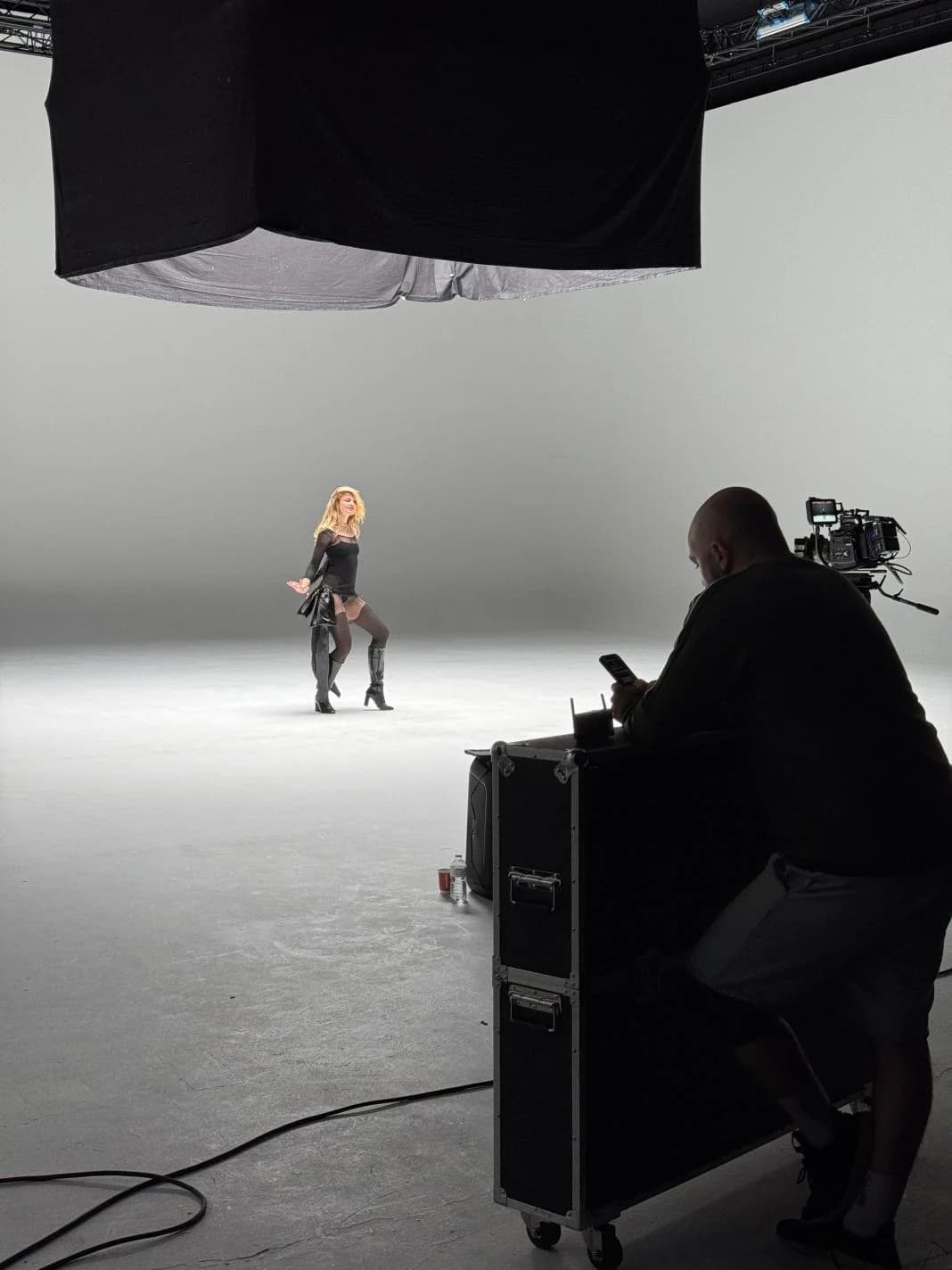
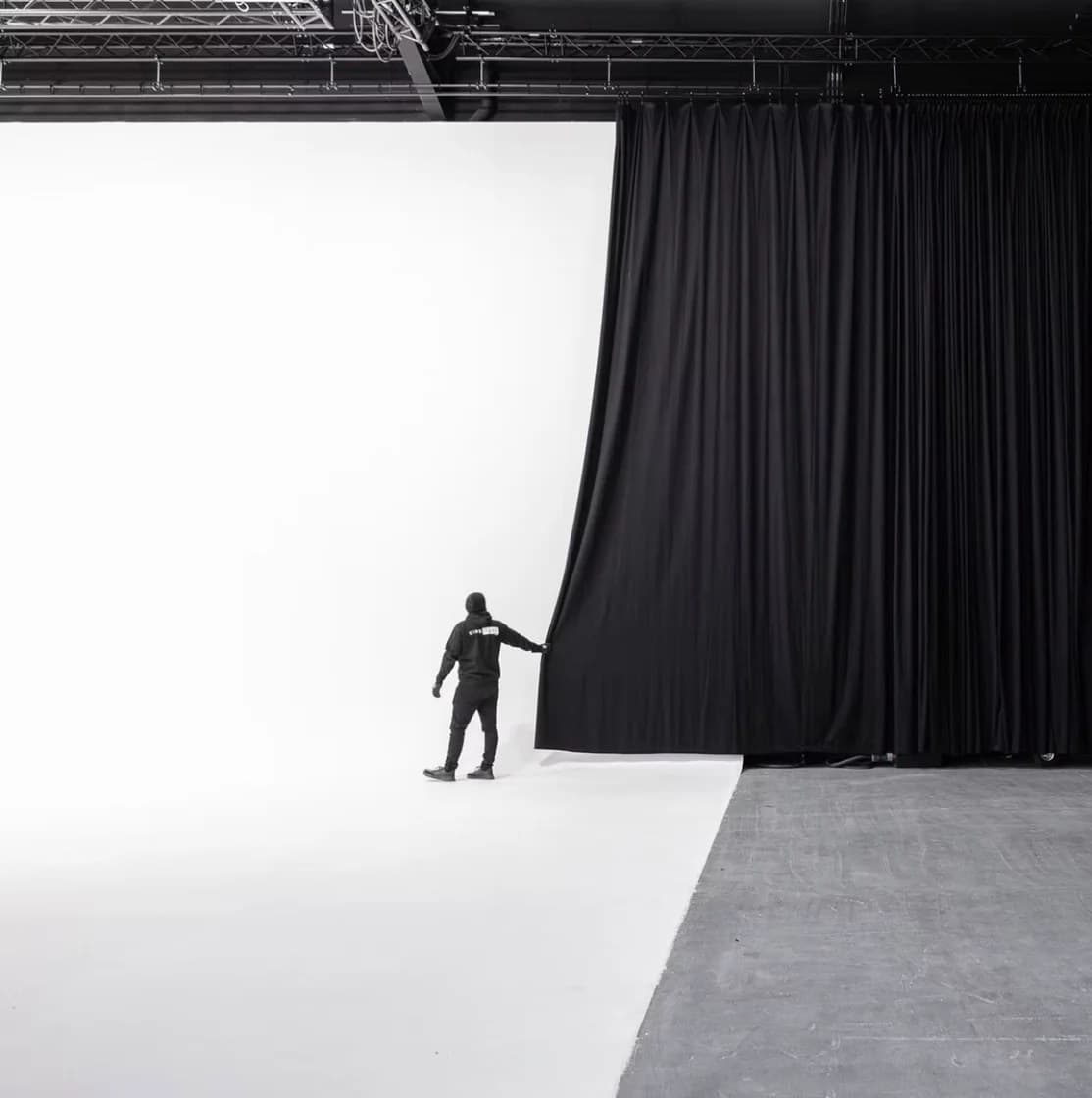
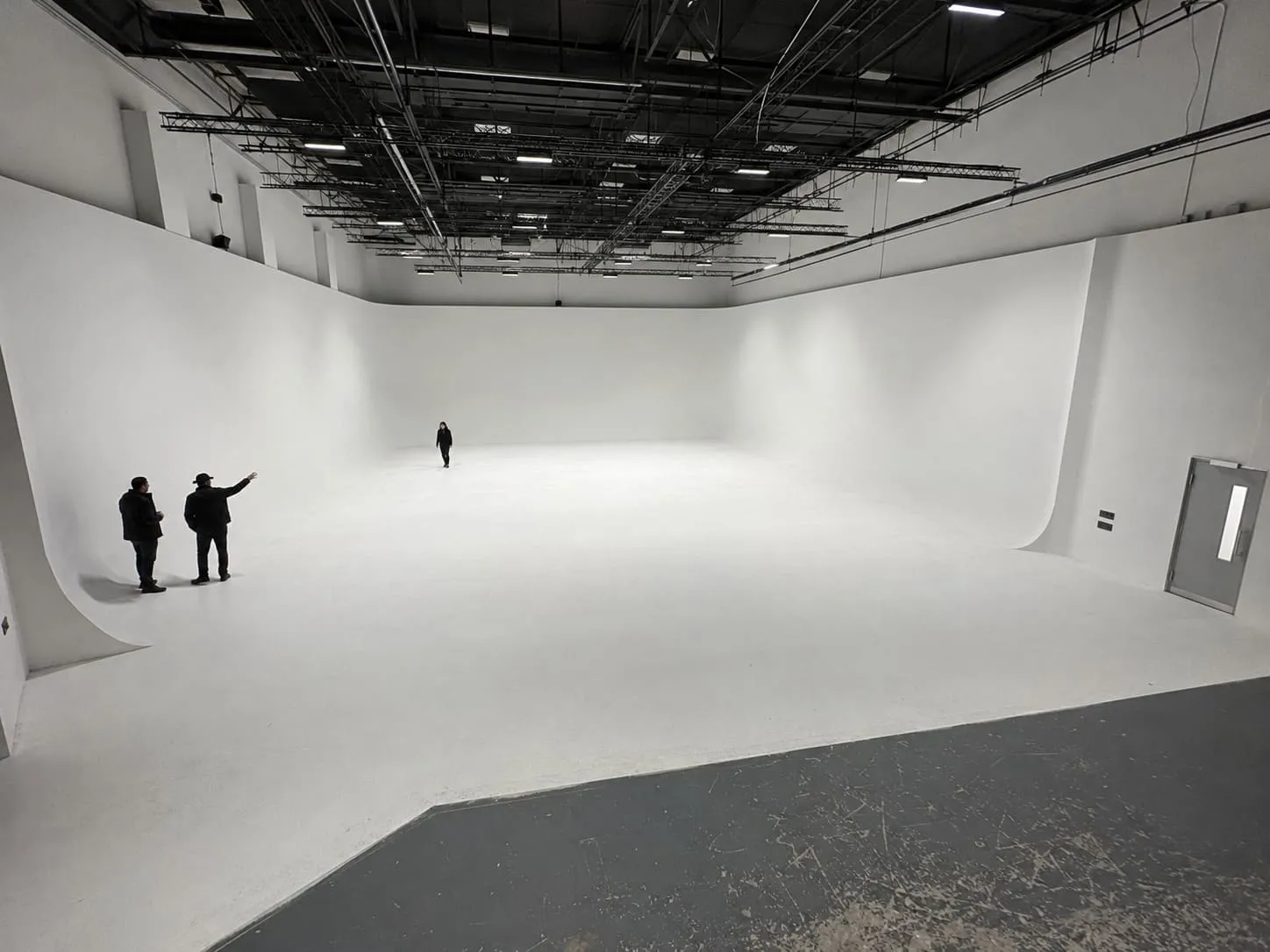
Studio 1 at Mammoth Film Studios is a useful example of how this model can work in a large-format setting. It is an 8,000 sq ft stage with a 60 x 60 ft white infinity cove, full blackout via drapes, a 24 ft grid height, motorised truss systems, 200A 3-phase power, drive-in access and associated production spaces. For a team that wants to bring its own lighting package, camera department, grip structure and set workflow, that sort of environment can offer a high level of autonomy without forcing a prescribed service stack.
Control, though, comes with responsibility. If a production wants complete freedom on crew and equipment rental partners, it also takes on more risk around timing, compatibility and oversight. A stage can be technically capable and still become inefficient if key departments arrive with different assumptions about rigging access, distribution, monitor routing or vehicle scheduling.
Before confirming independent studio hire, most teams need a clear view of the following:
- What is included as fixed infrastructure and what must be brought in separately.
- Who carries insurance requirements for hired kit, crew activity and any specialist build.
- How loading, prep days, de-rig and overtime are handled in the contract.
Dry hire is often efficient for commercials, stills campaigns, test shoots and film work led by a production team with trusted heads of department. It can also suit jobs where the studio is one part of a wider supplier network already in place. A production with an established gaffer, preferred rigging approach and known equipment chain will usually read dry hire very differently from a smaller team booking a stage for the first time.
Wet Hire: Integrated Support and Flexibility
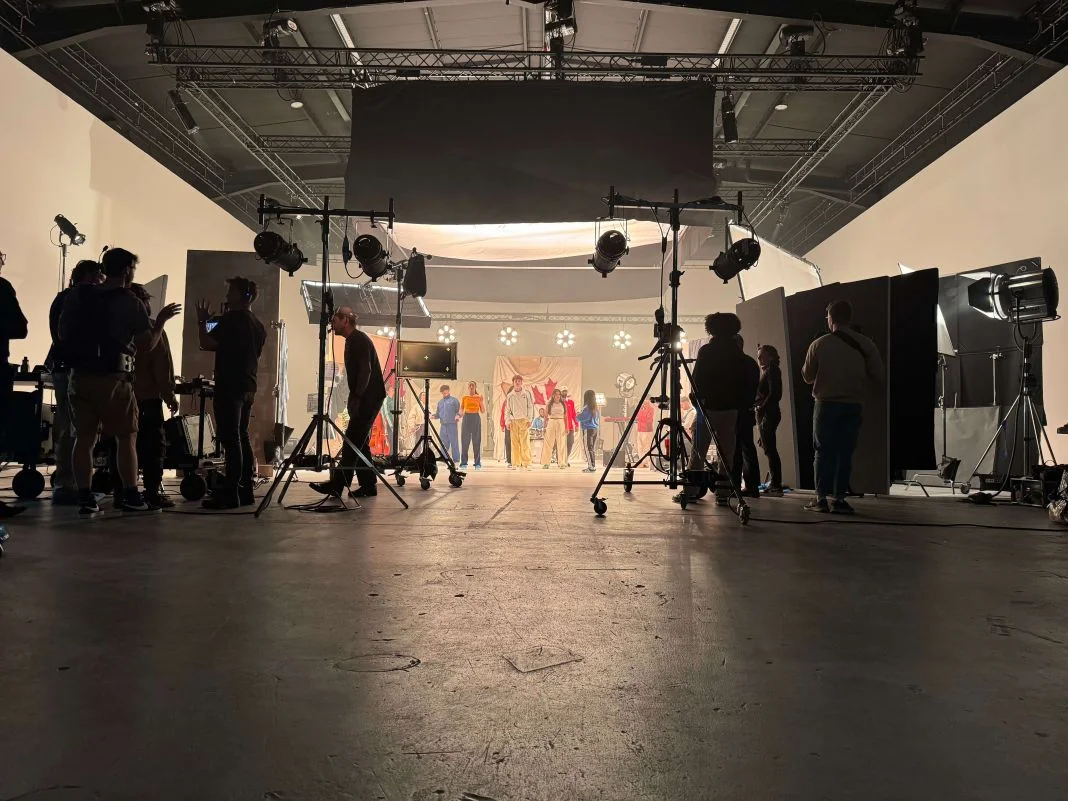
Wet hire sits in the middle ground. A production still controls the shoot, but the studio contributes practical support that reduces setup friction and closes some of the gaps that dry hire leaves open.
That support usually centres on technical crew, equipment bundles and on-set support. The exact mix varies, which means that the term only becomes useful once inclusions and exclusions are written down. A studio with crew included may cover house rigging, selected lighting, LED playback support or prep assistance, but it may not include camera package, art department labour or full engineering supervision.
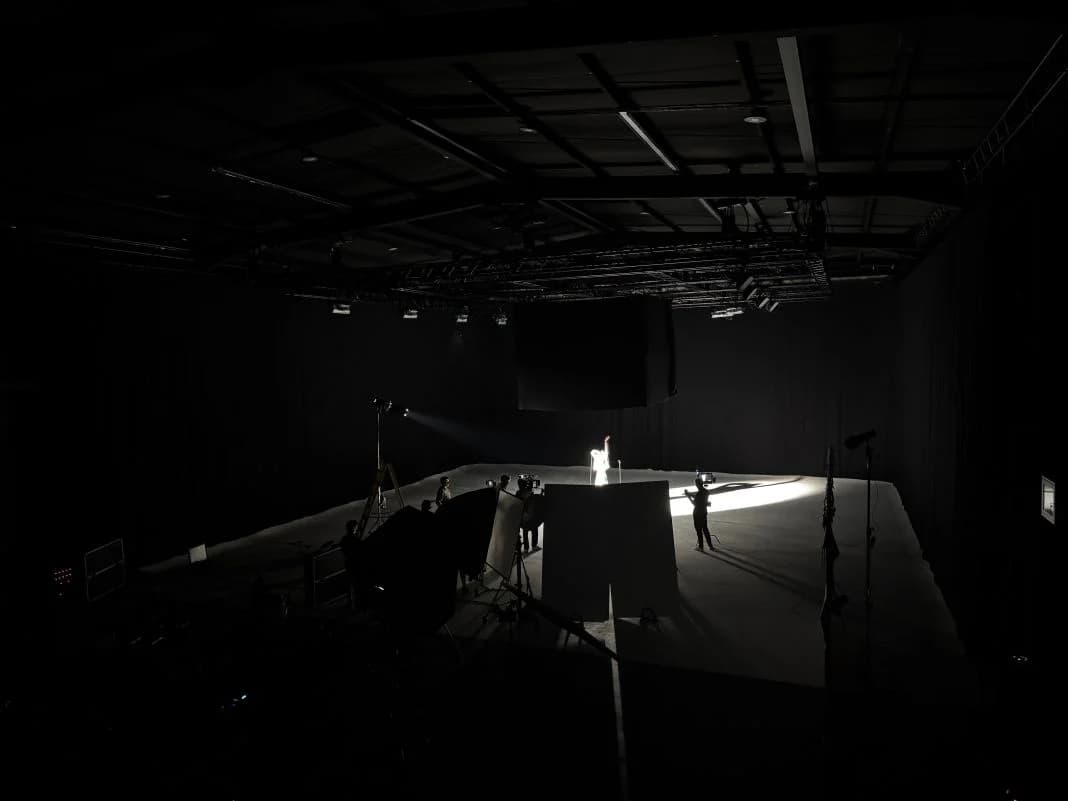
Studio 2 provides a clear example of a hybrid wet hire environment. The 5,000 sq ft blackout stage includes 360° blackout capability, a modular 8 x 4 m ROE 2.8mm HDR LED volume, 24 ft rigging height, steel beams, chain hoists, 63A 3-phase power, drive-in access and step-free movement across the space. Virtual production on that stage is delivered in partnership with Elsewhere Productions, and the site also works with an in-house rigging team and exclusive lighting partner. In operational terms, that creates a more integrated setup than a bare stage, even though it does not remove the need for the production to define scope carefully.
A wet hire studio London productions book will often include:
- Stage access and house infrastructure
- Some level of technical support studio staffing
- Selected equipment or rigging provision
- A clearer operational interface between stage, power and prep
What it may not include:
- Full production management
- Every department crew member on set
- Open-ended use of all in-house equipment
- Unlimited technical changes once the package is agreed
Misunderstandings usually arise around service boundaries. A producer may assume "wet hire" covers all technical support, while the studio may mean a narrower package built around agreed equipment provision and staffing levels. That difference affects call times, invoice structure and responsibility if plans change late in prep. On a blackout stage with LED workflow, the detail matters even more because playback, rigging, signal path and lighting logic all need to line up before the first shot.
Full Service: Turnkey Production Environments
Full service is the broadest of the production studio models. In most London contexts, it means the studio delivers a managed package that goes well beyond space hire and into coordinated execution.
That package can include the stage, lighting and grip, technical supervision teams, crew coordination, elements of scheduling, production support and a single operational lead. Some full service studio London providers also align prep, shooting and strike under one reporting structure, which can simplify communication across departments.
A true all-inclusive studio hire arrangement still needs careful definition. Full service does not automatically mean the studio becomes the creative lead, the production company or the post facility. The scope is usually operational and technical, with project management wrapped around it.
This model tends to suit:
- Shoots with complex technical interdependence
- Productions with limited internal resourcing
- High-stakes schedules where delays become expensive very quickly
- Jobs requiring a managed interface across crew, equipment and stage systems
Trade-offs are real. A managed production studio can reduce internal workload and tighten accountability, but it may also limit the flexibility to swap suppliers or alter workflow late in the process without cost or delay. Some productions value that structure; others prefer direct control over every department head and supplier decision. The right answer depends less on status and more on how the job is built.
Operational Factors: Choosing the Right Model for Your Production
The best hire option usually becomes clearer once the production is mapped against actual operating conditions rather than labels. A simple dry hire vs wet hire comparison is useful, but it rarely settles the matter on its own.
Project challenge is often the first dividing line. A straightforward tabletop commercial with a known crew and modest rig can work well in a studio space only model. A technically layered LED shoot, by contrast, may benefit from integrated support because more of the workflow sits inside the stage system itself.
Crew shape matters as much as crew size. If the production already has a strong technical spine, including line production, rigging oversight and department coordination, control may be worth retaining in-house. If that structure is thin, a wet or full service setup can reduce pressure on the schedule before day one even starts.
London logistics can also shift the decision. Zone 2 access, drive-in loading and on-site parking affect how quickly crew and suppliers can move through the day. Productions carrying heavy kit, multiple unit vehicles or fast turnarounds often gain more from operationally coherent sites than from nominal savings tied to a lighter hire model. The same applies to technical infrastructure such as dedicated streaming networks, internal LAN, hard-wired connectivity and stage-to-production video routing, particularly on jobs with live client review or complex playback needs.
A useful way to assess fit is to weigh four factors against one another:
- How much control the production genuinely needs
- How much technical support the stage workflow requires
- How much risk the team can carry internally
- How much time the schedule allows for prep, fixes and change
Shorter bookings tend to expose weak assumptions. If the crew has half a day to load, rig and start shooting, unresolved questions about access, equipment handover or staff coverage will surface immediately. Longer bookings offer more room to absorb challenge, although they can also hide inefficiency if roles are poorly defined.
Beyond the Labels: Rethinking Studio Hire for Modern Productions
Dry, wet and full service remain useful labels, but modern studio operations do not always fit neatly inside them. Production needs have become more modular, and many sites now mix infrastructure, specialist support and external partnerships in ways that cut across older categories.
That shift is visible in facilities built around technical integration rather than venue presentation. A studio may offer a large-format stage that functions well for independent hire, alongside a second stage that works better with embedded support because the workflow includes LED systems, playback and technical supervision. Mammoth Film Studios reflects that split clearly by separating a traditional large-scale infinity cove stage from a specialist blackout and virtual production environment instead of flattening both into one generic offer.
Hybrid studio models are likely to become more common in London because productions increasingly need specific combinations of control, access and systems support. Some teams want a blank operational base with strong infrastructure. Others need modular services that can expand around a complex shoot without pushing the whole job into a fully managed structure.
For producers, the practical lesson is straightforward. Hire labels matter, but the underlying question is whether the studio's infrastructure, staffing model and service boundaries match the way the production will actually run on the floor. That is likely to matter even more as industry workflow standards continue to move closer to integrated, technically managed shooting environments.