What should you include in a first brief to a virtual production studio?
A first brief should explain the job in practical terms before it sells the creative idea. A studio needs to know what you are shooting, how virtual production fits the plan, what technical conditions the scenes require, how many people and vehicles are coming, and what infrastructure the production will depend on on the day. Clear information at this stage gives the studio enough detail to judge suitability, flag limits, and shape an accurate response.
Table of Contents
Understanding what virtual production studios actually offer
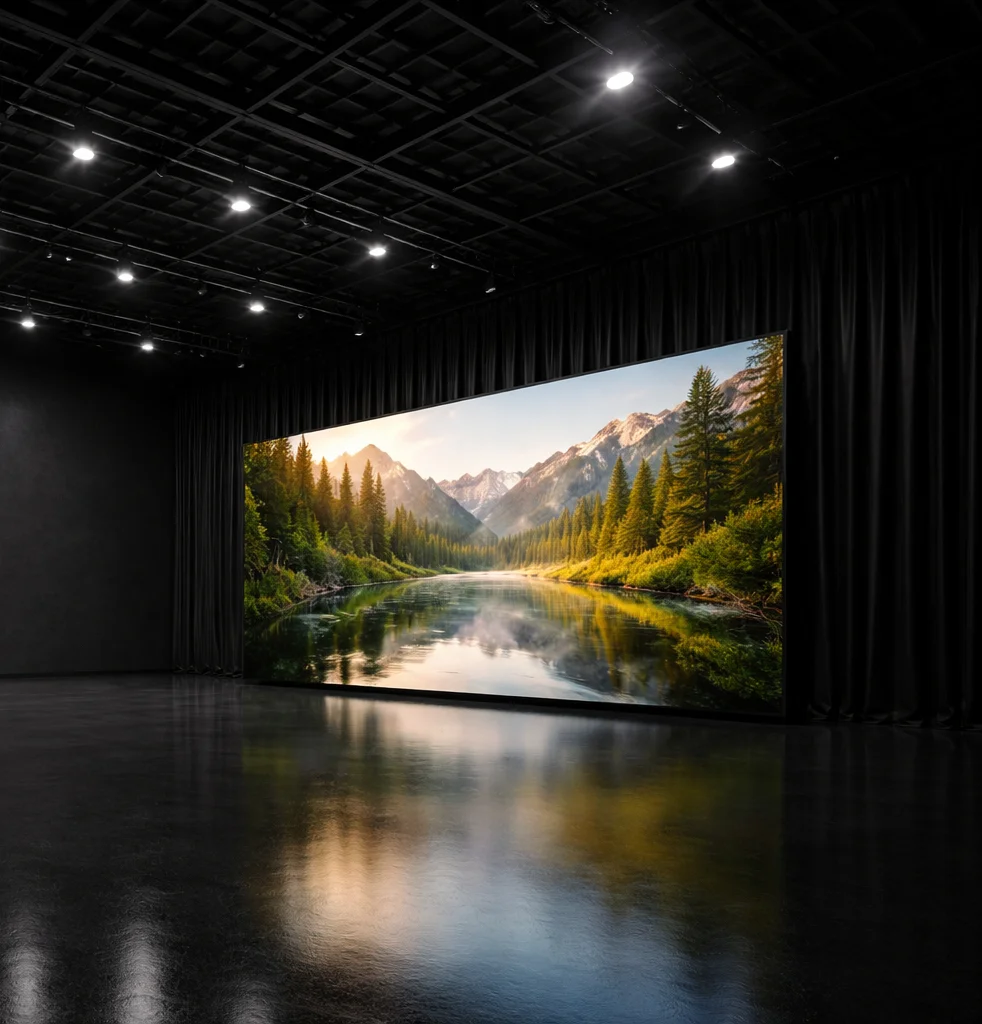
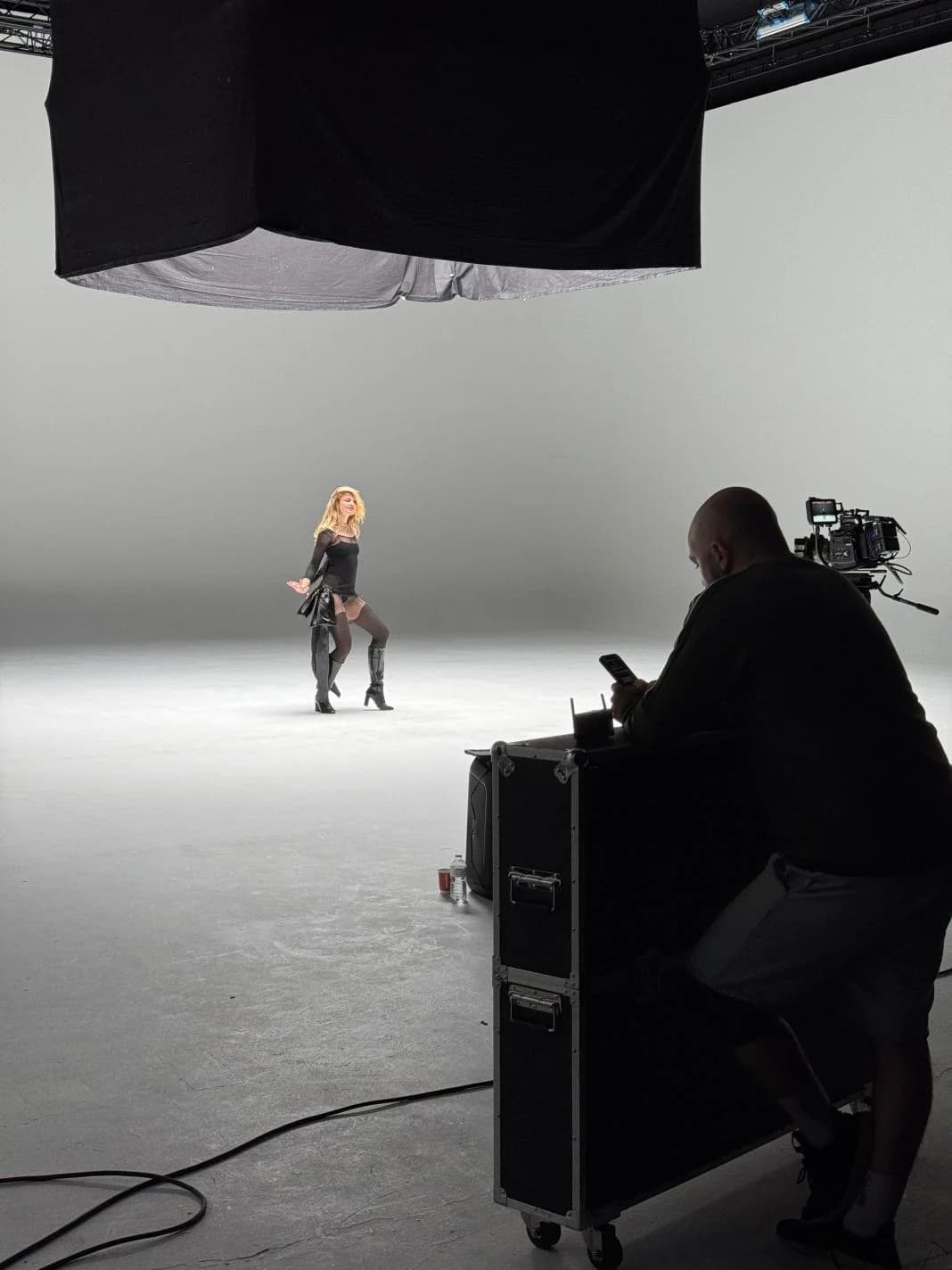
A virtual production studio is still a studio first. The difference is that part of the environment is built through an LED volume and related playback systems instead of relying only on physical scenery, printed backdrops, or green screen compositing later.
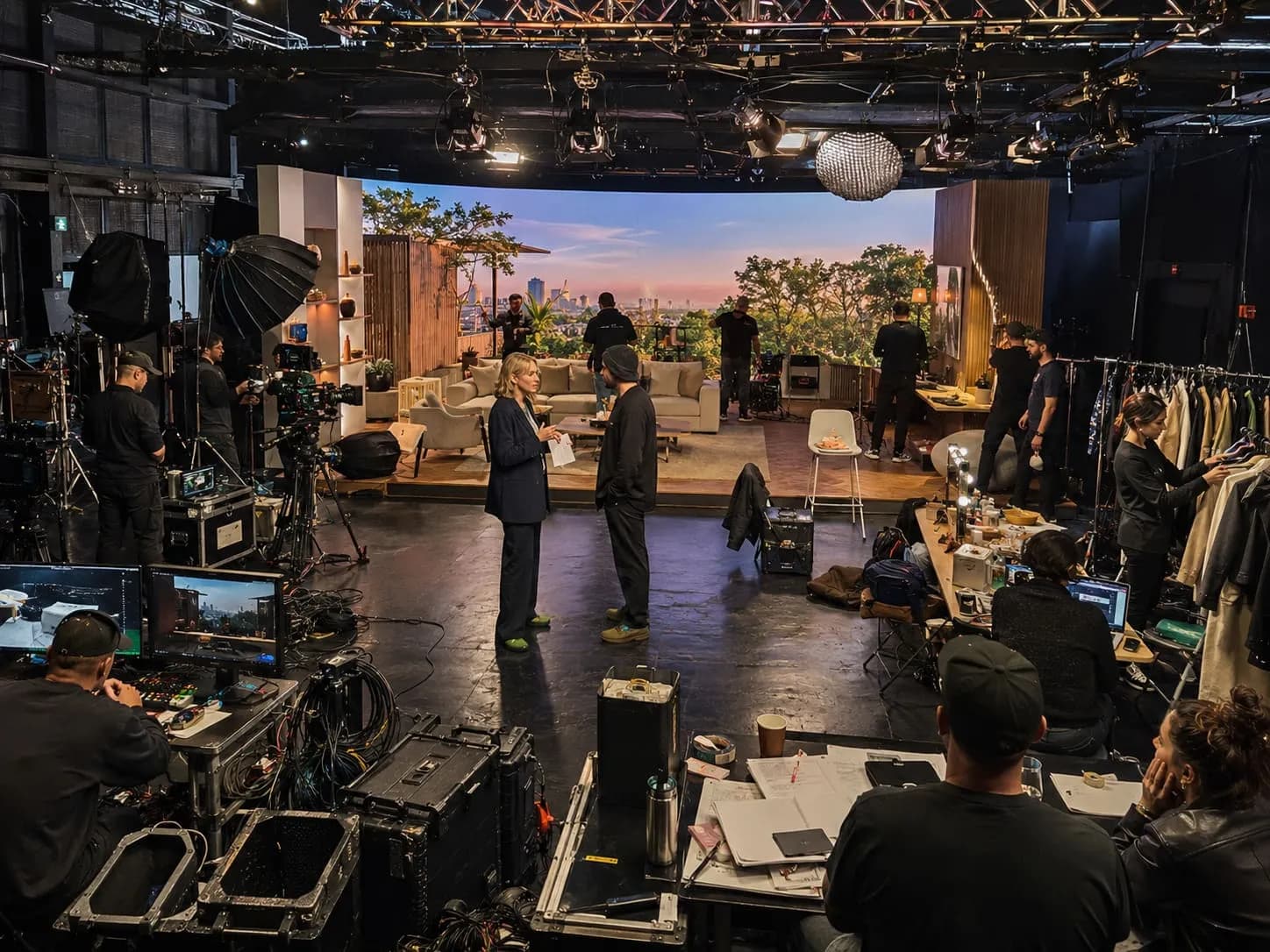
That changes the workflow in useful ways. Real-time environments can supply interactive lighting, visible reflections, and quicker transitions between scenes, but they do not remove the need for planning, art direction, camera decisions, or technical supervision. Virtual production capabilities are practical tools within a wider shoot, not a shortcut around production discipline.
For a first-time user, the simplest distinction is this:
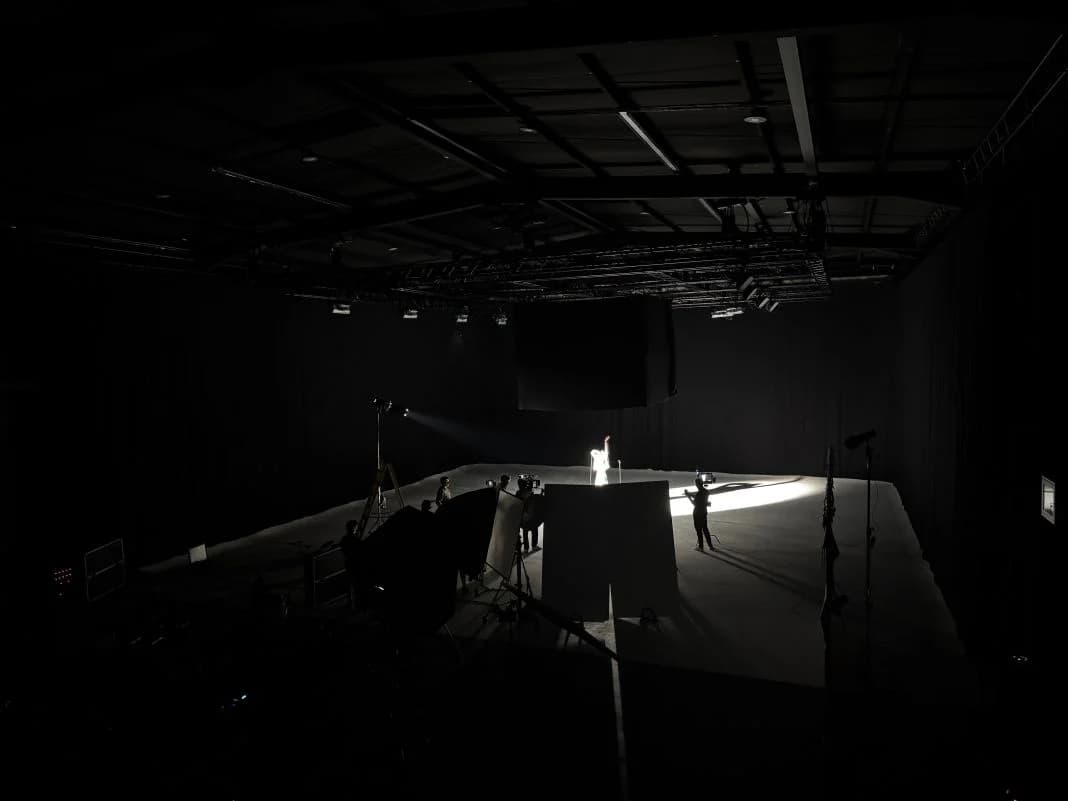
- A traditional blackout stage gives you controlled space, lighting rigging, and room to build or dress a set.
- A green screen stage gives you a neutral capture environment for later background replacement.
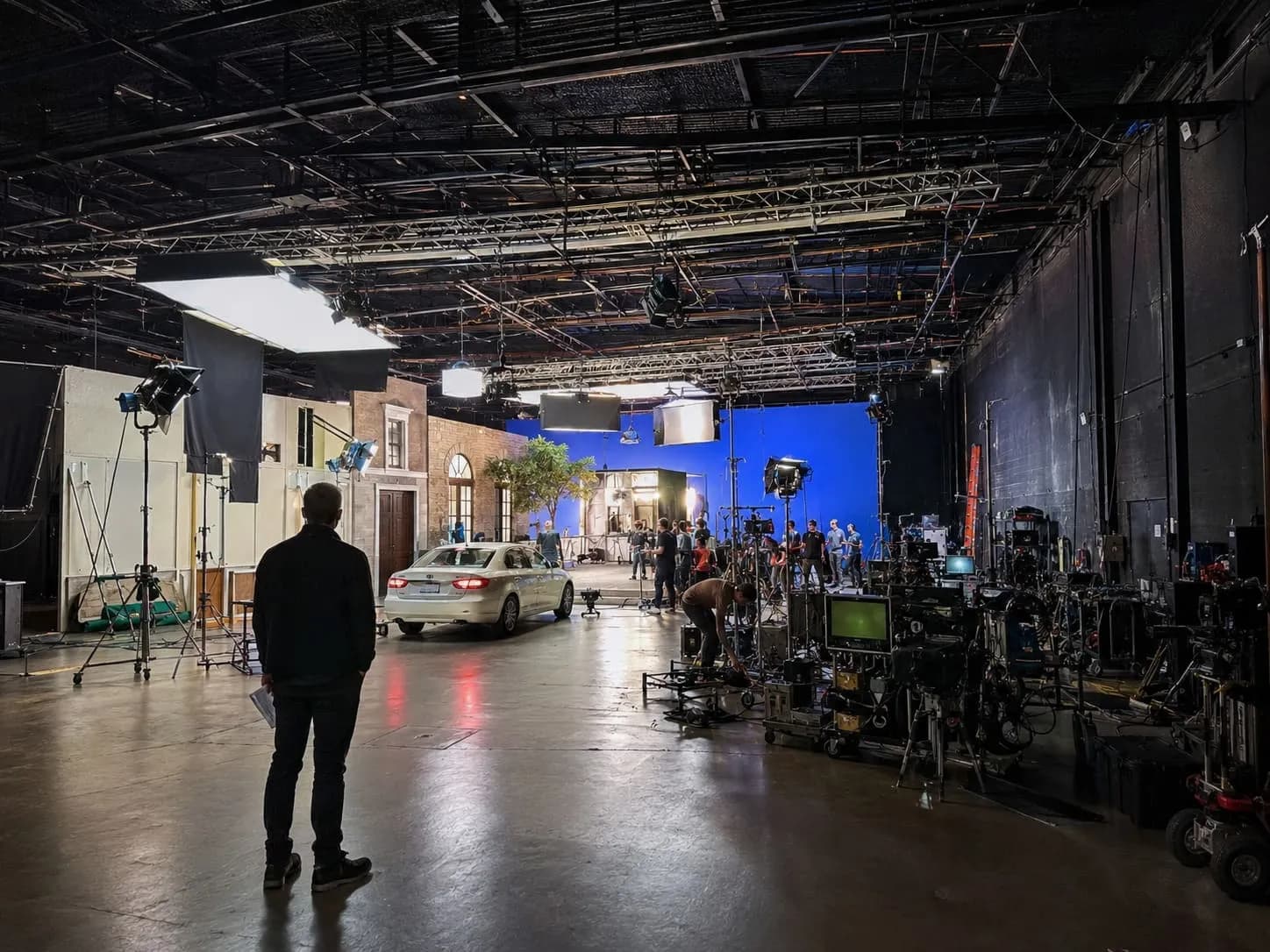
- An LED stage adds a visible background and real-time playback on set, which can affect lighting, reflections, framing, and camera movement during the shoot.
Studio 2 is a useful reference point because it is set up specifically for this hybrid way of working. It combines full blackout capability with an in-house modular LED volume, and virtual production is delivered with Elsewhere Productions. That matters because the space, the screen system, and the virtual production supervisors are part of one operating setup rather than separate hires patched together at the last minute.
LED stage features still come with boundaries. Screen size, pixel pitch, rigging positions, playback demands, lens choices, and the intended camera moves all shape what is realistic. A mountain road, a sunset skyline, and a glossy car interior can all sit under the broad label of virtual production, yet they place very different demands on the stage and crew.
Defining your production needs before the brief
The best brief usually starts before anyone emails the studio. Production managers, DPs, agency producers, and directors need a shared view of what the shoot actually needs from the stage.
A common early mistake is to brief the studio with mood references and a loose concept but no scene breakdown. That leaves a gap where the practical decisions should be. A studio cannot judge studio suitability from creative intent alone if the production has not defined how many setups are involved, whether scenes move between day and night conditions, or whether vehicles, large props, or tracked camera movement are part of the plan.
Before you draft the brief, pin down these points:
- Which scenes are intended for virtual production, and which are better handled physically or elsewhere.
- How often the background environment needs to change during the day.
- What lighting conditions the scenes require, including reflections, contrast, and time-of-day continuity.
- How large the crew is likely to be, including technical operators and agency attendance.
- Whether the job needs vehicle access, extended load-in time, or supporting spaces for client and production teams.
Scope matters here. A small number of highly controlled setups can suit Studio 2 very well. A brief that bundles in oversized scenery, unclear camera plans, and undefined environment changes can become difficult to assess, even if the original idea sounds straightforward on paper.
Internal preparation also helps you decide whether virtual production is the right fit at all. If the project depends on very large physical builds, unrestricted long-lens backgrounds, or exterior conditions that must feel genuinely exposed to weather, a conventional approach may still serve the work better. Good pre-brief planning often narrows the job into something more shootable.
What information studios actually need from you
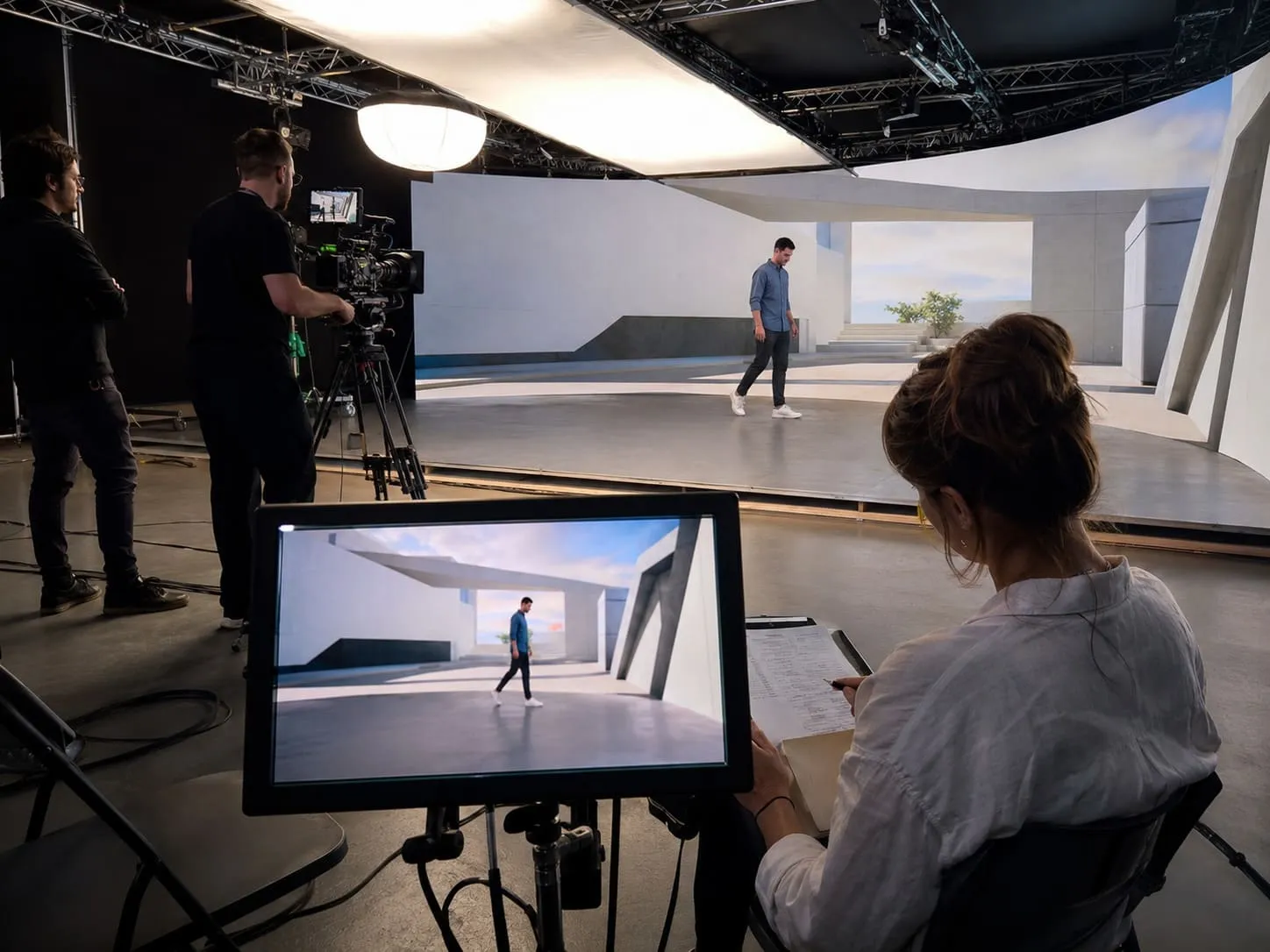
At briefing stage, operational details usually matter more than a polished treatment. The studio does not need every creative choice locked, but it does need enough information to plan the stage, crew, access, and infrastructure.
The most useful first brief usually covers the following:
- Proposed shoot dates and expected duration, including prep and de-rig if relevant
- Whether you need Studio 2 specifically for virtual production, blackout shooting, or both
- Approximate set dimensions, scenic elements, and any special rigging requirements
- Camera format, intended movement, and whether real-time playback will be part of live shooting
- Power requirements for production equipment beyond the standard studio provision
- Crew numbers, client attendance, HMU needs, and production space requirements
- Vehicle access, parking needs, and any drive-in requirements for props or picture vehicles
- Streaming, monitor distribution, or connectivity needs, including hard-wired internet expectations
Each item affects planning in a different way. Dates and duration shape availability and staffing. Set dimensions affect stage layout and safe movement. Power and rigging details determine whether the studio infrastructure covers the brief as stated or whether extra planning is needed. Connectivity becomes relevant quickly if agency stakeholders, remote clients, or live review workflows are part of the day.
A vague line such as "virtual production car shoot, one day, mid-size crew" leaves too much open. A clearer version would state whether the vehicle will drive in, whether the background needs motion playback, whether reflections on bodywork are part of the look, and whether the DP expects live environment changes during takes. That level of detail gives the studio, the in-house rigging team, the lighting partner Cinelight London, and the virtual production technical crew something concrete to work from.
Clarifying technical capabilities and limitations
First-time users often assume that one LED stage is much like another. It is not. Studio technical specifications vary widely, and small differences can affect whether a brief is realistic.
Studio 2, for example, is a blackout and virtual production stage with a modular 8 x 4 m ROE 2.8mm HDR LED volume that can be expanded, a 24 ft rigging height, 5 x 15 m steel beams with a 1 tonne load per beam, 12 chain hoists on travel trolleys, 63A 3-phase power, full vehicle drive-in access, step-free access throughout, and 10 on-site parking spaces. Those points are not brochure detail. They define what can be rigged, how the space can be configured, and how the day can run.
A few checks make a large difference:
- Confirm the actual LED volume size and whether the configuration can change for your scene.
- Ask how rigging loads are distributed and what existing hanging options are already in place.
- State any specific power draw early, particularly if specialist lighting or motion control is involved.
- Clarify signal paths, monitor needs, and whether internal routing or streaming infrastructure will be part of the workflow.
- Flag access requirements, including drive-in, step-free movement, and where vehicles or large props need to sit during setup.
Limitations are just as useful to establish as capabilities. An LED volume can create convincing real-time environments, but it still has finite dimensions. A background that works beautifully for a seated interview or a controlled vehicle scene may not suit wide action blocking that expects a vast playable horizon in every direction. A blackout stage can also be technically strong without being ideal for every virtual production concept.
Connectivity deserves its own line in the brief if the job depends on it. Some productions need more than crew Wi-Fi. If you expect hard-wired internet, dedicated streaming support, internal LAN use, or 12G SDI video routing into production areas, mention that from the outset so the studio can map the right setup before the shoot date is fixed.
Studio operations and in-house partners
Virtual production briefing is about the room and the screen. It is also about who runs which part of the system.
Some studios operate as blank space with a list of approved suppliers. Others work through a more integrated model in which core services are aligned by design. That structure can simplify the job because the handover points are clearer.
At Mammoth Film Studios, the operational setup includes an in-house rigging team, an exclusive lighting partner in Cinelight London, and virtual production delivered through Elsewhere Productions. The point is not creative control. The point is workflow consistency, crew coordination, and a shared understanding of the stage infrastructure.
That affects the way you brief.
Rigging and stage prep
If scenic or lighting elements need to be hung, the studio needs those details early enough for the rigging plan to be checked against beam loads, hoist positions, and safe working access. A late change here can affect prep time more than first-time users expect.
Lighting integration
Virtual production lighting decisions sit between the LED environment, practical fixtures, and any additional film lighting package. Bringing those strands together early is usually more efficient than treating the screen as one department and everything else as a separate problem.
Virtual production roles
A virtual production supervisor and technical crew are there to manage playback, system behaviour, and on-set coordination around the volume. They are not a substitute for the DP, production designer, or director. Their presence works best when the brief is specific about how the volume is meant to support the shoot.
Studios with this kind of structure are not acting as agencies or production companies. They are providing infrastructure, systems, and operational discipline around the brief you bring in. If you understand that distinction at the start, the planning conversation becomes much cleaner.
Addressing location, access, and logistics
Location matters in production terms, not as a lifestyle feature. A London Zone 2 studio can reduce travel friction for crews, agencies, and suppliers, but only if the brief accounts for how people and kit actually move through the day.
Rail access is part of that picture. Proximity to the Overground and Jubilee lines can help with call times, staggered crew arrivals, and client attendance. Road access matters just as much when the shoot includes lighting trucks, vans, large props, or picture vehicles.
Load-in and load-out should be treated as part of the brief, not a side note. Drive-in access to the stage changes what is possible for vehicle shoots and heavy scenic movement. On-site parking also affects unit flow, especially if crew vehicles, suppliers, and client cars are all expected at once.
Some sites also have conditional external space that can support production in flexible ways. A backlot area can be useful for parking overflow, holding, or selected exterior functions, but it should never be assumed to behave like a permanent exterior set unless the studio has confirmed that use for the dates in question.
If logistics are left vague, small issues stack up fast. A stage can suit the creative plan perfectly and still become awkward if no one has stated when the box van arrives, where the hero vehicle waits between setups, or how many parking spaces the production expects to hold all day.
Common misconceptions and how to avoid them
First-time users often make the same few briefing mistakes. Most of them come from treating virtual production as a category instead of a specific workflow.
- Assuming virtual production can replace every location shoot Virtual production can reduce travel, support consistency, and create controlled environments, but some scenes still work better on location or on a conventional stage with physical builds. Treat it as one production method among several.
- Thinking the studio only needs a creative deck A treatment can explain the intention, but the studio still needs technical requirements for studio use, access, timings, crew numbers, and infrastructure dependencies. Without that information, the response is likely to stay provisional.
- Treating all LED stages as interchangeable One studio may be suited to a compact, technically managed setup. Another may be aimed at a different scale or a different workflow. Studio 2 at Mammoth Film Studios is a specialist blackout and virtual production space, which means the brief should match that environment rather than a generic idea of an LED stage.
- Confusing studio infrastructure with creative services A production environment provides the space, systems, and operating framework. It does not replace the production team’s responsibility for creative decisions, approvals, or planning discipline.
- Underestimating logistics because the work is indoors Indoor shooting still depends on transport, parking, crew flow, prep time, signal routing, power planning, and support spaces. The absence of weather does not remove the need for proper scheduling.
A good first brief does not need to sound expert. It needs to be specific, honest about what is still undecided, and grounded in the practical realities of the shoot. That approach usually leads to better questions, better planning, and a virtual production day that behaves like a production day rather than a technology demo.