How should you prepare your lighting plan before the artist arrives?
Start with the rig, then build the lighting plan around what the stage can safely hang, feed and reach. In a blackout studio, schedule pressure comes from suspended fixtures, electrical supply, control testing and access, so the smartest prep happens before the shoot day starts.
Table of Contents
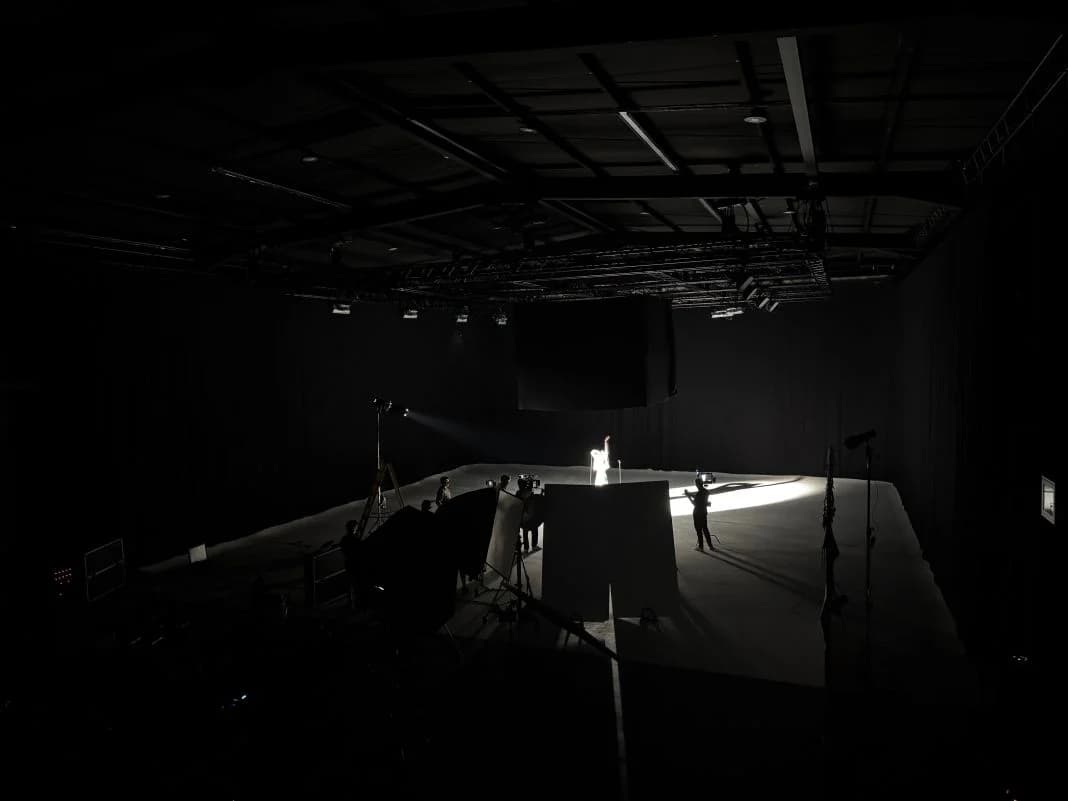
Blackout gives you a controlled shell, but the shell does very little on its own. Your plan still has to account for where fixtures sit, how the crew reaches them, which areas of the floor stay clear and how quickly the look can be adjusted between setups.
Many music video schedules fail at the join between creative ambition and practical build time. A design that reads well on a lighting plot can become slow if every change needs stands moved, cables re-routed or fixtures lowered during a performance block.
Producers get the cleanest answer by separating two questions early. First, can the studio support the overhead rig safely and efficiently? Second, has enough protected time been allowed to build, test and amend it before the shoot carries client, agency and talent pressure?
Overhead infrastructure comes first
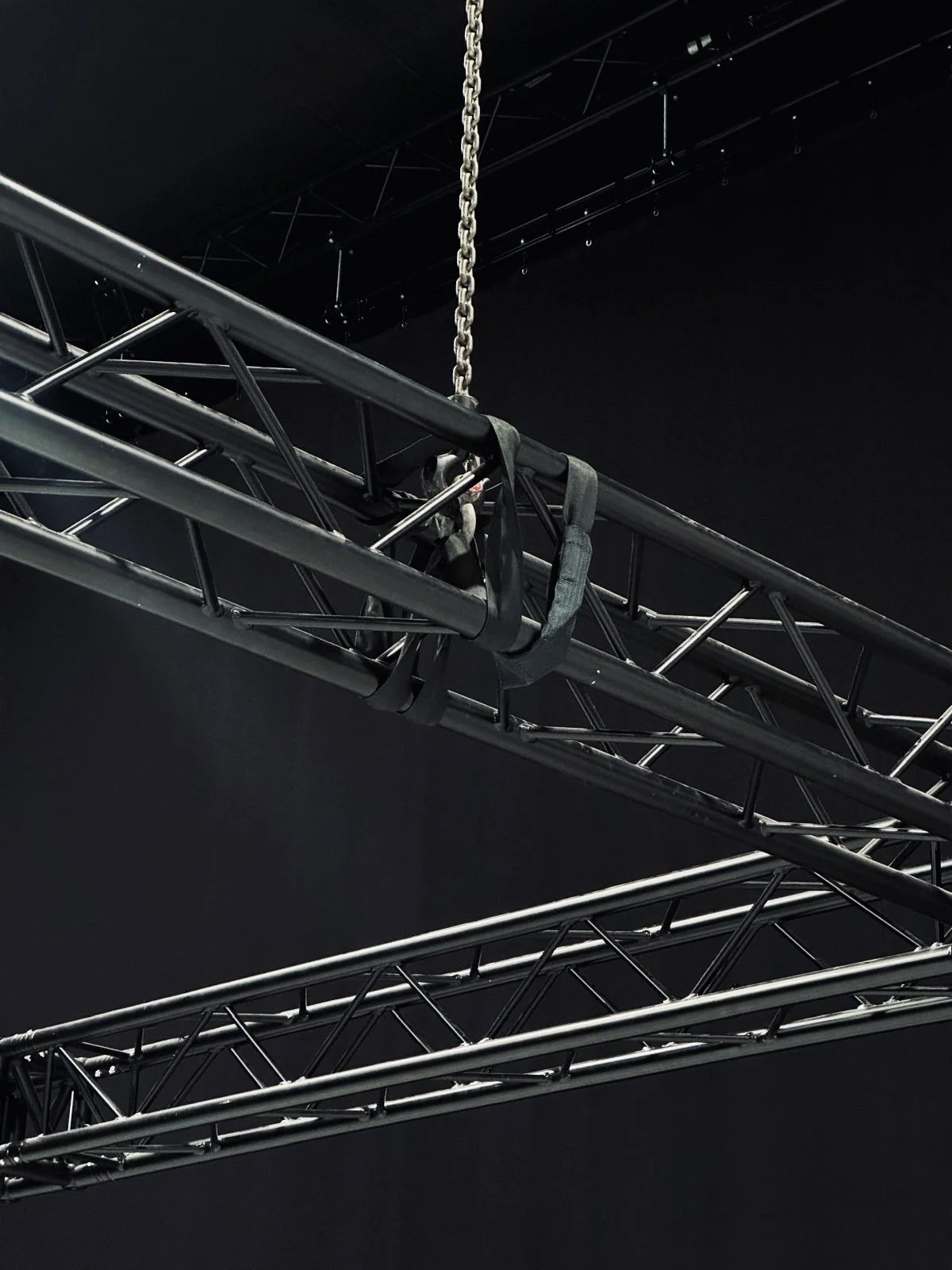
A blackout music video lighting plan is limited by the rig before it is limited by fixture choice. Truss position, grid height, suspended load and fixture access decide whether the design can be built cleanly and adjusted without eating into performance time.
Take a performance setup with top light, backlight and a moving camera path. Floor space has to hold the artist, dancers, playback, camera movement and any scenic pieces. If the lighting department is also fighting for the same footprint, every reset costs space and attention. Moving key fixtures overhead can clear the performance area and keep lens changes from turning into a floor-management problem.
Rig review belongs near the start of booking, because the answer affects the schedule. A lighting plot that relies on overhead units needs a clear load path, known access to the grid and a practical way to focus or change fixtures. Without that review, the shoot day absorbs decisions that could have been settled when the studio was still being chosen.
Your first useful question is simple: what does the overhead lighting rig need the building to do?
Floor stands limit movement
A performance area can fill up fast once c-stands, goalposts, cable runs and camera movement all compete for the same floor. That might be manageable for a tight setup, but larger music video studio lighting plans suffer when every angle change means clearing kit before the camera can move.
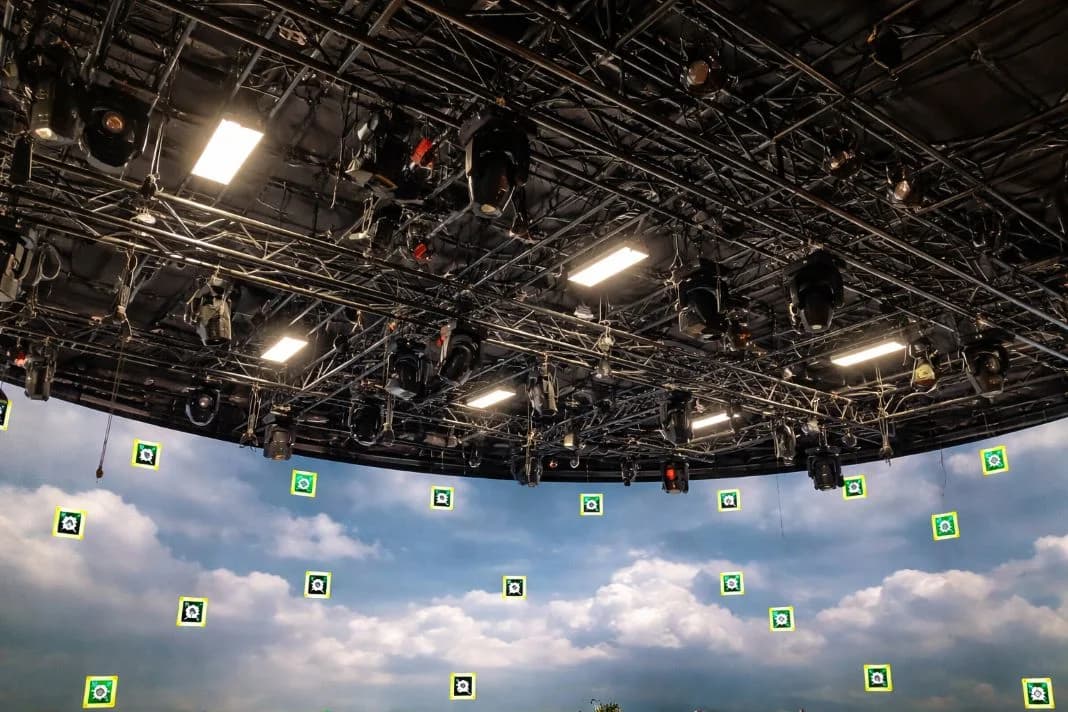
Overhead infrastructure gives the lighting department repeatable access, not a crowded floor full of last-minute compromises. A ceiling rig or motorised truss plan keeps major units above the action, which leaves the floor for performance blocking, tracking routes, floor protection and quick resets.
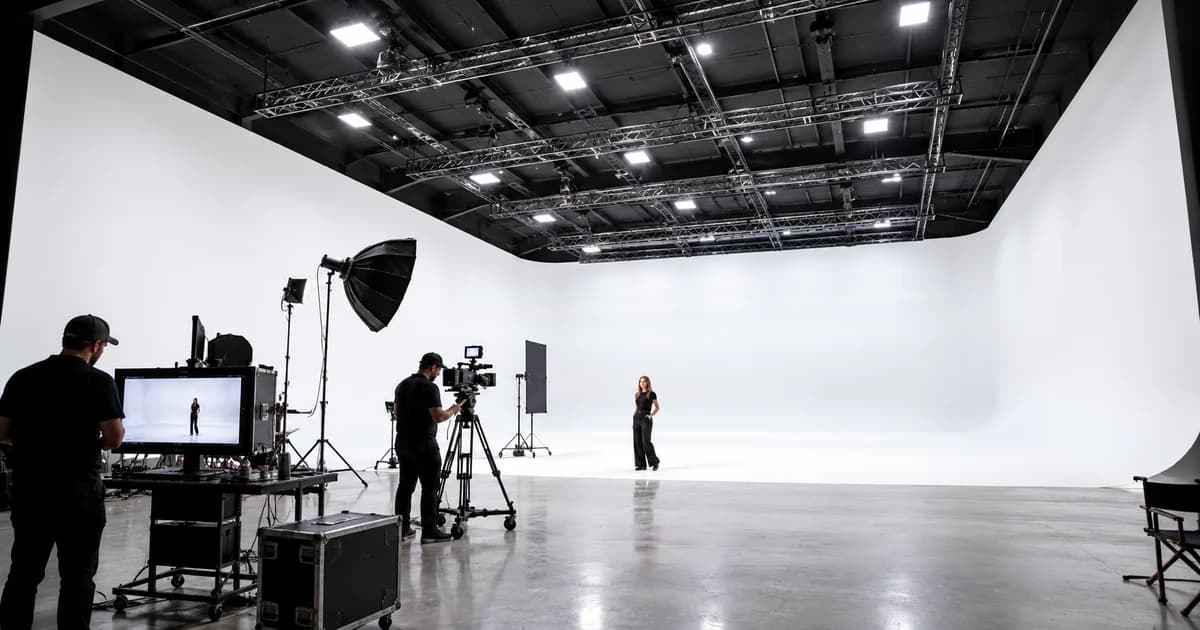
Mammoth Film Studios’ Studio 1 is a useful London Zone 2 example of how a large traditional blackout and cove stage changes that calculation. Studio 1 is an 8,000 sq ft infinity cove and blackout stage with a 60 x 60 ft cove, 24 ft grid height, 200A 3-phase electrical supply, a motorised grid, drive-in access and 20 parking spaces. For producers, those details translate into cove scale, load-in flow and overhead planning headroom, which is more useful than a vague promise of “studio space”.
Floor packages still have a place, especially for simple edges, low units and fast additions. Once the camera needs cleaner movement and the performance area has to stay usable, overhead rigging becomes a scheduling tool as much as a lighting tool.
Hoist access sets the pace
Chain hoists and grid access decide how confidently the rig can move from plan to working system. For a production manager, the key issue is the pace of build, access for focus and the point at which the rig is signed off before the stage becomes busy.
Chain hoists and truss movement
Chain hoists for lighting rigs give the crew a controlled way to raise, lower and position truss during prep. That matters because fixture placement rarely stays perfect from the first drawing. Units need to be hung, addressed, focused and tested, and the crew needs a safe route to make those changes without rebuilding the room.
Mammoth Film Studios’ Studio 2 shows the kind of infrastructure that producers should identify clearly before committing to a blackout or virtual production plan. Studio 2 is a 5,000 sq ft blackout and virtual production stage with 360° blackout, a standard 8 x 4 m LED screen, 63A 3-phase stage supply and chain-hoist based overhead infrastructure. Those are production facts, because they affect what can be planned above the set and how the team schedules rigging time.
Competence and sign-off
Hoists also bring a paperwork question, and it is a routine one. HSE guidance on LOLER says lifting operations using work equipment must be properly planned by a competent person, supervised in the right way and carried out safely. The practical booking point is that producers should know who is planning the lift and when the sign-off happens.
PLASA’s National Rigging Certificate is a relevant competence marker in entertainment rigging, covering skills such as chain hoists, trusses and rigging accessories. You are not there to manage the lift yourself. Your job is to make sure the studio, gaffer and rigging team have the rigging plot, safe working load information and sign-off route agreed before the shoot-day clock starts.
Blackout control needs testing
Blackout behaves differently once the full lighting plan is in the room. Drapes, reflective surfaces, haze, monitoring and programmed cue changes all interact with the rig, so the useful test is the room with the actual fixtures, control patch and electrical plan in place.
A London Zone 2 stage can help city-based crew, agencies and suppliers move in and out efficiently, but access alone does not prove that the lighting system is ready. The prep window has to include the parts of blackout studio lighting control that only show up when the rig is live.
Use prep time to check:
- Spill from backlight, top light and practical sources against blackout drapes or scenic surfaces.
- Reflection points that affect lensing, video village and client monitors.
- Haze behaviour during repeated takes, especially if continuity depends on a consistent level.
- DMX control data, fixture addressing and cue playback before performance pressure starts.
- The distro plan, meaning how temporary electrical supply is arranged for the lighting system.
Temporary electrical systems standard BS 7909:2023 covers the management, design, setting-up and operation of low-voltage AC electrical systems for entertainment work, including systems using 230 V AC or 400 V AC. Producers do not need to run the electrical design, but they do need to place that design inside the prep schedule.
A pre-rig day changes the shoot
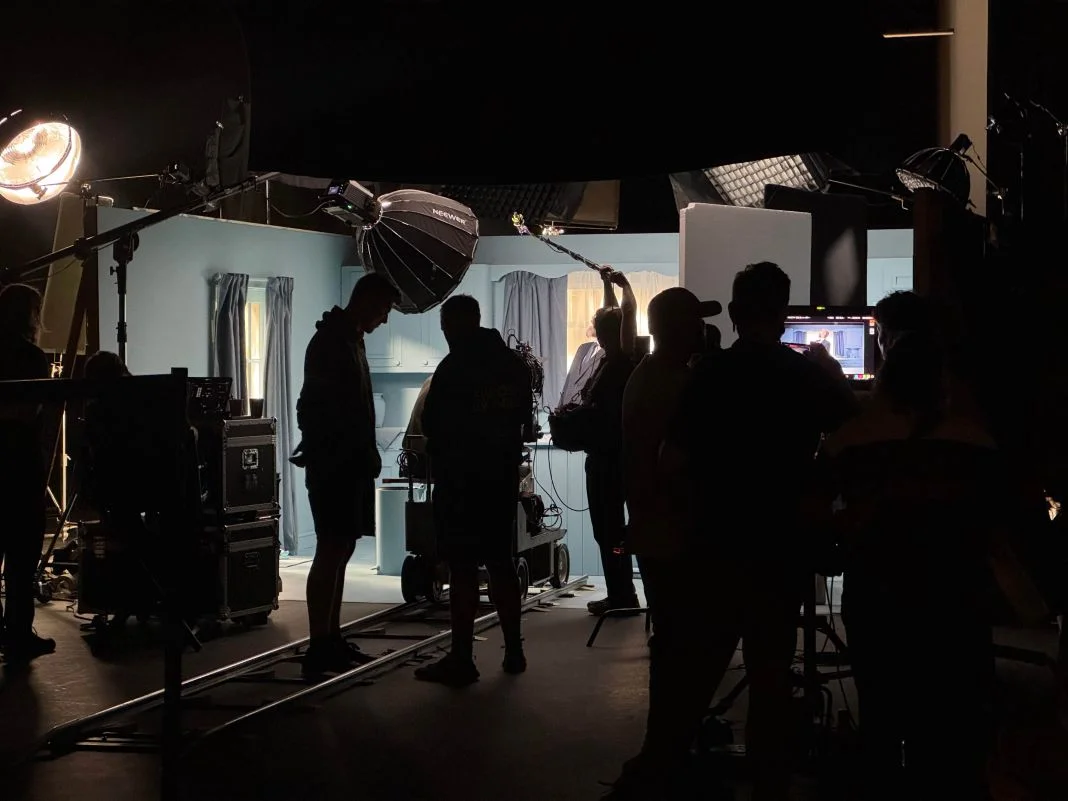
A pre-rig day is protected build and test time before the main shoot. For a blackout stage booking, it gives the crew room to load in, rig overhead fixtures, prove the control plan, test the room and fix weak points before the stage carries a full production.
A planned pre-rig makes the shoot day a controlled execution day, not a race to finish the lighting build around talent and agency arrivals. The decision is especially clear where the design relies on overhead fixtures, hoists, programmed cues, haze or camera movement that needs a clean floor.
Before booking, the producer should send or confirm:
- The lighting plot, with the main overhead positions clearly shown.
- The fixture list, including units that need to be hung or reached during prep.
- The total suspended load and the rigging plot for the studio and rigging team to review.
- The distro plan and DMX or network plan, so supply and control are tested together.
- Floor protection needs, vehicle details and pre-light call times, because load-in and testing have to match the real schedule.
Casual shoot-day building treats the studio as a room that can be solved once everyone arrives. Disciplined pre-rig planning treats the studio as a working system that has to be proven before the first performance take. The second approach holds up better because it moves fragile decisions out of the most expensive part of the day.
Common questions about blackout music video lighting
Can a music video use an LED volume and separate lighting fixtures together?
Yes, if the stage, control plan and crew are set up for that workflow. The LED image, practical fixtures and overhead units need to be tested together because each source affects exposure, reflections and cue timing.
Does drive-in access matter if the lighting kit is coming from a nearby hire house?
Yes, because drive-in access affects unloading time, vehicle movement and how quickly large items reach the stage. Local hire does not remove the need for a controlled load-in plan.
Should agency and client viewing be considered during the lighting prep?
Yes, because monitoring positions can be affected by spill, reflections and cable routes. Viewing areas work best when they are planned around the rig instead of being fitted into leftover space on the shoot day.
Can the same stage support stills and music video work on one booking?
Yes, if the schedule allows the lighting and floor plan to shift cleanly between stills and moving image work. Producers should treat each setup as a separate use of the stage, with its own access, lighting and reset demands.