What should agencies understand before selecting a virtual production studio?
Agencies should ask detailed, practical questions to ensure a studio’s virtual production setup aligns with their creative and technical requirements. Key considerations include capability limitations, workflow integration, spatial logistics, crew support, environmental flexibility, pre-production options and commercial structure.
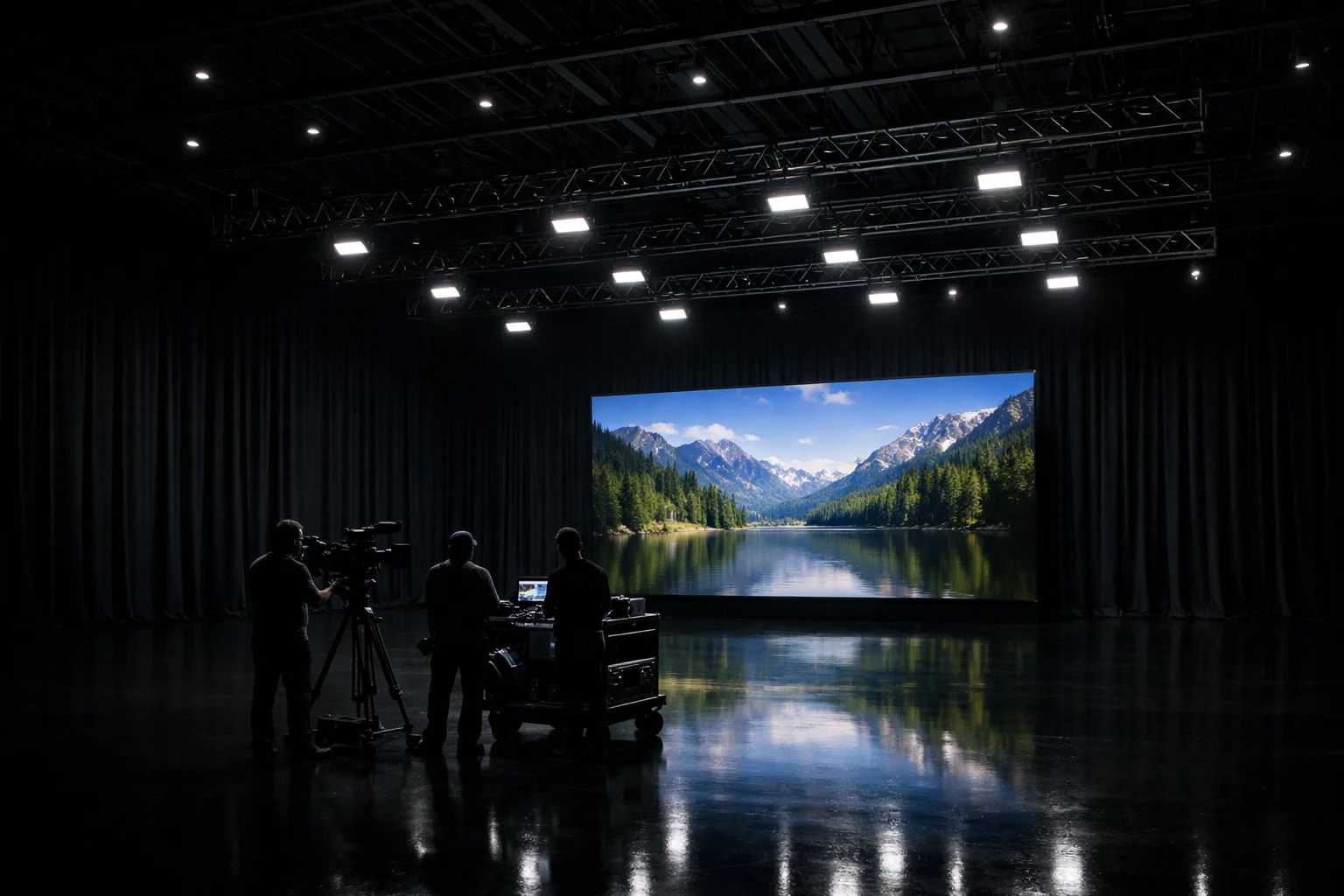
Studio capabilities vary, and needs to be clarified?
Not all virtual production studios operate at the same level, and assumptions can derail a shoot before it begins. Agencies must define what the stage can genuinely deliver across several fronts.
Key areas to examine:
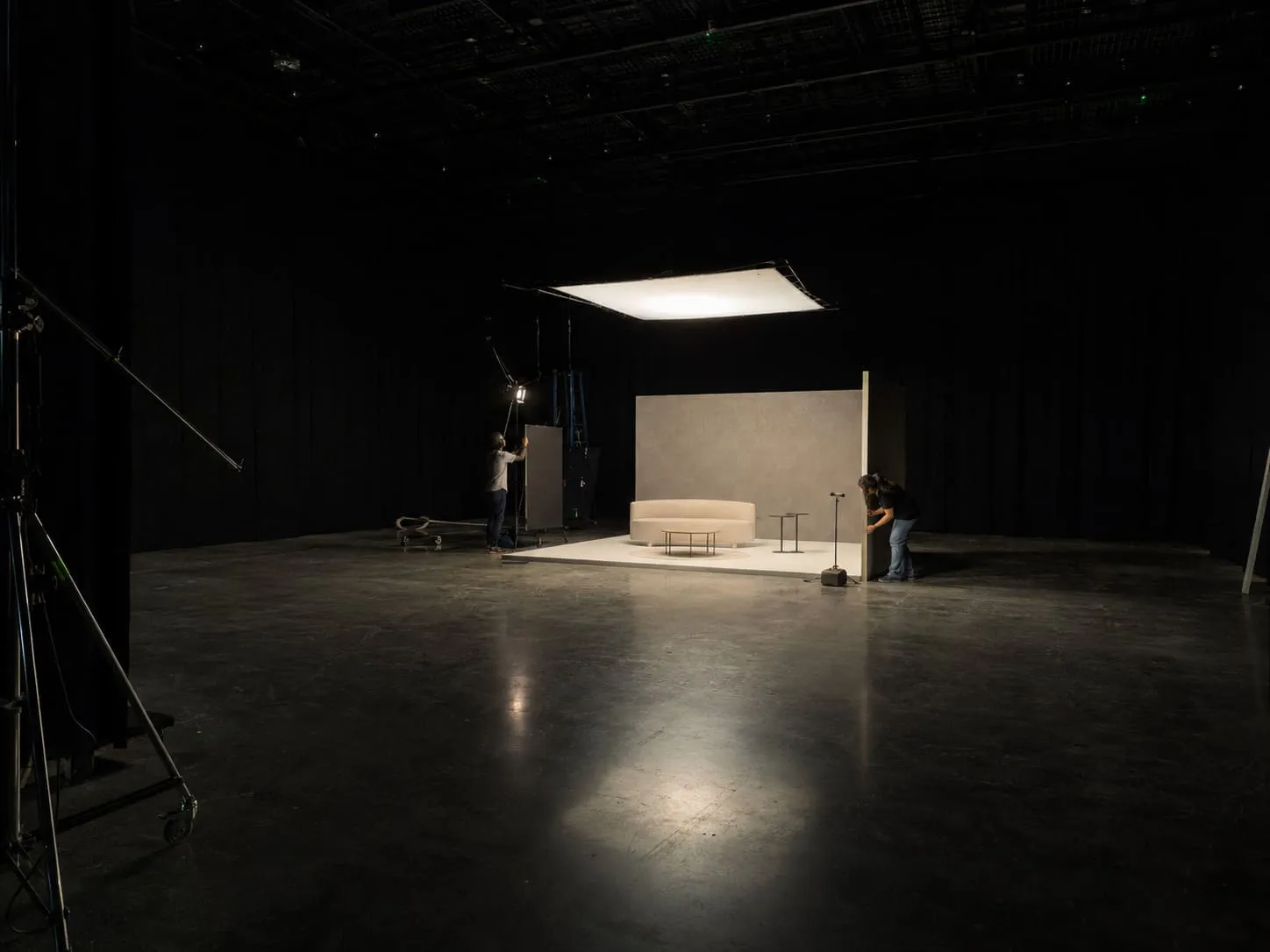
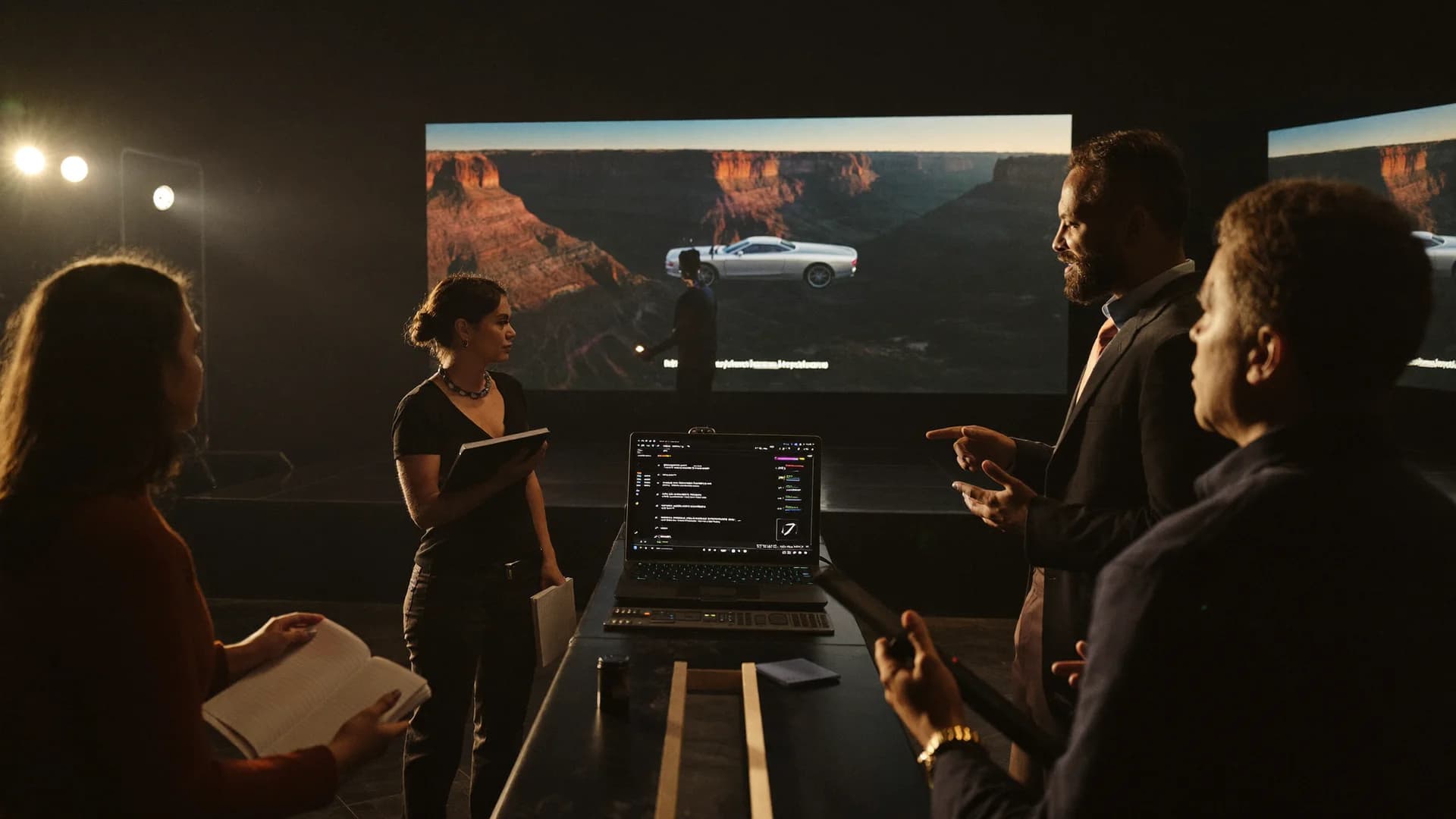
- Production format and environment: Is the stage based on LED volume, green screen or a hybrid of both? For example, Mammoth Film Studios’ Studio 2 is a hybrid stage with a modular 8 x 4 metre ROE 2.8mm HDR LED wall and full blackout capability, which suits a range of virtual and traditional production workflows.
- Modularity and scale: Are the LED systems fixed or adjustable? Can they accommodate complex camera moves or expanded environments?
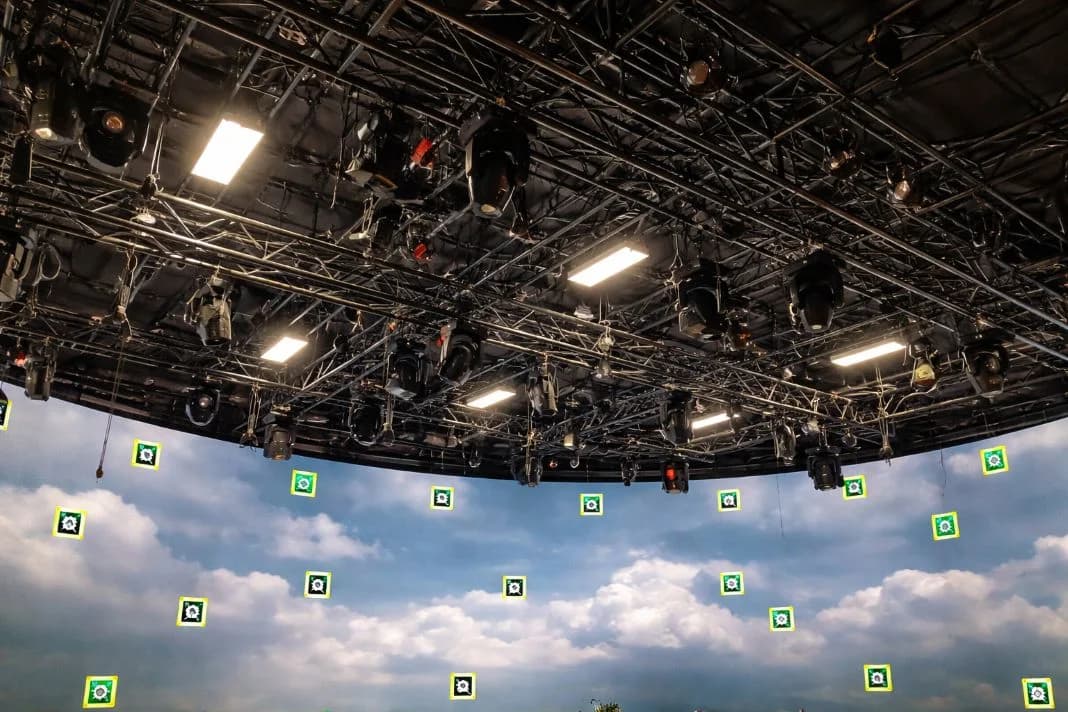
- Rigging and load handling: Confirm grid or beam capacity. Studio 2, for instance, provides five 15-metre steel beams, each rated for 1 tonne, with mobile chain hoists enabling flexible overhead rigging.
- Capability provision: Virtual production demands substantial capability draw. Studios should offer 3-phase supply, with clarity on amperage and availability for lighting, data workflows and camera systems.
- System interoperability: Ask about compatibility with Unreal Engine, Disguise, Mo-Sys or other platforms. Tracking systems must match the demands of the production, both in terms of responsiveness and accuracy.
- Technical limitations: Clarify what the space cannot do. No studio can handle every scenario. Be direct about constraints on shoot duration, monitor placement, sound recording or high-speed capture.
Wider assumptions about a “do-it-all” stage often lead to misalignment. The more specific the technical dialogue upfront, the better the outcome.
How is the virtual production process integrated into studio workflow?
Functioning LED walls and strong hardware matter, but systemic capability depends just as much on how well virtual production is embedded across the studio's operational flow.
Key factors agencies should address:
- In-house or third-party delivery Is virtual production handled internally or brought in ad hoc? At Mammoth, the 360° blackout stage in Studio 2 operates its LED volume in collaboration with Elsewhere Productions, embedding technical supervisors, playback ops and crew as part of the stage infrastructure.
- On-set playback and rendering systems What is the approach to real-time rendering? Are systems like Unreal Engine or Disguise pre-configured? Is there a primary playback station governed by a technical operator during shoot?
- Camera tracking and synchronisation Systems such as Mo-Sys, Pixotope or Ncam may be used, check which are supported natively, and whether calibration, sync and offset tools are maintained in-house.
- Workflow stages: prep, shoot, post Is there a structured path from previsualisation through to delivery? Scene versioning, round-tripping digital assets, even naming conventions. These determine consistency across departments.
- Change management on set How are scene updates or adjustments handled real-time? are they tested immediately or pushed through batch rendering? Look for process visibility.
Studios with a clear, repeatable virtual production workflow will support agency teams far more effectively than those relying on last-minute system integration.
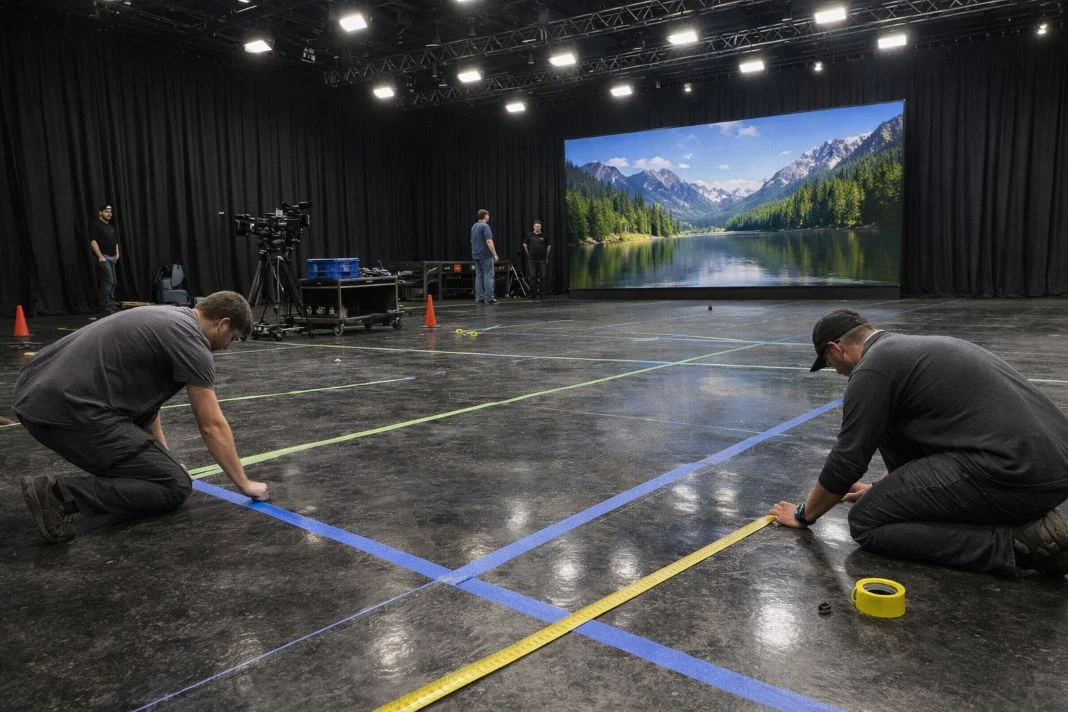
What spatial and logistical constraints affect production feasibility?
Even studios with advanced virtual production systems face physical and logistical limits. Agencies must assess whether a space can support their production footprint in practice.
Common aspects to verify:
- Drive-in access Productions involving set pieces, track, vehicles or significant kit movements require straightforward access. Studio 2 allows full-size vehicle entry directly onto the stage floor.
- Rig height and ceiling clearance Virtual backplate perspectives, camera angles and lighting setups need predictable clearance. Studio 2’s 7.3 metre rigging height supports standard commercial and long-lens configurations.
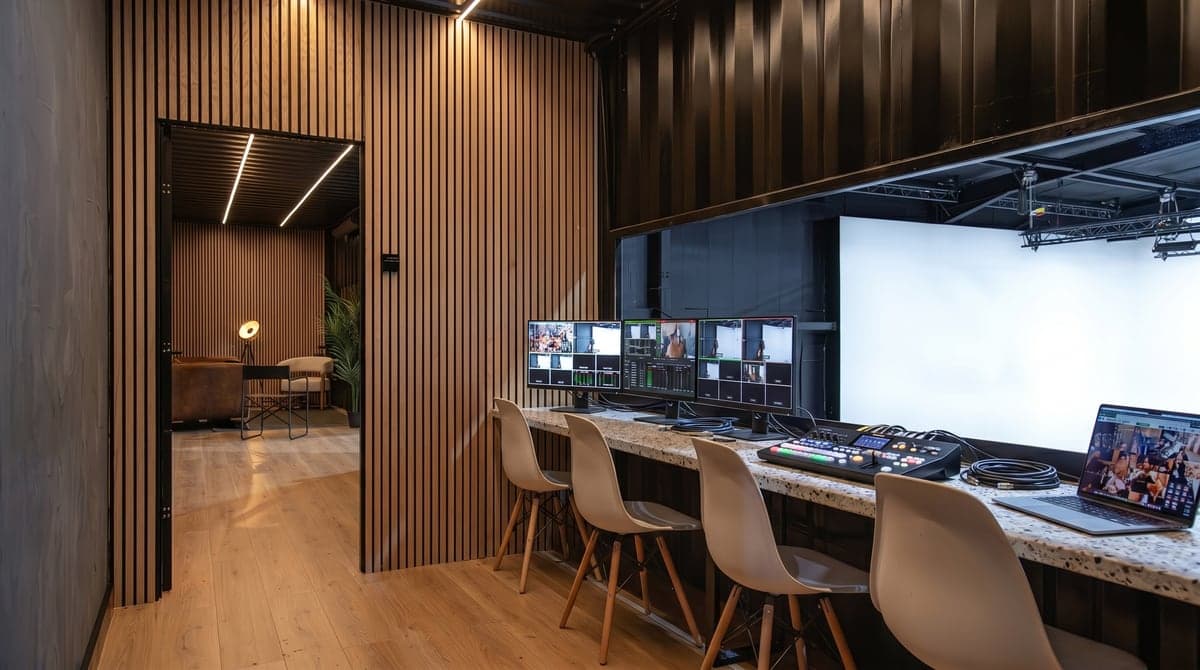
- On-site support spaces Hair and makeup, client holding, production areas and toilets must be co-located to avoid split units or off-site logistics. A full 8-bay HMU room is part of the Studio 2 configuration.
- Step-free and efficient crew flow Ground-floor access and non-restrictive routes save time and reduce challenge. Step-free layouts accelerate turnarounds and equipment movement.
- Parking and movement flow Vehicle staging, crew parking and load-in sequencing need to be defined early. Studio 2 includes dedicated parking for up to ten vehicles, diverting unit cars and tech vans from side roads.
Logistics are not just about comfort. They directly influence production timing, crew costs and site safety.
What technical supervision and crew support is provided?
Agency producers require clarity on facility specs, but also on who operates the system. Effective virtual production depends heavily on the embedded crew.
Roles to clarify:
- VP Supervisor Usually the primary liaison between creative and technical departments, they coordinate imaging, camera tracking and real-time rendering operations.
- Playback Operator Responsible for queueing, switching and running background plates or interactive scenes. This role ensures continuity and timing alignment.
- LED Technician Manages panel configuration, capability, safety and integration. Requires familiarity with colour calibration and light interaction with practical objects.
- Continuity and escalation process Is the same team involved from prep through wrap? How are issues managed on set, and how is support escalated when something fails?
Mammoth’s partnership model with Elsewhere Productions ensures these roles are structurally integrated, with consistent crew across each stage of the shoot. Agencies should ask whether these services are guaranteed, optional or must be sourced separately.
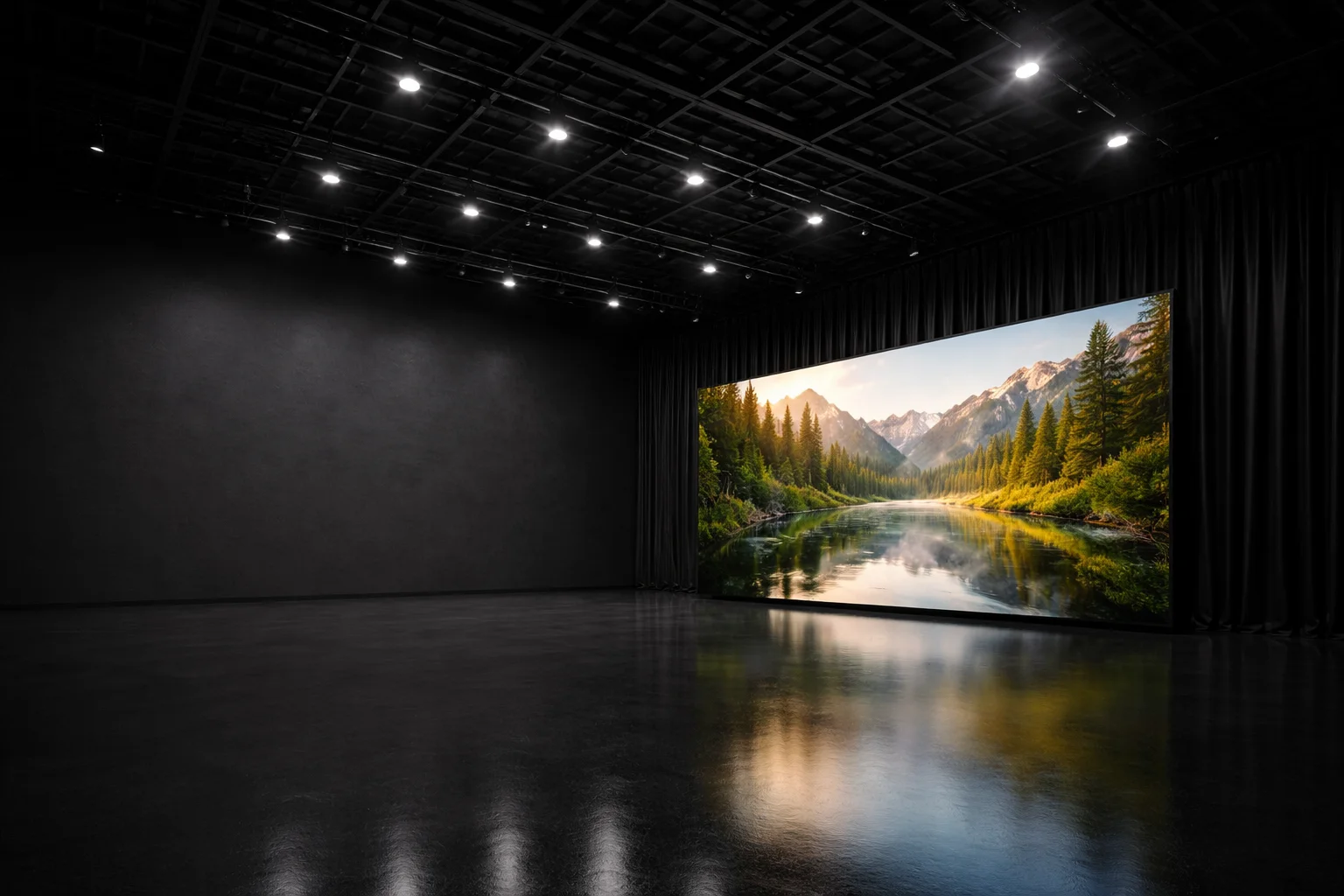
How flexible is the LED volume and surrounding environment?
Not all LED volumes are created with adaptability in mind. Agencies must confirm how configurable the environment is, technically and physically.
Key checks to conduct:
- Is the LED volume modular? At Studio 2, the 8 x 4 metre ROE 2.8mm LED wall is modular and can be expanded subject to requirements. Flexible configurations support shifts between wide backgrounds and tighter compositions.
- Can partial environments be built? Mixed setups, LED with live set pieces or chroma elements, demand room to rearrange. Fixed volumes limit this flexibility.
- Is there alternate use potential? Can the space be turned over for non-LED shoots? Studio 2’s blackout configuration allows the space to function for traditional filmed content without LED dependency.
- Lighting system compatibility Interaction between LED walls and practical lighting must be addressed. Integrated rigging beams and controlled blackout allow full lighting manipulation in line with LED outputs.
Flexibility is not simply about physical length or height. It is about response to creative variation and technical reconfiguration.
What pre-production and testing options are built into the offer?
Virtual production gains are often determined well before cameras roll. Agencies should confirm what testing, simulation and prep capabilities they can access on-site.
Pre-production items to clarify:
- Scene tests on the LED wall Can scenes be checked in-camera ahead of time? This step reduces risk on shoot day by verifying framing, colour and backplate suitability.
- Previsualisation and look development Is there a pipeline to bring Unreal Engine or Disguise projects onto the system for previs? Can assets be reviewed and adjusted collaboratively?
- Camera and lens alignment Can specific camera systems be tested with the chosen tracking and LED configuration? Lens distortion, parallax and sync offsets need early detection.
- Tech rehearsals and lighting previews Is there availability for a full tech rehearsal, or at least lighting and interaction checks? Even a half-day can reveal integration snags.
- Advance asset load-in Ask whether digital backgrounds or 3D assets can be transferred in days before the shoot. This enables versioning and reduces downtime.
By treating virtual production as a pipeline rather than a shoot-day feature, agencies can reduce uncertainty and tighten creative decision-making.
What does the studio’s commercial structure reveal?
Budget confidence does not come from rates alone, but from clarity on what is included, how services are itemised and where overages or change risks lie.
Points to interrogate:
- Is there a structured rate model? Mammoth Film Studios provides structured, request-based pricing that varies by studio, timeframe and challenge. Look for line-item transparency rather than bundled ambiguity.
- What is included in hire? Which services are base-included (e.g. capability, crew Wi-Fi, production areas) and which are add-ons? Confirm specifics around lighting, rigging or technical crew.
- Change, cancellation and overage policies Are these set out clearly in writing? Lack of clarity can lead to disputes in fast-moving schedules.
- Decision lock-in points Virtual production frequently involves asset sign-off, scene finalisation and system prep milestones. These affect both timing and cost.
Time spent clarifying commercial framework pays dividends during procurement, approvals and invoicing. Avoid vague estimates, and push for clarity around workflow, people, space and services.
Choosing a virtual production studio is not about finding a showpiece. It is about ensuring technical alignment, operational fit and process reliability. Agencies that ask precise, grounded questions from the outset will enter production with fewer surprises, and more control.