What are the key elements that affect the quality of a virtual production shoot?
The quality of a virtual production shoot is determined by the alignment between creative planning and technical execution, the suitability and configuration of the LED volume, the realism of lighting and reflections, asset readiness, tracking precision, crew coordination and the reliability of stage infrastructure.
Creative Vision and Technical Planning Must Align
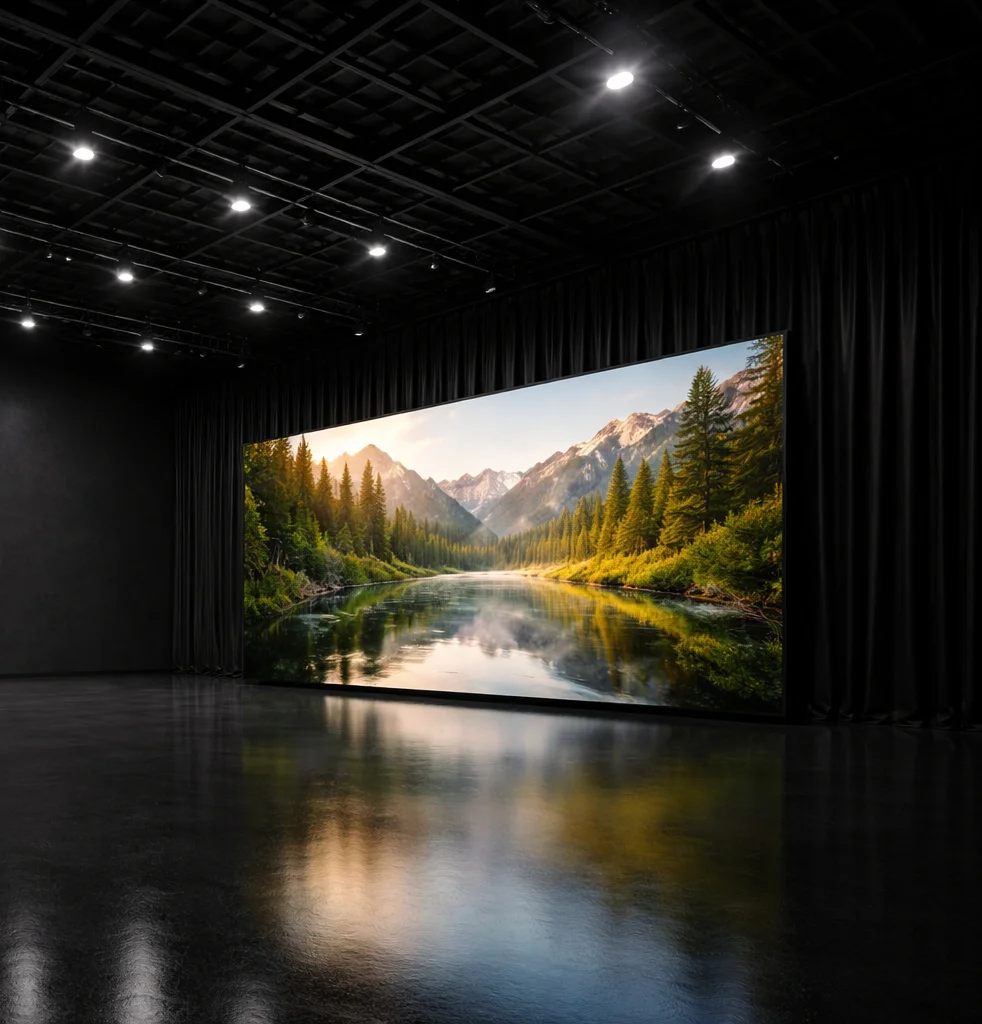
A virtual production shoot (see virtual production explained) demands early coordination between creative ambition and technical feasibility. Decisions made during the planning phase directly affect what is achievable in-camera and how efficiently the production day will run.
Misalignment between departments often begins when creative vision is mapped out without regard to technical limits. For example, a director may design wide sweeping shots only to find the LED volume cannot accommodate the required viewing angle. This results in late-day compromises that reduce image quality or force scene revision.
Maintain alignment by addressing these factors early:
- Use previsualisation tools, such as Unreal Engine and dedicated previs platforms, to simulate shots in virtual space
- Include the Virtual Art Department (VAD) in creative development to flag technical issues before layout is locked
- Confirm that assets built for previs will be optimised for final rendering, not just early approvals
- Coordinate with virtual production supervisors to understand shot feasibility against LED volume constraints
- Avoid linear workflows. Planning must be iterative with constant visual and technical feedback
When creative and technical teams operate in relative silos, the result is often rigid storyboards that collapse under practical conditions or visual compromises that dilute intended impact.
LED Volume Configuration Shapes What’s Possible
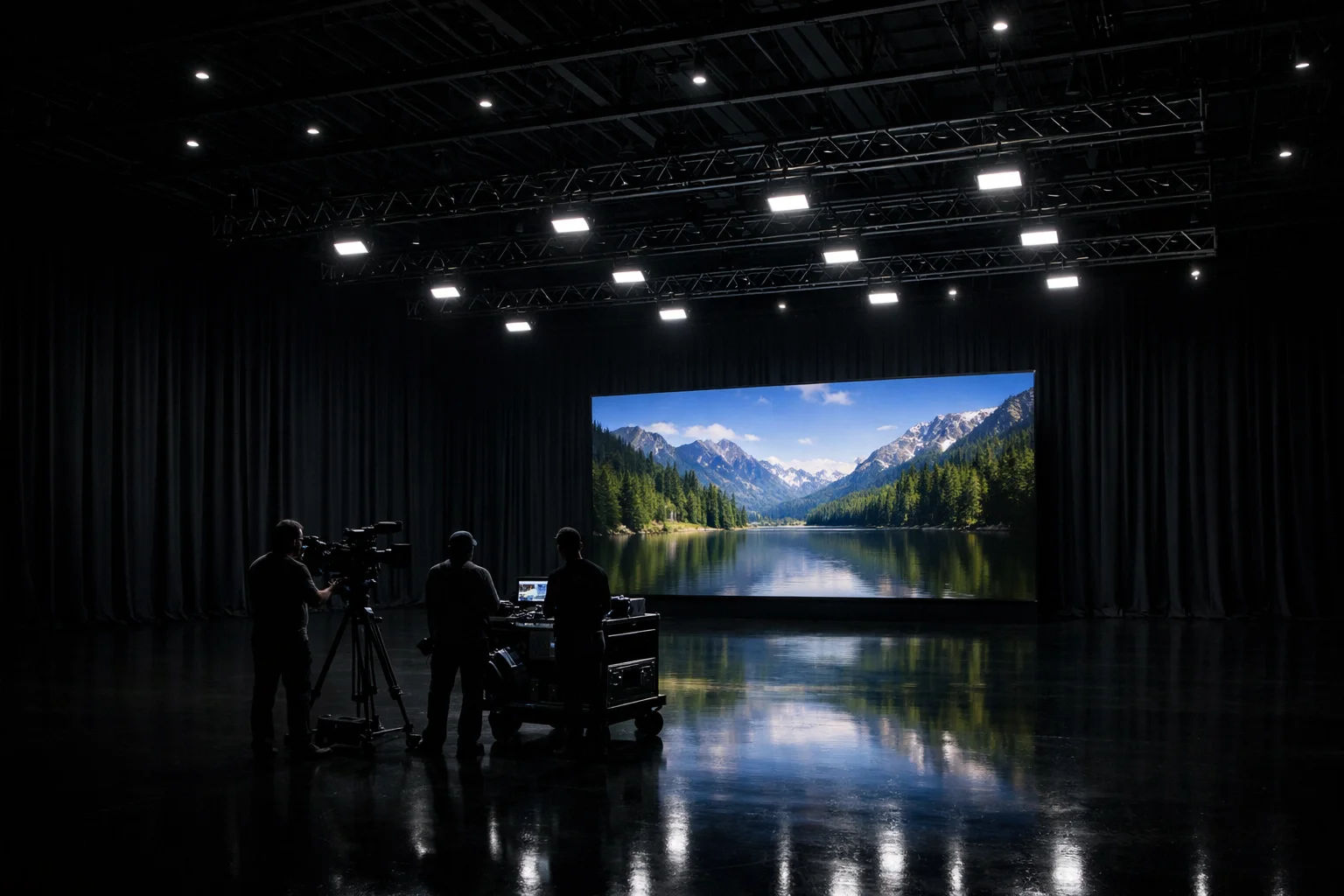
The design of the LED volume is not just a technical concern. It directly affects framing, performance, lighting and realism. Assessing a stage’s LED setup means looking beyond size.
Key considerations include:
- Pixel pitch: A tighter pitch (i.e. more pixels per square metre) reduces moiré and allows the camera to shoot closer without distortion
- Brightness and HDR capability: Drives the realism of light emitted onto talent and props
- Refresh rate and colour accuracy: Affects image consistency, especially when intercutting with other footage
- Volume shape and modularity: A fixed wall may limit framing options, while a modular system allows for reconfiguration across setups
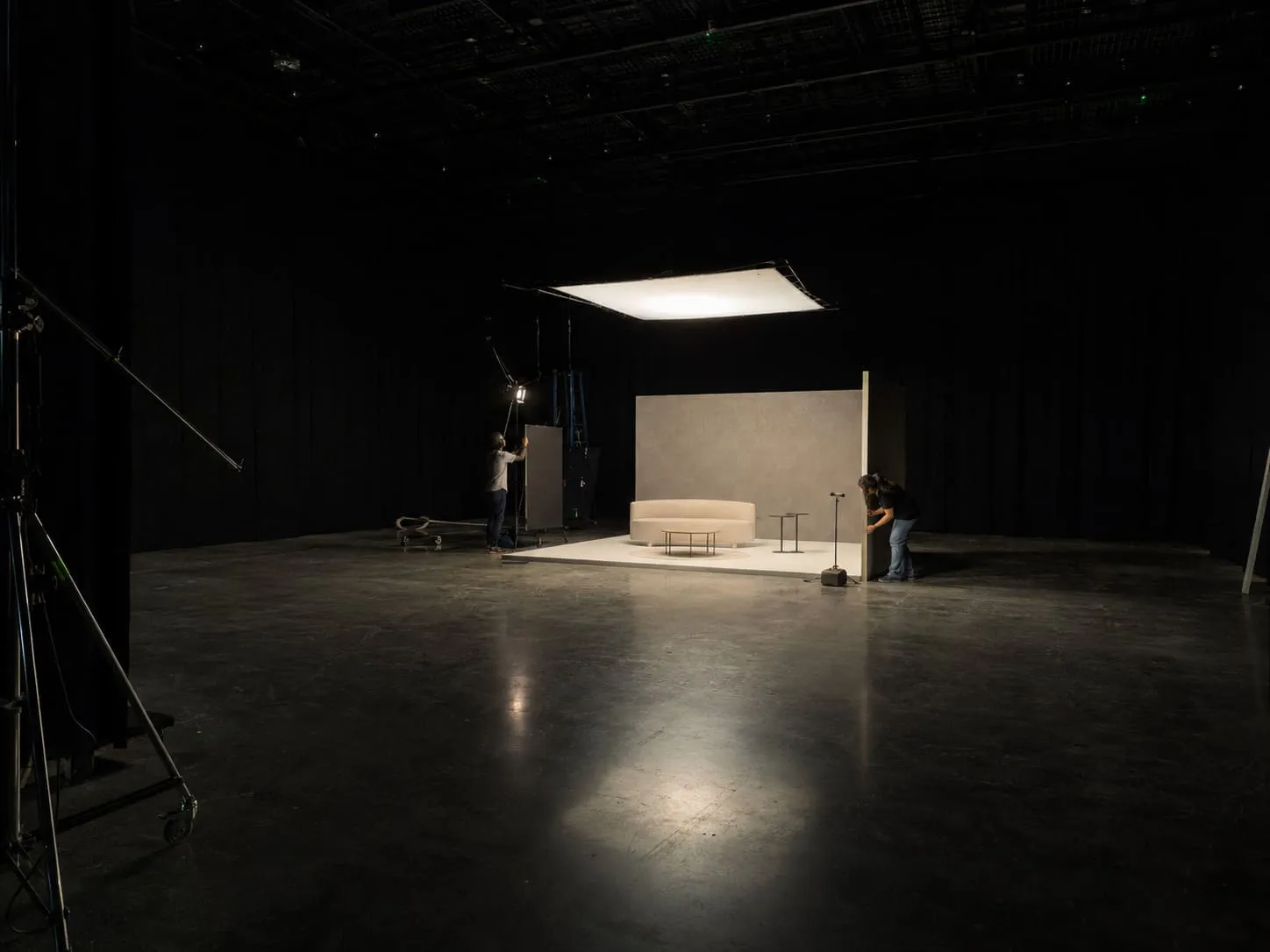
At Mammoth Film Studios, Studio 2 includes an in-house 8 × 4 metre ROE 2.8mm HDR LED volume that can expand depending on production needs. Critically, it's rigged beneath a 24-foot grid with 12 hoists on travel trolleys, allowing flexible shaping to support creative requirements.
Bigger is not always better. A smaller, well-configured volume with high-spec panels and thorough planning will outperform a larger setup if poorly designed or implemented.
Believable Lighting and Reflections Are Not Automatic
Much of the realism in virtual production relies on how well the LED wall contributes to lighting and reflections on set. This is particularly evident in reflective surfaces, such as cars or glass, where any mismatch quickly exposes the illusion.
LED panels serve as light sources, providing ambient glow and interactive lighting cues. However, they rarely suffice for full key or fill lighting, especially under high active range requirements. Additional lighting systems, such as DMX-controlled rigs, are needed to shape exposure properly.
For realism:
- Use HDRI environments mapped to the LED to provide coherent ambient lighting
- Supplement with practical lights aligned to scene directionality and camera position
- Control spill and unwanted light falloff using physical flags or digital correction
- Coordinate lighting values across LED and traditional units to maintain tone
In Studio 2 at Mammoth, integrated rigging and capability infrastructure enable precise lighting setups alongside LED playback. Cinelight London provides lighting systems that complement LED use, allowing for calibrated, predictable exposure. Incorrect assumptions about “natural” lighting from LEDs often lead to flat or unrealistic results. Lighting design must treat LED contribution as one element of a larger strategy.
Virtual Asset Quality Affects Every Frame
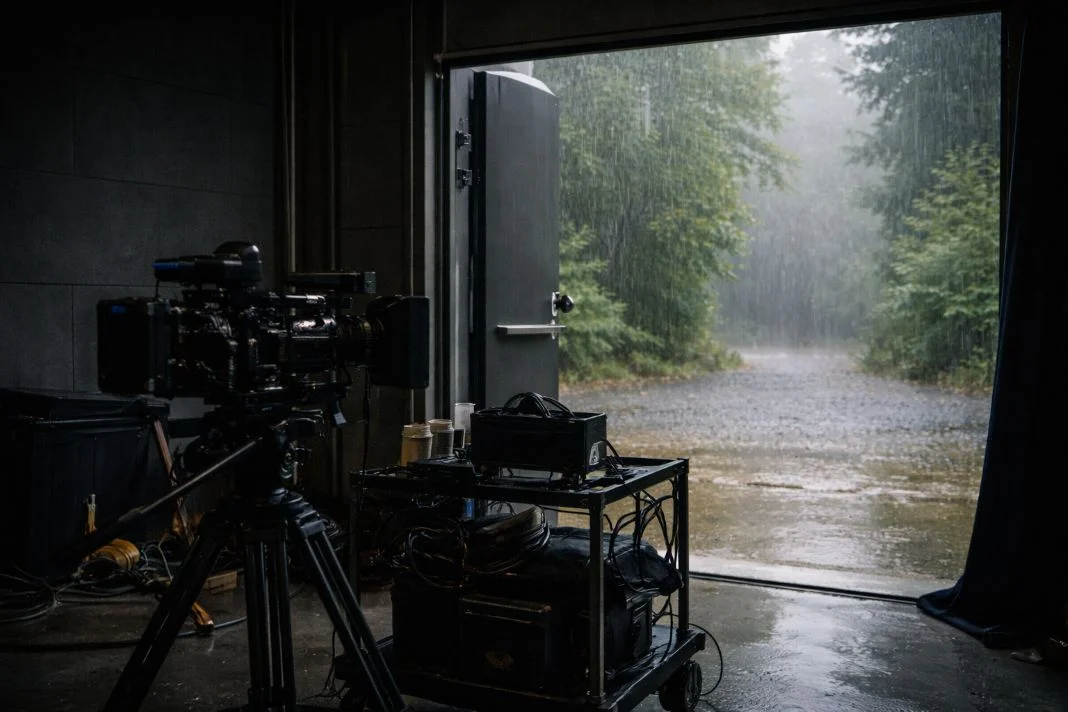
A virtual production shoot relies on pre-built digital environments and props. If these assets are low-resolution, improperly scaled or poorly optimised, the physical and virtual worlds will not align, and viewers will notice.
Risks of substandard assets include:
- Lag or glitches from objects too detailed for real-time playback
- Mismatched lighting where digital shadows or highlights clash with practical lighting
- Parallax errors when scene depth does not respond correctly to camera movement
- Scale mismatches disrupting sense of space or object interaction
Asset optimisation for real-time rendering in engines such as Unreal is non-negotiable. Tools like Quixel Megascans help ensure consistency, but assets must still be reviewed for formatting, lighting response and performance. Version control also plays a major role. Teams must track asset development rigorously to avoid outdated or incomplete files appearing on the LED wall. Efficiency on set is directly tied to digital readiness going in.
Camera Tracking and Real-Time Rendering Must Stay in Sync
Virtual production depends on synchronisation between the physical and digital worlds. Camera tracking systems feed position data to the rendering engine, ensuring accurate parallax and believable movement within a virtual environment. Even minor drift can disrupt shot integrity.
Key components include:
- Tracking accuracy: Determines whether foreground and background remain spatially coherent
- Render latency: Lag in displaying virtual content affects timing, actor performance and framing
- System reliability: Inconsistent tracking or network issues can impact shooting rhythm or require shot reshoots
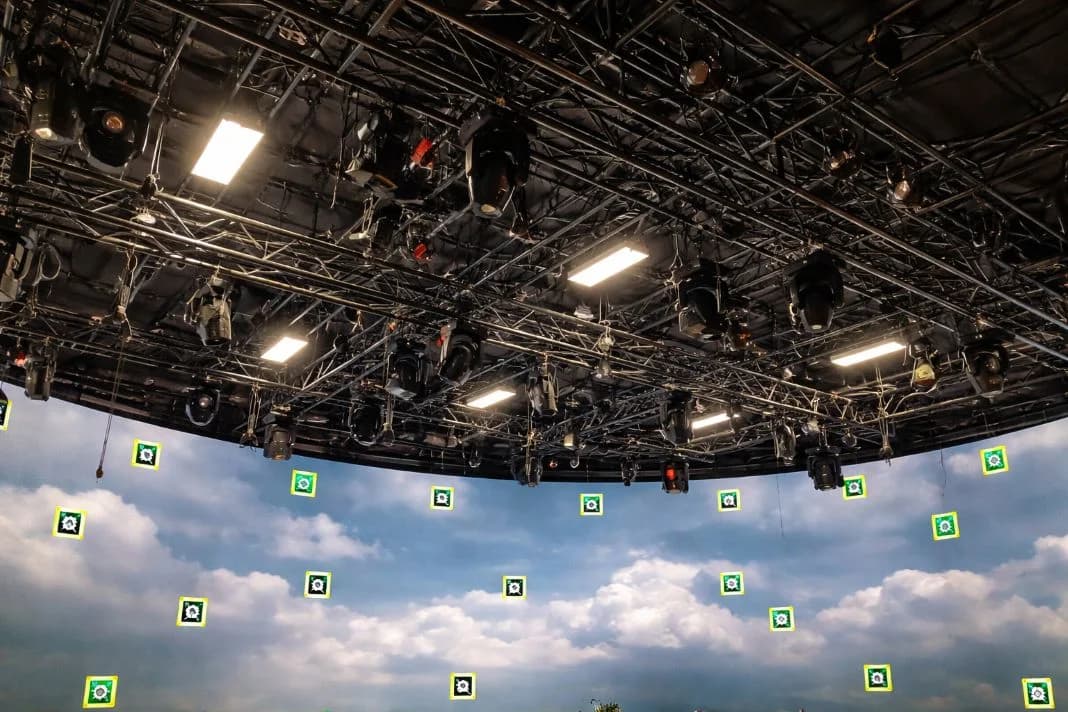
Studio 2 at Mammoth is equipped to support camera tracking with ceiling-mounted rigging points and integrated data transmission back to Unreal Engine playback systems. Systems such as Mo-Sys or NCAM, when configured correctly, maintain stable synchronisation across takes.
Tracking data also supports post-production, informing VFX overlays or camera matching in editorial. When these systems are stable, real-time feedback offers a continuous creative loop. When they fail, the illusion collapses.
Crew Coordination Defines Real-World Outcomes
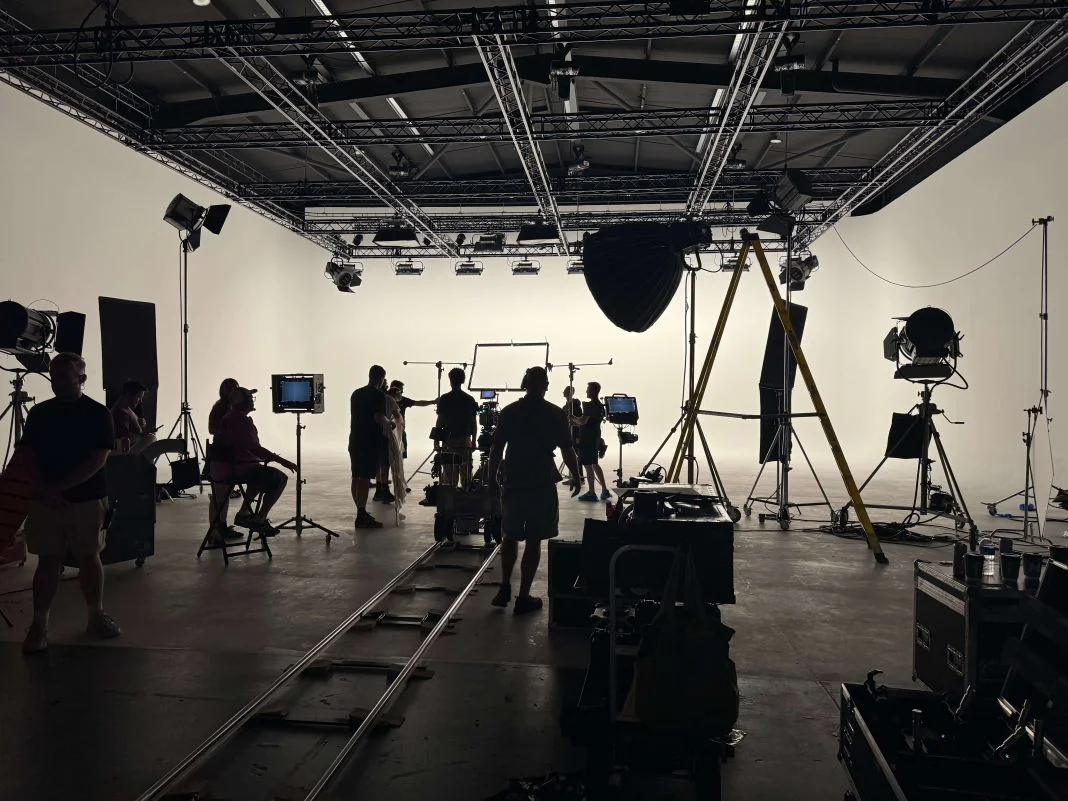
Technology does not deliver results in isolation. A well-run virtual production shoot depends on how clearly roles are defined and how confidently the crew operates within this hybrid environment.
Common failure points include:
- Poor communication between director, DOP and virtual production supervisor
- Delayed decision-making due to lack of real-time feedback mechanisms
- “Fix it in post” thinking that ignores the reality of baked-in LED imagery
- Inexperience handling playback systems, LED calibration or live compositing needs
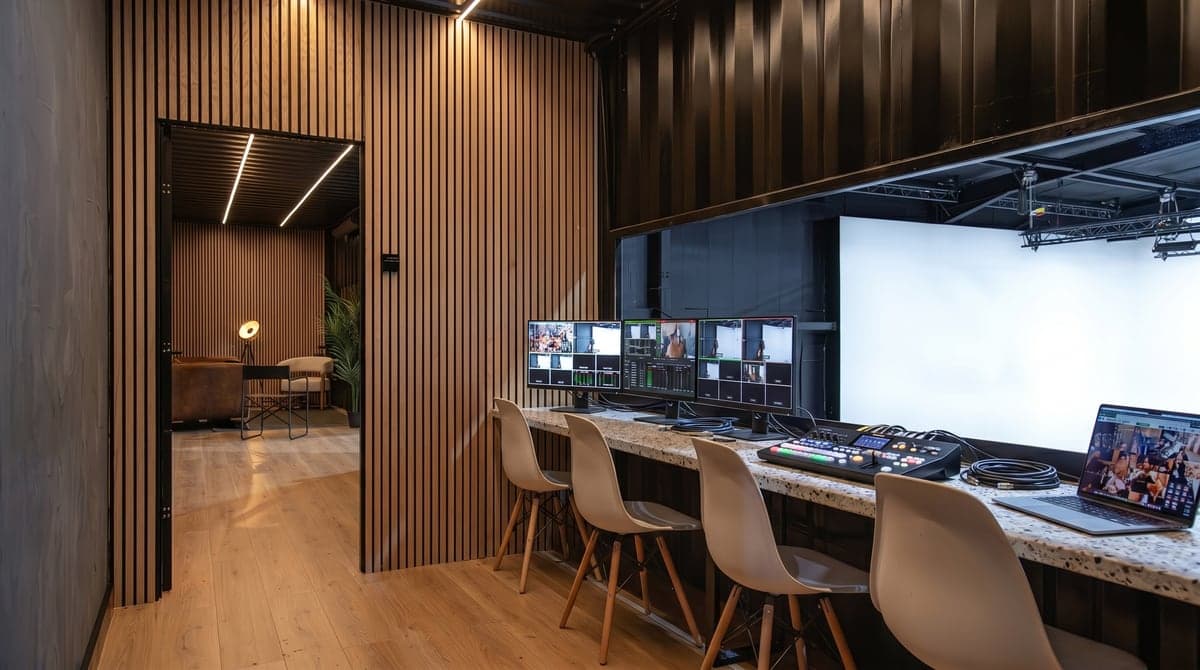
Strong shoots often involve rehearsals with the LED wall active, allowing departments to synchronise intentions and correct issues before cameras roll. Integrated playback systems, as provided by Elsewhere Productions at Mammoth, create fast feedback loops that preserve pacing.
Training matters. A crew unfamiliar with virtual tools will work cautiously, hesitate under pressure and exhaust time buffers. By contrast, a team confident in LED workflows moves fluidly and adapts as new challenges emerge.
Infrastructure Is the Hidden Foundation of Quality
Behind every virtual production shoot that runs on schedule and delivers visual fidelity is a studio infrastructure built to support technical demands.
Essentials include:
- Rigging capacity: At Mammoth’s Studio 2, 5 steel beams rated to 1 tonne each, with 12 chain hoists, support complex lighting and volume builds
- Stable capability: Reliable 63A 3-phase capability ensures all systems remain continuous under load
- Drive-in access: Simplifies logistics when transporting LED panels, equipment and set pieces
- Connectivity: 12G SDI routing and high-speed internet support live streaming, instant playback and on-set collaboration
- Parking and access: On-site spaces reduce vehicle conflict and ease unit base planning
Studios that lack these capabilities often face delays, compromised safety, or last-minute improvisation. Virtual production places continuous strain on network, capability and load capacities. If these are not built-in, they cannot be faked. Mammoth Film Studios provides these elements by default, which means technical teams can focus on execution rather than problem-solving basic infrastructure gaps.
Final Thoughts
Virtual production succeeds when every component, creative, technical and human, is aligned. A high-quality shoot does not emerge from the LED wall alone, but from attentive planning, appropriate tools and a crew that understands how to work with both time and technology. Studios such as Mammoth demonstrate that it is the sum of systems, not spectacle, that defines whether a production delivers on its intent.