What does "lower risk" really mean for brands choosing how to shoot?
Lowering production risk is not just about reducing spend. For brand teams, a missed approval or a late delivery can topple an entire launch. One delay can set off a chain reaction. The real focus is delivery certainty. That matters most when deadlines are fixed and stakeholder expectations are high.
An illustrative image of three people wearing headsets look at a monitor displaying a scenic landscape. They're in a dimly lit room with equipment around.
The real meaning of production risk for brands
Creative risk dominates in film. But in brand work, operational pressure leads. Campaigns have fixed launch dates, legal compliance requirements, and multiple layers of internal approval.
Here is what production risk often looks like for brands:
- Schedule certainty: Can the delivery date be met without fail?
- Cost volatility: Are there hidden charges or cost overruns?
- Approval risk: Will stakeholders sign off on time?
- Safety and legal: Is the production compliant, and is everyone protected?
- Reshoot probability: What happens if a key shot is missed?
- Brand safety: Is the brand's image and intellectual property protected?
This is why production managers use a risk register. It logs potential issues, scores exposure, and assigns responsibility for mitigation. It replaces guesswork with planning.
Every production carries risk. But where that risk lives and how visible or controllable it is depends on your production method.
Where studio controlled environments reduce risk
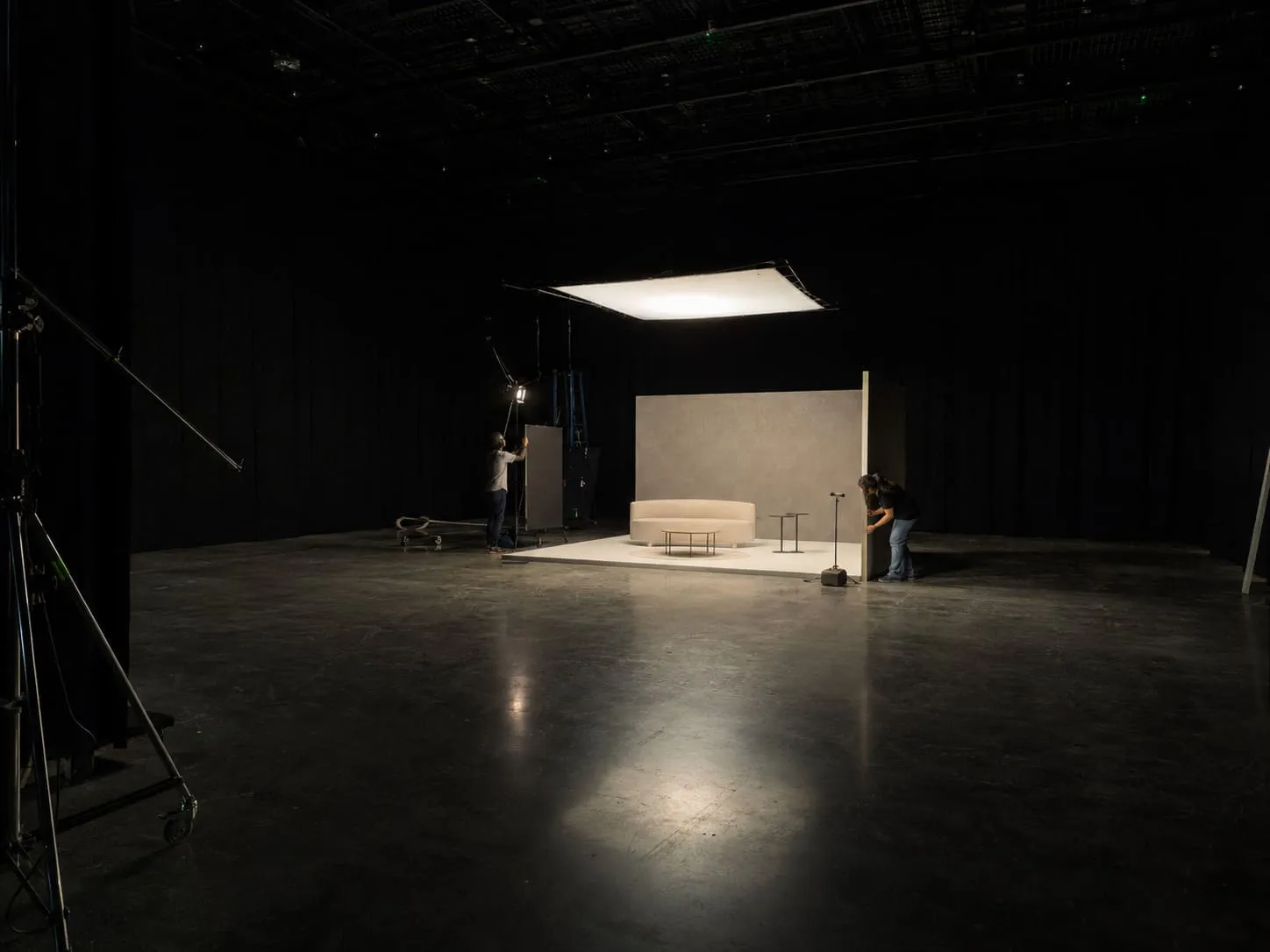
Studios reduce external variables. That is their core purpose.
There are no weather delays, no uninvited bystanders, and no traffic management issues. The crew has a space that is secure, quiet, and purpose-built for filming.
Inside a studio, there is less room for error. Continuity is easier to manage. Safety planning is more straightforward. Call times are consistent.
Fewer company moves mean fewer logistical handoffs and reduced reshoot risk.
You gain:
- Predictable shooting schedules
- Stable lighting and sound environments
- Simplified safety protocols
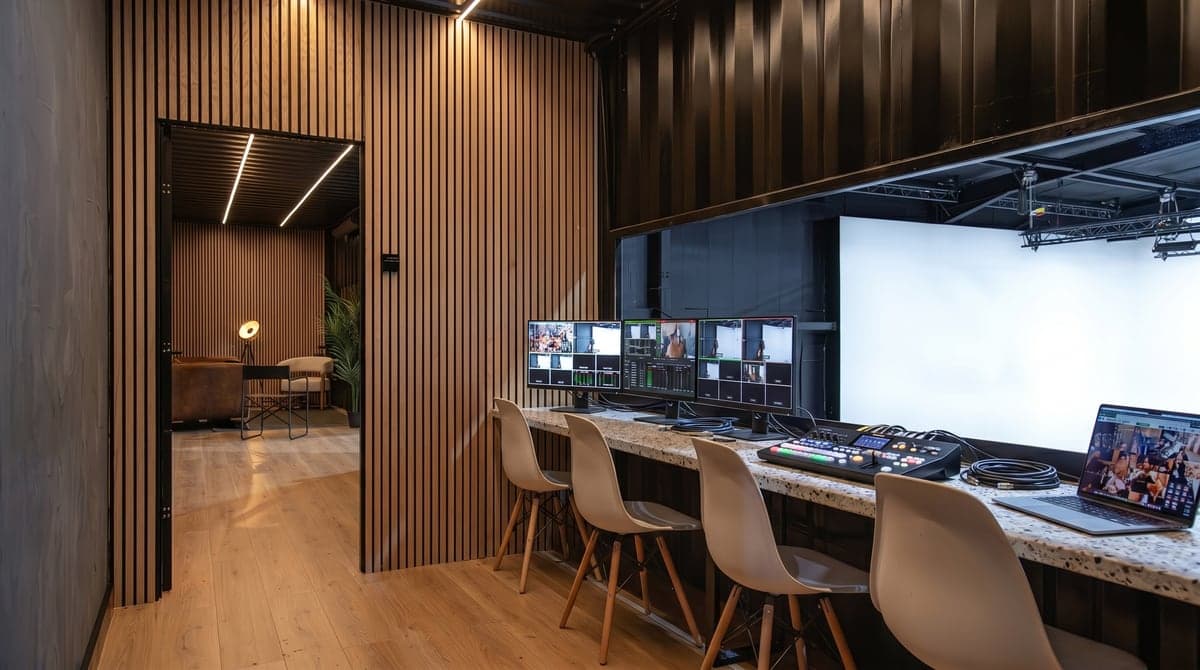
- Real-time access for client reviews
Studios do not eliminate all risk. But they remove most external variables from the equation.
The classic unknowns of location shoots
Location filming delivers authenticity. But it introduces volatility.
A perfect-looking location during a recce may change overnight:
- Roadworks appear
- Weather turns
- A permit includes new restrictions
These issues quickly snowball. One unexpected delay can compromise lighting, extend crew hours, and shrink approval windows.
Common risk triggers include:
- Public access and noise disruption
- Permit complications
- Environmental unpredictability
- Equipment access and parking limitations
Permits often require third-party approval from councils or private landowners. If these fall through, it is not just a delay. It can derail the day. Contingency plans help, but only when the risks are identified early enough to act.
Virtual production introduces new kinds of risk
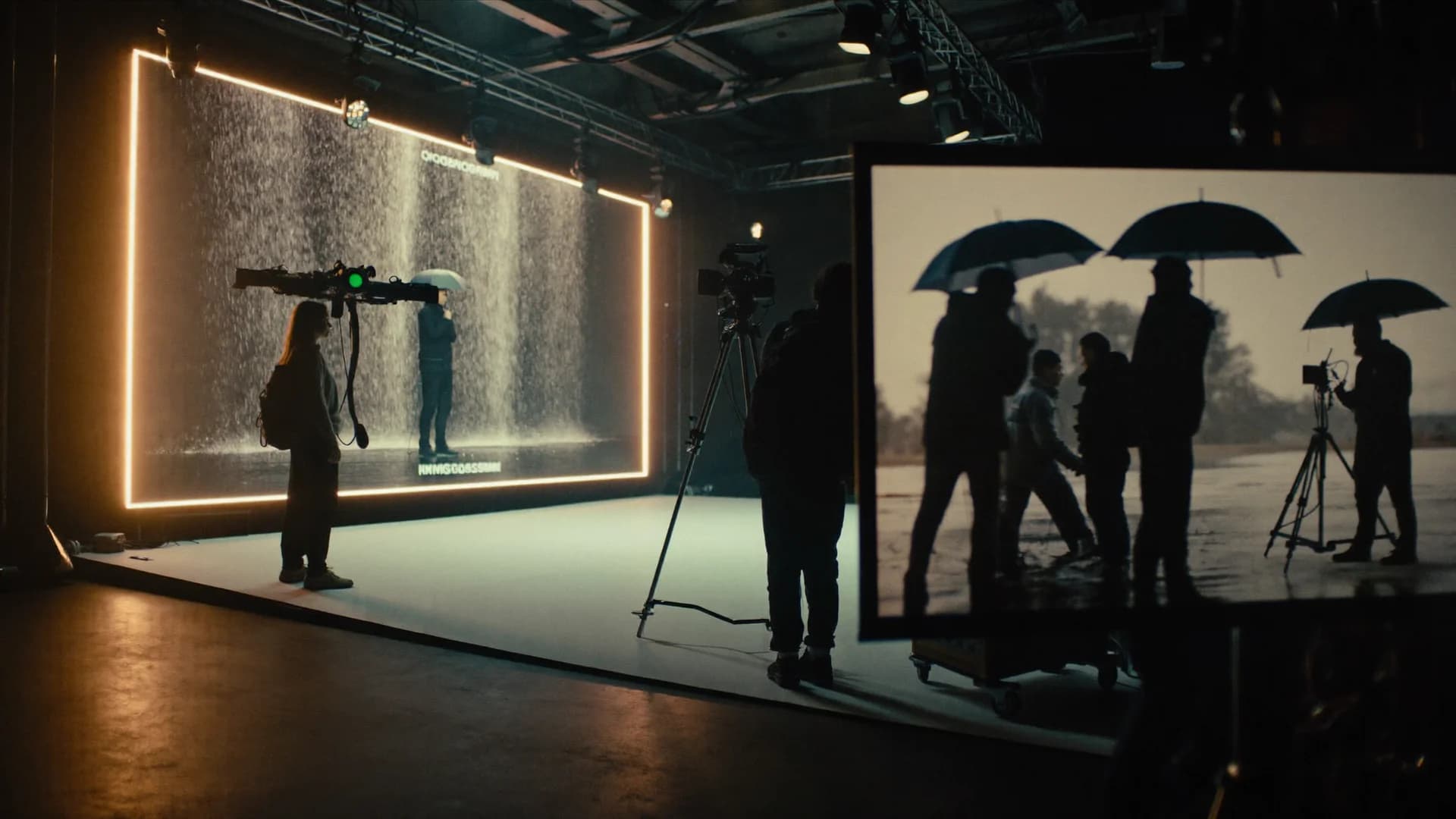
Virtual production replaces external uncertainty with internal complexity.
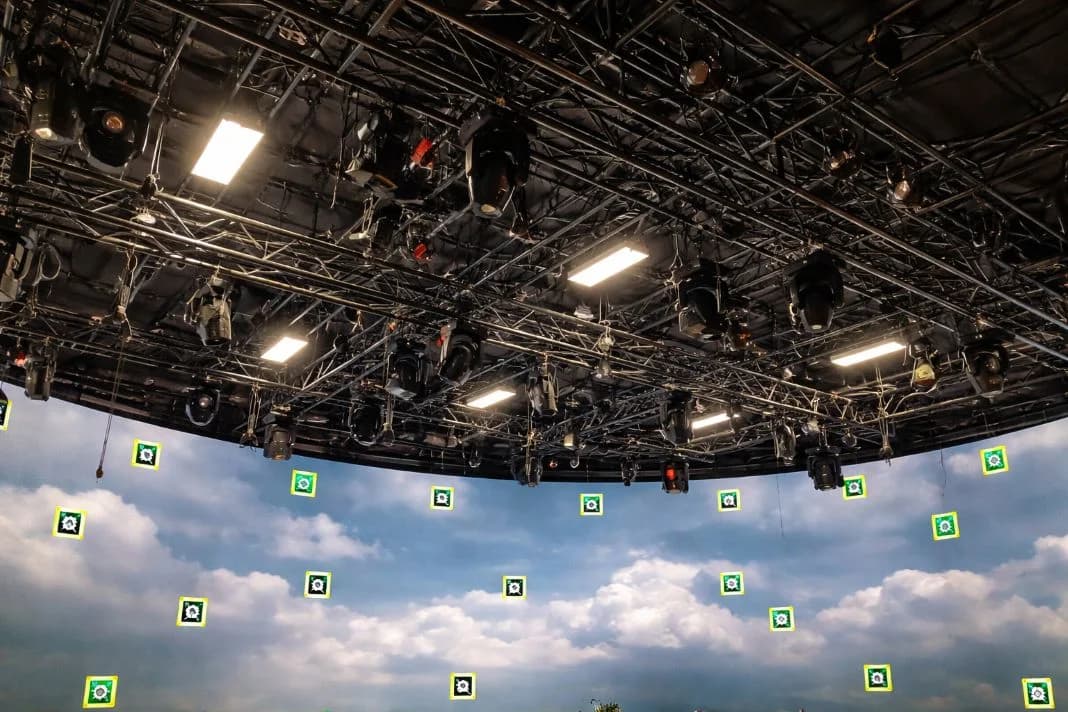
There is no scouting, no travel, and no weather planning. But there is a highly connected technical system (see how our LED volume workflow works) that must function reliably. A single failure whether in tracking, LED calibration, or content readiness can pause the shoot.
These are examples of internal VP risks:
- Lens miscalibration disrupting virtual set alignment
- Genlock sync issues causing unusable footage
- Late environment approval reducing shoot flexibility
With ICVFX, playback operators show near-final images live. That can dramatically reduce stakeholder sign-off friction. But it also means content must be locked sooner. The fix is not avoidance. It is preparation. Lock the creative early. Bring experienced VP supervisors. Test everything before cameras roll.
An illustrative image of a laptop displaying a spreadsheet and paperwork with a pencil on a wooden table. Background shows film equipment in a studio setting.
When virtual production is the lower-risk option
VP is most effective when time, approvals, and control are the biggest concerns.
It performs well when:
- Multiple setups need to be filmed quickly
- Lighting and reflections must remain consistent
- The product cannot be exposed publicly
- Reshoot budgets are limited or non-existent
- Client approval needs to happen on set
In these cases, virtual production removes the unknowns that usually cause overruns or brand-side delays.
When location shoots are the safer choice
Sometimes, the lowest risk is the most straightforward approach.
Location works best when:
- The place already fits the brief visually
- Few or no company moves are needed
- Timelines are tight but creative demands are simple
- Access is secure and reliable
- The shoot relies on natural light or real-world scale
These are signs of a low-risk location shoot:
- The site requires minimal build
- The production is not tech-heavy
- Permits are pre-cleared and enforced
- Stakeholders understand and accept live-environment conditions
Fewer moving parts often means fewer failure points.
Hidden risks: brand safety, approvals and confidentiality
Some of the biggest brand risks emerge in post.
- A bystander uploads leaked content
- Signage or intellectual property appears in background
- Stakeholders see something for the first time in edit and reject it
Studios and VP stages reduce these risks by limiting exposure.
Client teams can approve shots on-set via playback. Approval happens when changes can still be made not after. Controlled spaces reduce reputational risk, legal complexity, and feedback loops. This matters more when unreleased products or embargoed campaigns are involved.
An illustrative image of a studio with a large mountain landscape screen on the left; prints of similar scenery on a wooden table with a coffee mug on the right.
Side-by-side: comparing production risk
Use this table as a planning prompt.
| Risk Category | Location Shoot | Studio/VP Stage |
| Schedule Certainty | 2 (low) | 4 (high) |
| Cost Volatility | 2 | 3 |
| Approval Risk | 2 | 4 |
| Legal/Compliance | 2 | 4 |
| Technical Failure | 4 | 2 |
| Confidentiality | 2 | 5 |
| Safety | 3 | 4 |
Scoring uses a 1–5 scale based on likelihood and impact. In pre-production meetings, teams can use this to prioritise mitigations and assign responsibilities.
What to ask before you book a VP stage or location
If you're booking VP:
- Who runs tracking, playback and calibration?
- When does content need to be finalised?
- How are tech failures handled mid-shoot?
- What’s locked versus flexible on the day?
- Who is on-site to support real-time changes?
If you're going on location:
- Who grants access and what authority backs it?
- Are there time or sound restrictions?
- Where are unit base and parking located?
- What’s the plan if weather turns?
- Have all permits and public risks been reviewed?
For client-side sign-off:
- When will decision-makers see stakeholder-ready frames?
- What’s flexible creatively, and what’s not?
- Who resolves disputes on shoot day?
Capture answers in writing. If they are vague or unconfirmed, pause the booking.
The hybrid option: control what you can, capture what you must
Most commercial shoots today are hybrid. It is the most pragmatic way to reduce unknowns.
Use real-world textures or backgrounds for authenticity. Put product close-ups and stakeholder-heavy scenes on a controlled stage. Align your VP days with known dependencies.
Hybrid does not always reduce cost. But it separates risks so one failure does not compromise the entire schedule.
An illustrative image of a camera filming a tranquil lake with a forest backdrop, reflecting vibrant green trees and mountains. Microphone attached, capturing serene scene.
A working example: what operational infrastructure looks like
Mammoth Film Studios in London is structured to support this kind of production logic, reflecting what makes a good virtual production studio beyond the LED wall.
- Studio 1: 8,000 sq ft white cove and blackout stage, 200A power, 24 ft grid height, and 18-tonne vehicle drive-in access
- Studio 2: 5,000 sq ft blackout stage with modular 8×4m LED volume, 12 chain hoists, and on-set VP supervision by Elsewhere Productions
- Internal 12G SDI routing, step-free access, 4 Gbps hard-wired internet, and secure parking for crew and client vehicles
Nothing is over-promised. It is infrastructure built to support working producers.
So which approach is lower risk?
It depends on your specific production priorities.
If deadlines, stakeholder approvals, and confidentiality carry the highest exposure, VP or studio filming gives you more control. If your creative is low-complexity and your location is accessible and trusted, the simplest answer is often the best.
If you have both types of needs, go hybrid. Move what must be controlled into a stage. Shoot the rest where flexibility offers an advantage. Ask hard questions early. Build the risk register. Manage what you can see and prepare for what you cannot.