What Does 'Technically Fit' Really Mean?
In virtual production, technical fitness means the studio can handle the real demands of a shoot. That includes reliable , rigging, signal flow and crew systems. It is not about how the space looks. It is about how it performs when pressure builds. A technically fit virtual production studio is built for stability, not spectacle.
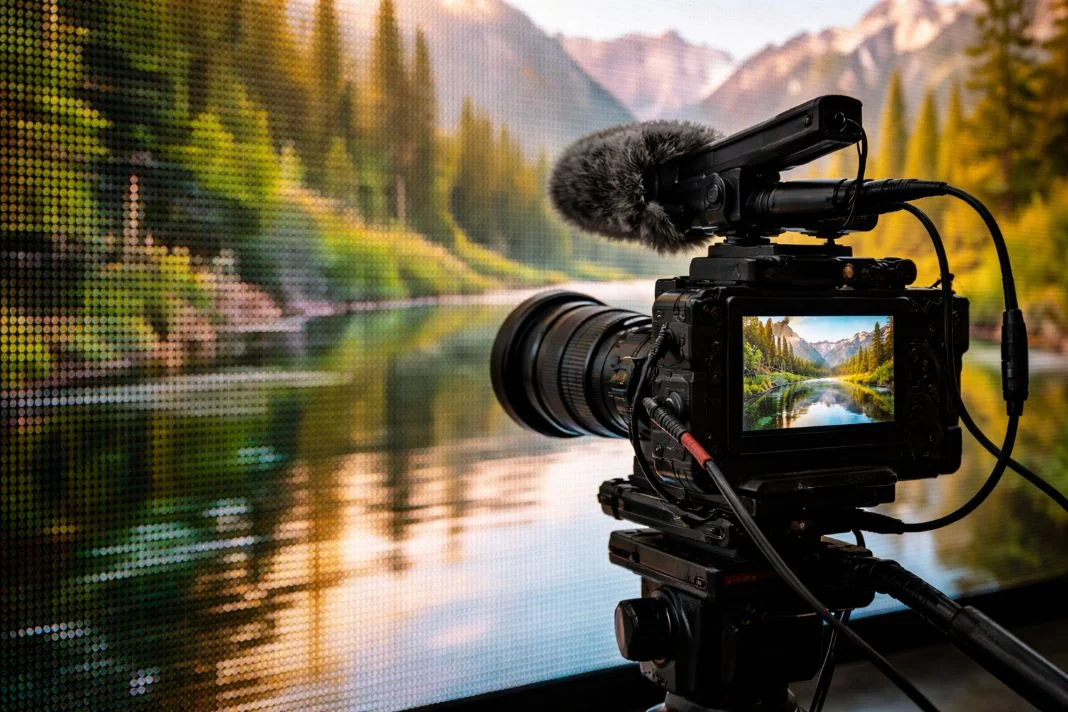
An illustrative image of a camera films a serene mountain lake scene on a vibrant digital screen. The camera display shows a reflection, emphasizing the natural beauty.
What does technical fitness look like beneath the surface?
Polished visuals can hide technical gaps. A studio might look impressive on a website, but that says little about its infrastructure. Weak rigging, shallow power reserves or overtaxed systems reveal themselves once gear is powered up. Real fitness shows when stress increases, not during the tour.
Where do things usually go wrong?
LED panels can overheat. Sync systems may drift. Circuits sometimes trip. These do not happen in showreels. They appear during long days with real crews and real demands. Production-ready infrastructure prevents surprises, keeps everything aligned and protects your schedule.
Can creativity survive without infrastructure?
You cannot shift a lighting rig mid-scene or swap playback content quickly without strong infrastructure. Creative flexibility is only useful when the stage can handle pressure. Otherwise, the system collapses under change. Fit studios, offering the standard and custom VP solutions, make creative thinking operationally possible.
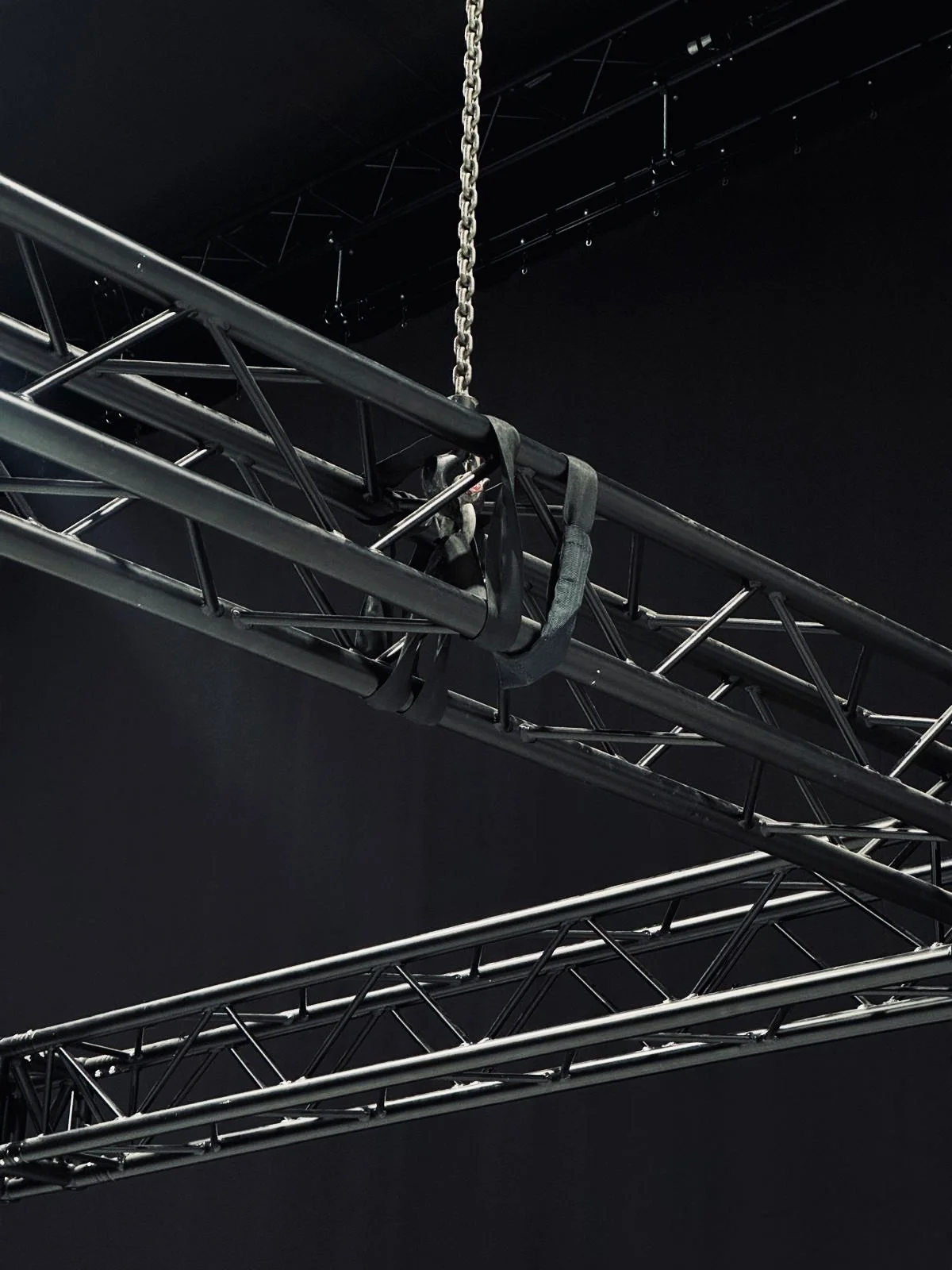
An illustrative image of a metal truss structures suspended by a chain in a dark setting. Industrial, minimalist design with geometric patterns, conveying a stark mood.
Can the Rigging and Power Infrastructure Handle the Load?
System failure often starts quietly. A lighting truss may sag. A breaker might trip. Moments like these can halt entire shoots. Fit studios avoid these outcomes by engineering margin into every load.
Can the studio handle peak demand?
Power should be clean, balanced and predictable. Studio 2 offers 63A 3-phase power with proper load planning, which means it can handle LED, lighting and signal simultaneously, with redundancy built in. That stability avoids rationing and keeps playback smooth.
How much can the grid actually carry?
LED volumes, overhead lighting and tracking all add weight. Studio 2’s five steel beams, rated at one tonne each, plus 12 chain hoists, allow flexible hanging without stressing the grid. Capacity matters, but so does distribution.
What holds retrofitted stages back?
Add-ons rarely match built-in systems. Studios that retrofit LED often leave rigging, cabling and electrical unchanged. These mismatches restrict layouts, increase risk and slow every changeover. Fitness starts with intentional design.
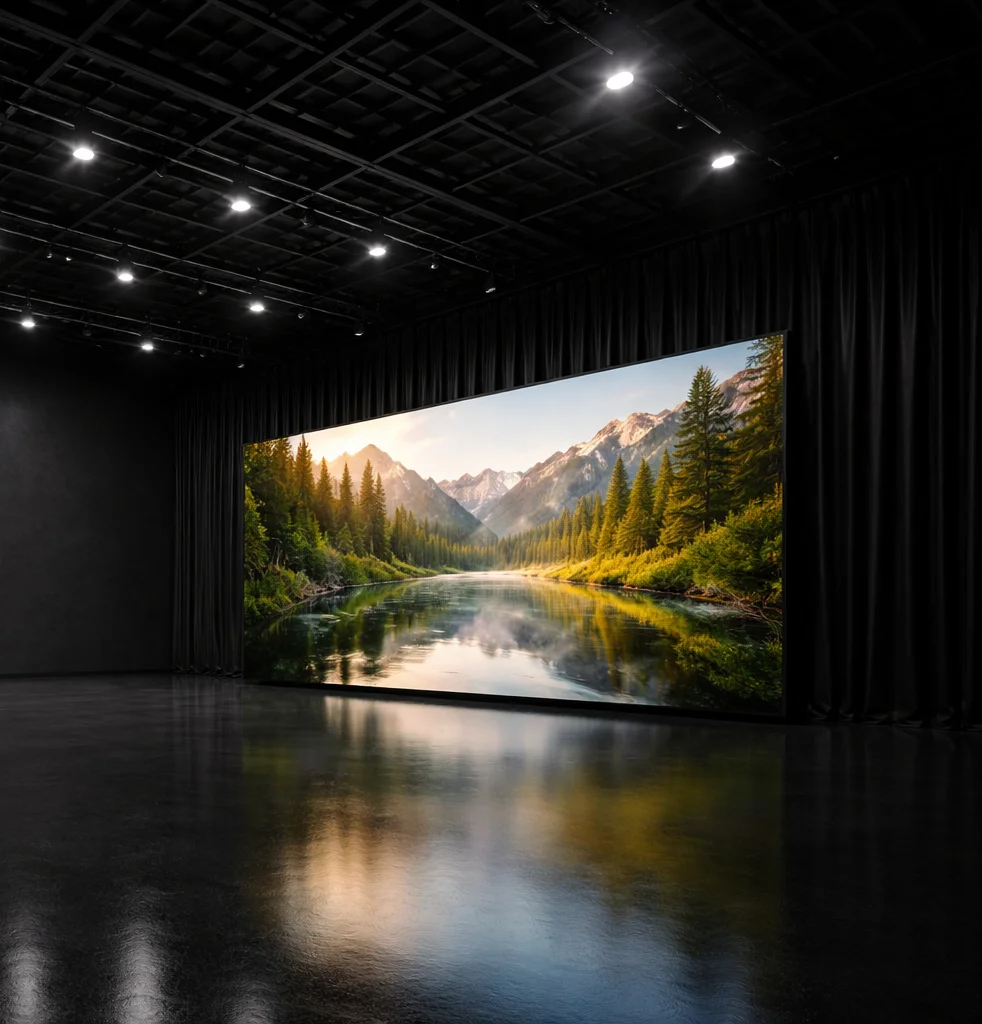
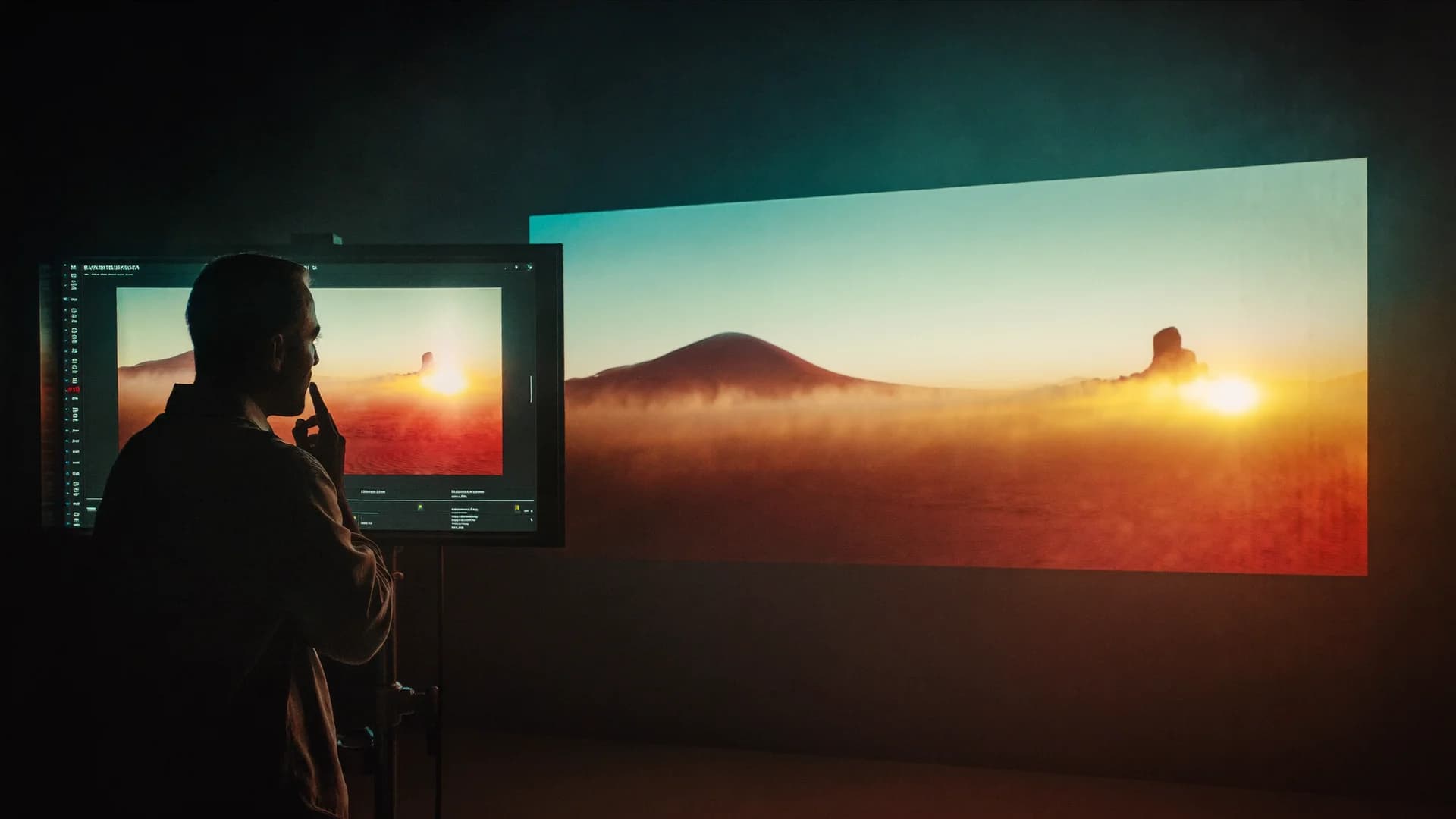
An illustrative image of a large landscape screen displays a serene mountain view with river and trees in a dark room. Reflection visible on polished floor.
Is the LED Wall Enough?
It helps. But it is not everything. Without matching playback, lensing and routing systems, a wall is just a surface. The value lies in integration.
Is pixel pitch even relevant on its own?
Get this wrong and image quality drops fast. Studio 2 pairs 2.8mm LED with calibrated distances and lenses to minimise moiré and support consistent depth. Matching LED to camera is a system decision, not a spec sheet entry.
What does HDR calibration mean in practice?
Brightness sells specs. But consistency wins in production. Uniform colour and output across the volume supports realistic lighting, smooth compositing and continuity from shot to shot.
Can the LED wall adapt with the shoot?
A wall locked to one shape cannot serve different setups. Modular systems allow reconfiguration to fit the scene. Studio 2’s volume adapts as needed, which is another mark of production fitness.
Can the Studio Handle Signal Flow and Sync Reliably?
The system only works when it is in sync. Drops, delays or drift can ruin takes and stop progress. A fit studio keeps signals aligned from lens to LED, across every frame.
Is everything really in sync?
These are not extras. They are required. Genlock ensures refresh matches capture. Timecode keeps playback, sync and edit aligned. Studio 2 distributes both cleanly, avoiding drift across long days.
What kind of signal path matters most?
Studio 2 uses 12G-SDI for its reliability and crew familiarity. Consistent signal behaviour under load matters more than the protocol used. That consistency helps crews focus on content rather than troubleshooting.
What happens when stress hits the system?
Some faults do not show until everything is live. Latency climbs. Frames drop. Playback desyncs. Studio 2 stress-tests systems before you arrive so failures do not happen while the cameras are rolling.
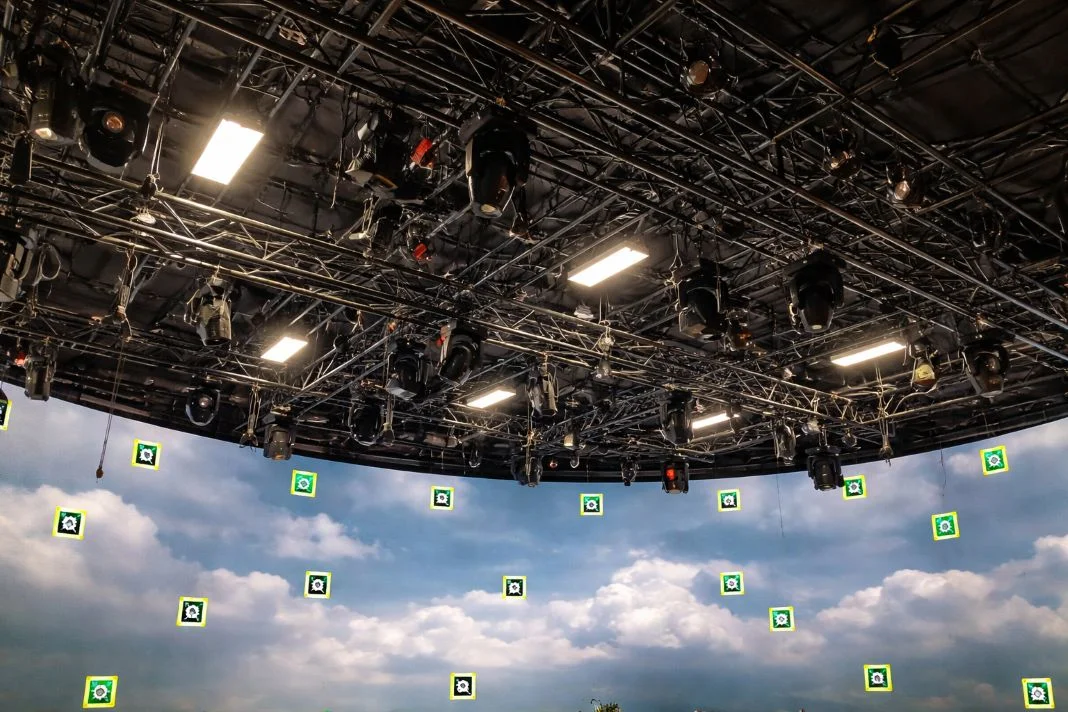
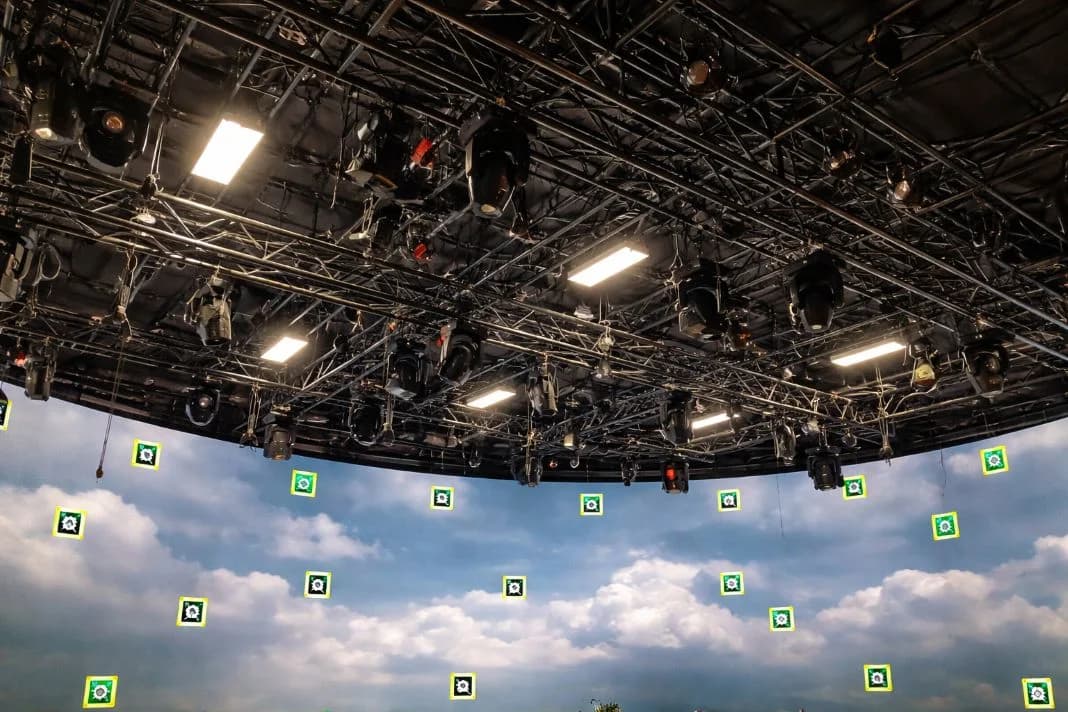
An illustrative image of a studio ceiling with multiple lights, scaffolding, and a sky background dotted with motion tracking markers. Bright, technical setting.
Is the Lighting and Environmental Control Actually Reliable?
Light control underpins image quality. Reflections, leaks or ambient drift make backgrounds look fake. Temperature swings impact both gear and crew. Control matters.
Is full blackout really full blackout?
Curtains and workaround drapes do not hold. Studio 2 is built as a true blackout space, which is 360° enclosed and matte-finished. That eliminates spill and keeps exposure predictable.
How does spill show up in the footage?
Reflections bounce from any untreated surface. Rigging, floors and ceilings all must be managed. Studio 2’s materials and layouts are selected to stop uncontrolled bounce from affecting performance.
What about temperature and sound control?
LED systems run hot. Unmanaged HVAC causes airflow noise or dead zones. Studio 2 maintains temperature, controls echo and supports long hours without fatigue or noise issues creeping in.
Does the Crew Matter More Than the Kit?
Gear only works if it is used right. Problems escalate when no one owns them. Supervision ensures systems stay stable and decisions move quickly.
Who actually knows the system?
Familiarity reduces failure. Studio 2 works with Elsewhere Productions, which means playback, LED and routing are handled by trained crews who know the rig. That saves time and protects consistency.
How quickly do things get fixed?
Who presses play? Who resets tracking? Fit studios do not wait for answers. Roles are defined, escalation is clear and systems are staffed, not left idle.
Who owns what when something breaks?
Studios run smoother when ownership is clear. If sync fails, who resets it? In Studio 2, every system has a supervisor. No debates. No delays.
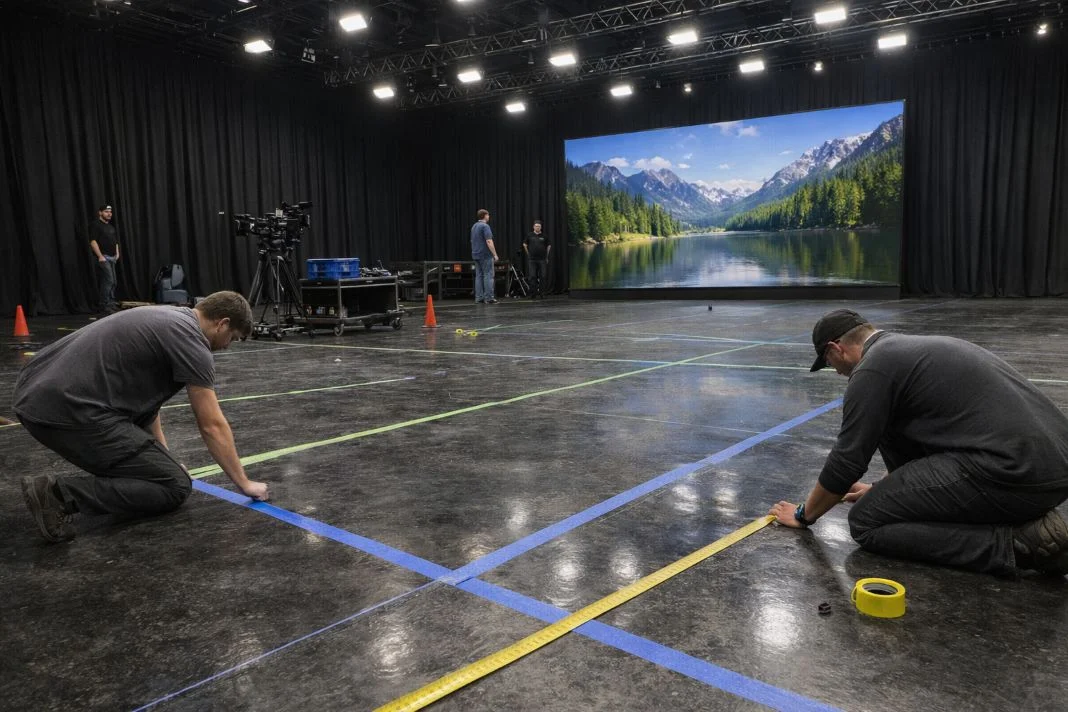
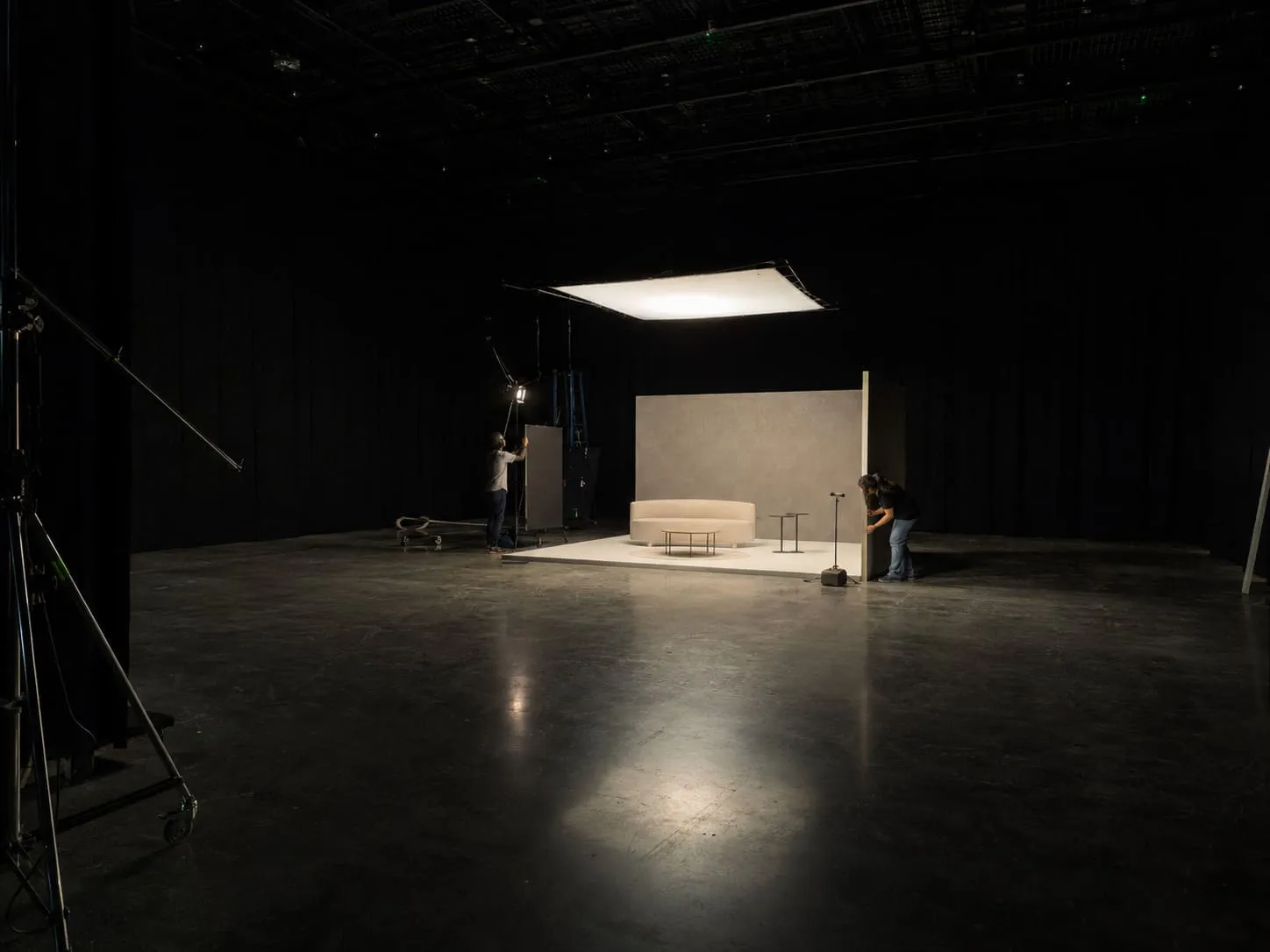
An illustrative image of Two men tape lines on a studio floor, with a large screen displaying a mountain lake scene. Dark curtains and stage lights above.
Can Virtual and Traditional Production Coexist?
LED is not a silo. Sets need lighting. Props need scale. Crews need space. Fitness means accommodating departments, not isolating them.
Can departments actually work together on set?
Studio 2 has space, rigging and power to run LED, practical lighting and grip together. That overlap enables realism and continuity without rearranging the schedule.
Does the studio support hybrid production?
Virtual scenes often sit next to traditional ones. Modularity makes that possible. Repositionable LEDs, flexible layouts and dual-purpose space keep the day moving.
Is the space built for both stills and video?
Stills require different setups. Studio 2 supports both modes without needing full rebuilds. From sync to resolution, the infrastructure supports change without disruption.
What Does Infrastructure-Led Studio Design Look Like in Practice?
It looks like separation. Studio 1 is for white cove work. Studio 2 is for virtual production. Each space does its job without compromise.
Why keep traditional and VP apart?
Mammoth avoids hybrid stages. That keeps workflows clean. No shared rigging. No ambient crossovers. No half-measures. Traditional work stays traditional. VP stays blackout.
What does separation actually solve?
Trying to serve every shoot from one space creates friction. Fitness means purpose-built stages where every component, from ceiling height to crew layout, aligns with use.
What makes Studio 2’s layout different?
Blackout. Modularity. Power. Supervision. Studio 2 brings these together so LED-based work functions like any other workflow. It is consistent, controlled and repeatable.
What Should You Know Before You Book?
Ask what fails under load. Ask who fixes it. Look for tests, not promises. Fitness is not a mood. It is a system that proves itself under pressure.
What should you ask during the walkthrough?
- What is the signal path from playback to camera?
- Are there failovers for power or routing?
- Who operates and supervises playback?
- Can we run a signal and blackout check?
- Has the crew worked together before?
Which issues can you live with which means that and which can't you?
Unclear systems. Unavailable supervisors. Untested signal paths. These are deal-breakers. You can work around space. But you cannot work around chaos.
Does the studio actually match your needs?
The right stage fits your shoot, not the other way around, and knowing when virtual production costs more than traditional shooting helps you decide. Need LED for vehicles? Check access and rigging. Need modularity? Ask about wall configurations. Technical fitness means being ready, not just equipped.