What are brands using virtual production for right now, and what can you learn from that?
Brands are using virtual production for practical production problems, including tighter schedules, location substitution, lighting control, versioned assets, and cleaner approvals. The strongest lesson is simple: LED stage work performs best when it is planned as part of a wider workflow, not treated as a novelty or a full replacement for every other shooting method.
Table of Contents
The Current Landscape: How Brands Are Engaging with Virtual Production
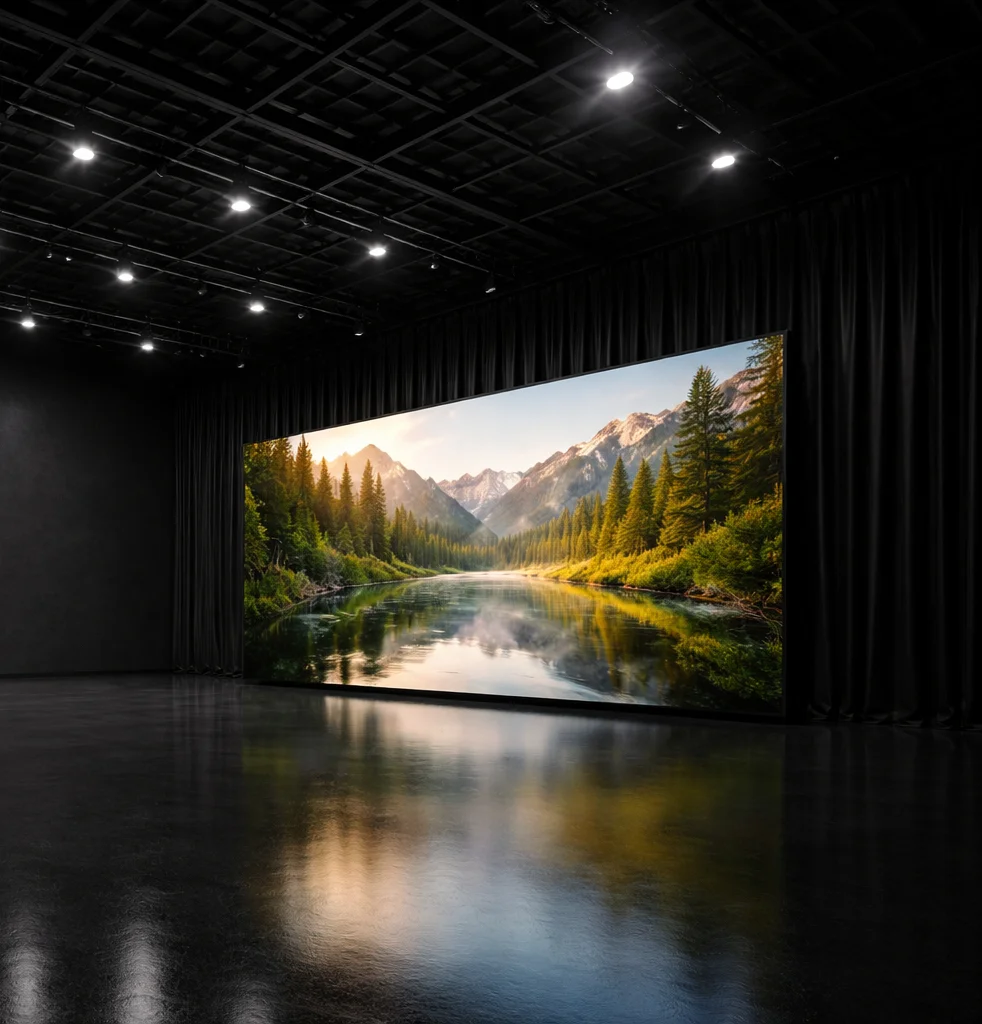
Virtual production has moved past the stage where it was discussed mainly as spectacle. Across commercial production, the more grounded pattern is operational adoption. Brand-side creative teams, agency producers, and studio partners are using it where control matters more than novelty.
Several factors sit behind that shift:
- Teams can move between environments without moving the whole unit.
- Lighting remains more consistent across long shoot days and multiple versions.
- Production studios can keep weather, sound spill, and timing under tighter control.
- Post-production alignment often improves because backgrounds, reflections, and camera movement are considered earlier.
Misunderstandings still shape some conversations. Virtual production is not replacing every location shoot, and it is not automatically the right choice for every brief. Industry use of LED stages is strongest where repeatability, speed, and visual consistency carry direct production value, which is why advertising, automotive, fashion, retail, and selected corporate work have adopted it with the fewest illusions about what it can and cannot do.
1. Automotive Brands: Accelerating Campaign Turnarounds
Automotive campaigns expose production problems quickly. Vehicles are large, reflective, logistically awkward, and often tied to launch windows that leave little room for delay. A traditional location approach can still be the right fit, though it often brings transport planning, road permissions, changing daylight, and weather risk into the middle of a high-value shoot.
LED stage work gives automotive manufacturers and agency producers another route. A controlled volume can simulate different locations for market-specific assets, which reduces the need to move cars, crew, and support vehicles between multiple sites. Interactive lighting also matters here because paint finish, glass, and chrome react badly to inconsistency.
Common uses in automotive virtual production include:
- Launch assets that need several geographic looks in a compressed schedule
- Interior driving scenes where exposure and reflections need to stay stable
- Product films requiring close post-production alignment with CGI elements
Vehicle campaign workflow also benefits from tighter rigging coordination. Camera movement, plate playback, and lighting cues can be tested before the car even enters the stage, which gives virtual production supervisors and producers a clearer path through the day. On a reflective vehicle body, minor lighting shifts can change the whole frame, so predictability is not a luxury in this sector.
Environmental considerations often enter the discussion as well. Fewer moves, fewer location resets, and reduced transport can lower the physical footprint of a campaign, though that benefit depends on the brief and should be judged case by case.
2. Fashion and Retail: Rapid Content for Seasonal and Social Campaigns
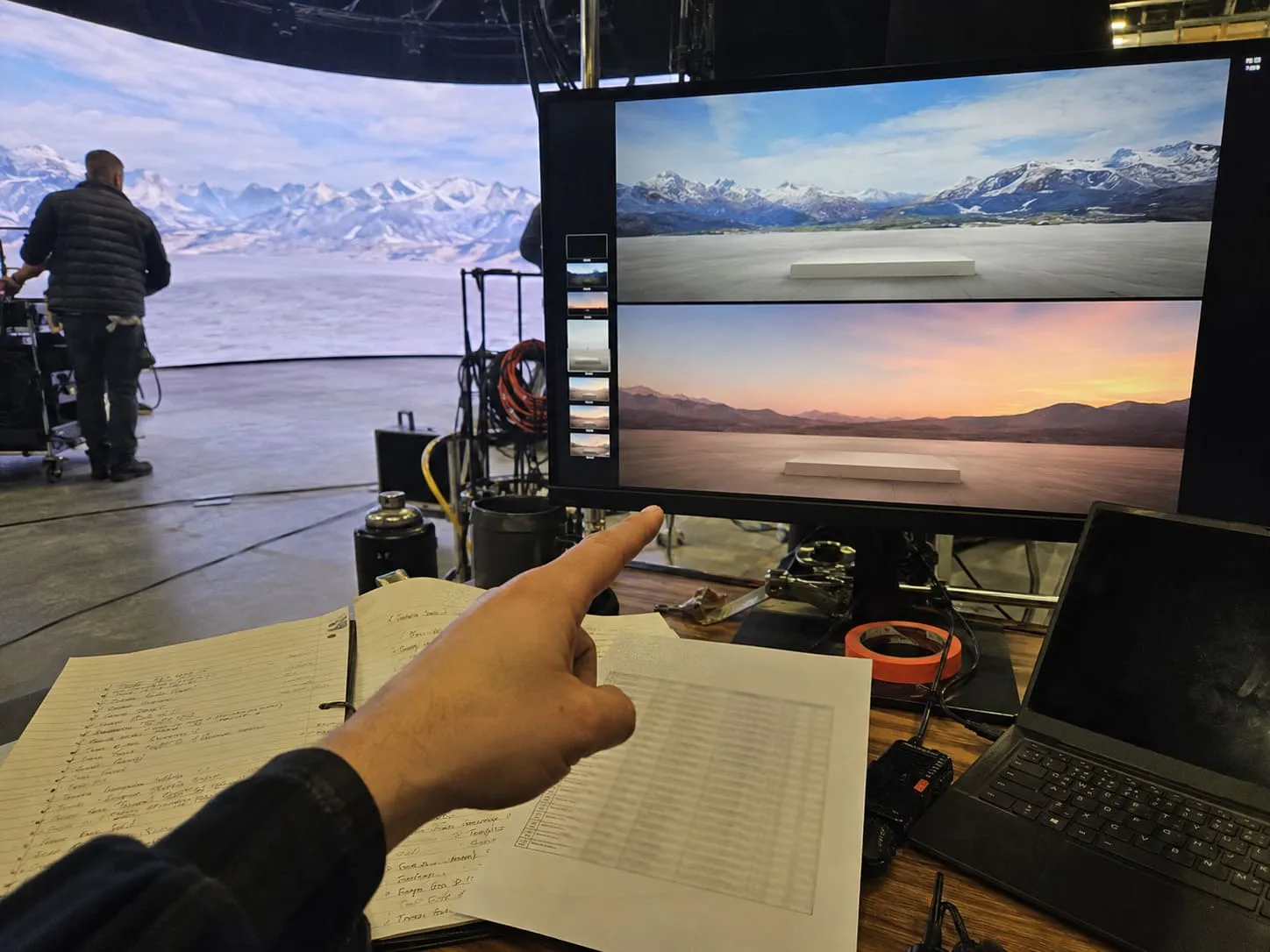
Fashion and retail teams work to a rhythm that leaves little slack. Seasonal launches, social edits, regional variants, and e-commerce adjacencies can all pull from the same campaign shoot, often with revised messaging late in the process.
Virtual production suits that pressure because it can support fast visual changes without rebuilding the entire day. A retail campaign studio setup can hold model lighting, background treatment, and brand consistency in a more controlled state than many location environments. If a brief shifts from one seasonal setting to another, the production can adjust the scene more quickly than a conventional company move would allow.
Scheduling is often the real advantage. Talent availability is short, crews may be shooting for several outputs at once, and marketing teams need material that works across paid social, site banners, in-store screens, and launch films. In that context, virtual production for lookbooks or seasonal content production is less about spectacle and more about reducing reset time.
Another useful feature is visual continuity. Fashion labels tend to care deeply about how skin tone, fabric texture, and colour rendering appear across a campaign. Once the lighting and virtual environment are calibrated, teams have a firmer baseline for producing different cuts and formats without visible drift. That consistency becomes especially valuable when a spring push becomes a social refresh, then a regional edit, all within the same approval cycle.
3. Technology and Electronics: Product Launches with Controlled Visuals
Technology brands often need precision before they need atmosphere. Product launches for phones, laptops, audio devices, and wearables can involve reflective surfaces, glass, dark finishes, and close-up detail that punish uncontrolled conditions. Add embargo management, versioned global assets, and CGI overlays, and the value of a controlled environment becomes obvious.
Tech product virtual production tends to work well in three areas:
- Product hero shots where reflections, edge light, and surface detail need repeatability
- Demonstration content combining live action with graphics or CGI integration
- Launch materials that require multiple formats and regional versions from one setup
Embargoed products introduce another layer. Electronics manufacturers and product marketing teams often need a secure filming environment with limited access, tightly managed review, and minimal exposure to external variables. A contained studio setup can support that more effectively than a location shoot with a larger operational footprint.
Repeatability is equally useful once the first hero setup is approved. Asset versioning becomes easier when the camera move, background treatment, and lighting ratio can be reproduced for alternate products, localised edits, or updated messaging. For controlled environment filming, the gain is often less visible to the viewer than to the producer managing deadlines and approvals.
4. Advertising Agencies: Multi-Client, Multi-Format Efficiency
Agencies are often dealing with the production consequences of fragmented delivery. One campaign can require landscape film, cutdowns, vertical social assets, stills, product close-ups, local market variants, and client review moments that happen in quick succession.
Agency virtual production is useful here because it can compress challenge. A multi-format content studio setup lets campaign producers plan multiple outputs around one technical environment, with real-time review and a clearer relationship between production and post. That matters when clients want fast turnaround without giving up control over brand detail.
A practical agency workflow might involve one stage day producing a hero film background, stills plates, social loops, and alternate messaging versions for different placements. Cross-platform delivery becomes less chaotic when the visual logic is established earlier, and the approval chain can see that logic on set instead of waiting for later composites.
Some agencies also use LED stages to reduce day-of uncertainty. If weather, ambient light, and location access are taken out of the equation, the schedule becomes easier to defend. That does not remove pressure from the producer, although it does shift more responsibility into pre-production, where the work is usually cheaper to solve.
5. Corporate and Internal Communications: Consistency and Control
Corporate use receives less attention, yet it is one of the more practical applications. Internal communications teams, training departments, and senior leadership groups often need consistency, confidentiality, and efficient turnaround more than they need visual novelty.
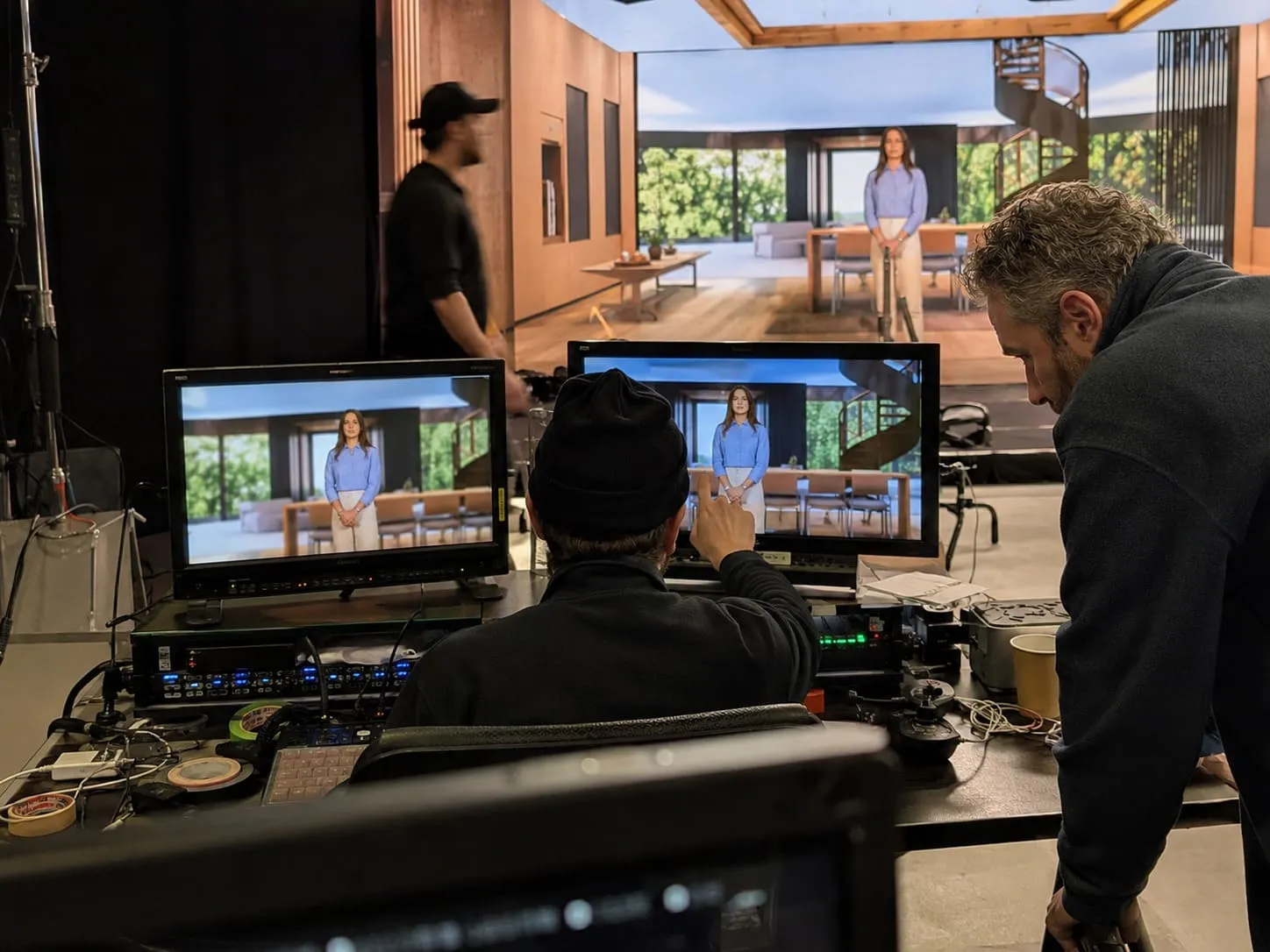
Executive filming is a strong example. An internal message for global staff may require a neutral but controlled backdrop, aligned brand guidelines, secure handling of sensitive information, and the option for remote participation from stakeholders who cannot be in the room. A studio-based virtual setup can support all of that with fewer variables than a live office environment.
Training content also benefits from stable production conditions. If modules need regular updates, a repeatable setup makes it easier to refresh content without obvious visual mismatch between one version and the next. Corporate virtual production is therefore useful for continuity as much as for presentation.
Confidentiality protocols matter here as well. Product strategy briefings, leadership announcements, and internal change communications often need a contained crew footprint and careful file handling. In those cases, the production method supports governance as much as image quality.
6. Film and Episodic Production: Improving Workflow, Not Replacing Tradition
Film and episodic teams usually approach virtual production with fewer illusions than marketing teams do. They know that some scenes belong on location, some belong on a stage, and some work best in a hybrid production workflow that combines both.
A common use case involves sequences that would be expensive or unreliable to stage outdoors for multiple days. Weather continuity, twilight windows, vehicle process work, and scenes with controlled environmental effects can all benefit from an episodic LED stage setup. The gain is often practical: fewer lost hours, steadier lighting control, and more predictable scene transitions between setups.
Studios built with separate capabilities illustrate this well. Mammoth Film Studios, for example, separates its large-format traditional stage from its specialist virtual production stage, which reflects how productions actually work. Studio 1 is an infinity cove and blackout space for conventional large-scale film and photography work. Studio 2 is the blackout and virtual production stage, where LED-based workflows can be integrated with technical supervision and on-set playback support.
That distinction matters because integrating virtual production is mainly a question of fit. Directors, DPs, and production teams need to know whether a scene benefits from interactive light, reduced location days, or controlled transitions between environments. If the answer is yes, the LED stage becomes a useful production tool. If the answer is no, traditional methods remain entirely valid.
7. Learning from Leading Brands: Practical Insights for Your Next Production
The broad pattern across brands using virtual production is straightforward. The teams getting the best results are using it to solve defined production problems, not to satisfy a trend.
Three lessons carry across sectors:
- Start with the workflow, not the screen. Pre-visualisation, camera planning, lighting intent, and asset versioning need agreement before the shoot day.
- Match the format to the brief. A car launch, a fashion refresh, an embargoed electronics film, and an internal executive message all need different technical setups and approval paths.
- Keep expectations realistic. Virtual production can reduce certain risks and compress some timelines, but it also moves more decision-making into pre-production.
Another recurring point is the value of technical supervision. Whether a team is working with a studio operations crew or a specialist partner such as Elsewhere Productions, the strongest outcomes usually come from early alignment between production, creative, and technical departments. Problems that look expensive on set often begin as vague assumptions in prep.
The useful takeaway is not that every brand should move to LED stages. The better lesson is that virtual production works best when it is treated as one production method among several, chosen for the jobs it suits and ignored for the ones it does not.